乳香
Rǔxiāng · 别名马尾香、乳头香
Ruxiang · Frankincense (Olibanum)
活血定痛 · 消肿生肌 Activates Blood & Relieves Pain · Reduces Swelling & Promotes Healing乳香原产于阿拉伯半岛及东非,因树脂渗出时呈乳滴状凝结而得名,是古代「海上香药之路」贸易中最重要的商品之一,早在汉唐时期便随海上丝绸之路传入中国。乳香在西方文明中同样地位崇高——《圣经》记载东方三博士献给耶稣的礼物中即包含乳香,象征神圣与尊贵。传入中国后,医家发现其活血定痛之效卓著,遂与没药配伍,成为骨伤科「乳没」经典药对,至今仍是伤科用药的核心组合。
Frankincense originates from the Arabian Peninsula and East Africa, named for the way its resin oozes and hardens into milk-drop-like tears. It was one of the most valuable commodities traded along the ancient maritime spice route, reaching China via the Maritime Silk Road as early as the Han and Tang dynasties. Frankincense held equally exalted status in Western civilization—the Bible records it as one of the gifts brought by the Magi to Jesus, symbolizing divinity and reverence. After its introduction to China, physicians discovered its remarkable blood-activating, pain-relieving properties, pairing it with myrrh to form the classic orthopedic herb duo "Ruxiang-Moyao," a combination still central to trauma medicine today.
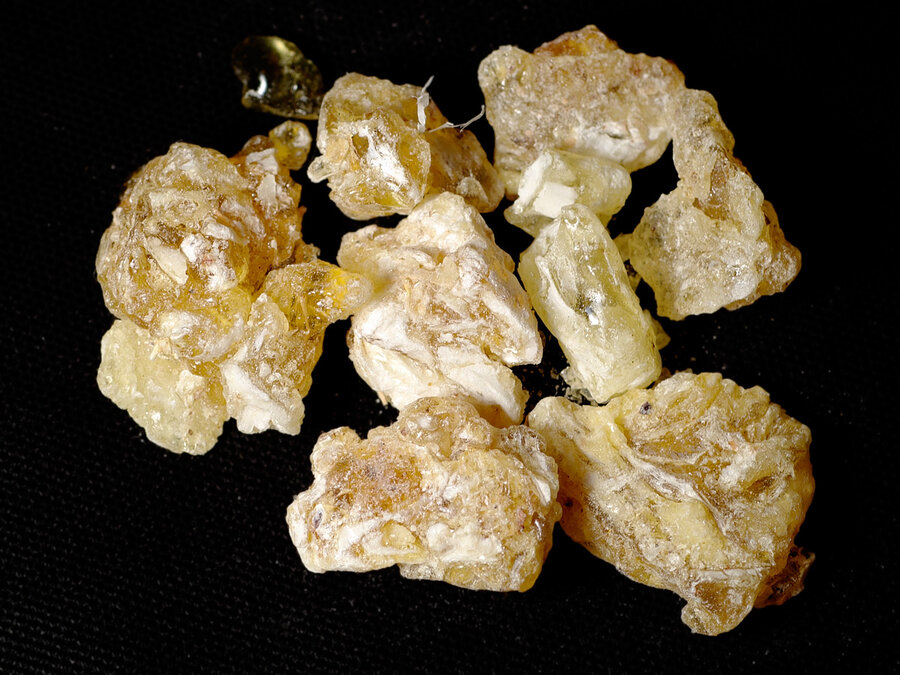
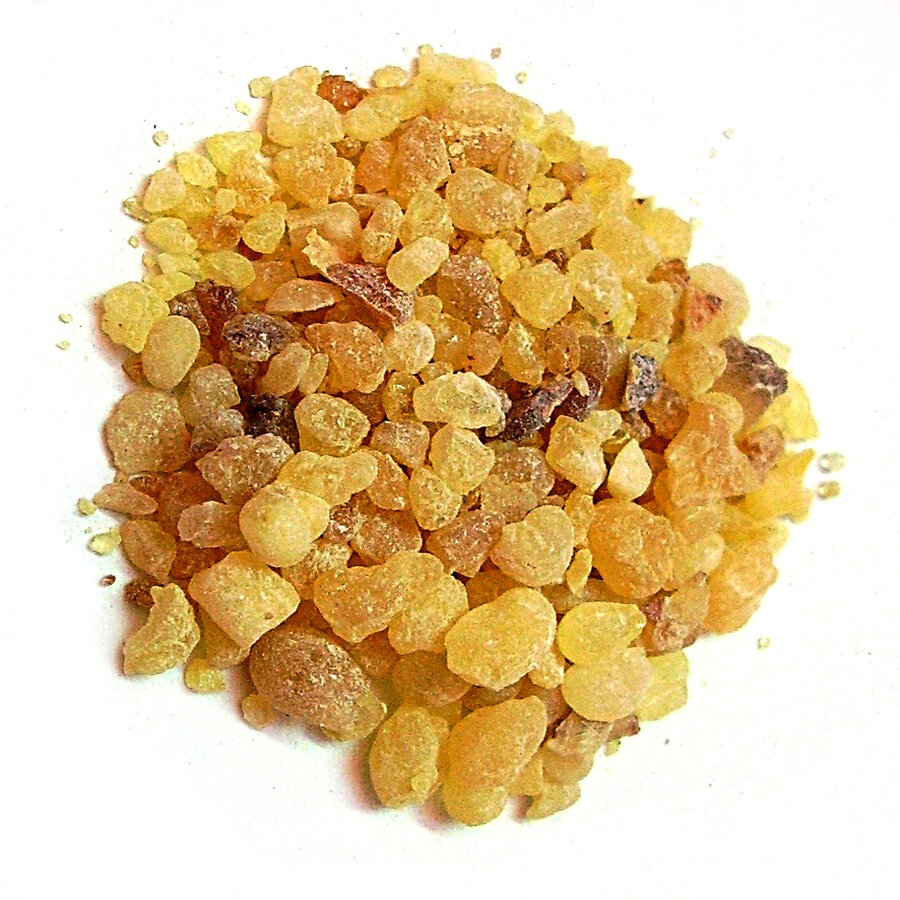
乳香为乳香树(Boswellia sacra及同属植物)分泌的树脂,主产于阿曼佐法尔地区、索马里及也门等地,经割裂树皮渗出乳白色汁液,凝结成半透明颗粒状树脂后采收。《本草纲目》载:「乳香,一名熏陆香……南番诸国及大食国에皆出之。」现代乳香仍主要依赖进口,以颗粒完整、色泽淡黄、香气浓郁者为上品。
Frankincense is the resin secreted by frankincense trees (Boswellia sacra and related species), primarily produced in the Dhofar region of Oman, Somalia, and Yemen. It is harvested by making incisions in the bark, allowing milky sap to ooze out and harden into translucent resin granules. The Compendium of Materia Medica notes: "Frankincense, also called xunlu resin... is produced by various southern foreign nations and Arab lands." Modern frankincense remains largely import-dependent, with premium grades identified by intact granules, pale yellow color, and strong fragrance.
乳香性味辛、苦,温,归心、肝、脾经。功能活血定痛、消肿生肌,主治跌打损伤、瘀血肿痛、痈疮肿毒、经闭痛经等证,为骨伤科及外科常用要药。因其性偏辛温走窜,孕妇及血虚无瘀者应慎用,脘腹胀满者不宜多服。
Frankincense is pungent and bitter in flavor, warm in nature, and enters the Heart, Liver, and Spleen meridians. It activates blood circulation, relieves pain, reduces swelling, and promotes tissue regeneration. It is indicated for traumatic injuries, painful blood stasis, abscesses and toxic swellings, and menstrual disorders with pain, making it a key remedy in orthopedics and surgery. Due to its pungent, warming, and dispersing nature, it should be used cautiously by pregnant women and those with blood deficiency without stasis, and those with abdominal distension should avoid excessive dosing.
乳香传统炮制多采用「醋炙法」:将净乳香置锅中,加米醋文火翻炒至表面微融、香气透出,取出晾凉后研碎备用,此法可矫正其辛烈之气并增强活血功效。因乳香质地黏软,研粉时常加入少量滑石粉或糯米粉作为分散剂,防止研磨过程中黏结成块,影响入药均匀度。
The traditional processing method for frankincense typically involves vinegar-frying: the cleaned resin is placed in a pan with rice vinegar and gently stir-fried over low heat until the surface slightly softens and its aroma is released, then cooled and ground for use—a process that tempers its pungent intensity while enhancing its blood-activating effect. As frankincense has a sticky, soft texture, a small amount of talc powder or glutinous rice flour is often added as a dispersing agent during grinding to prevent clumping and ensure uniform distribution in formulations.
乳香性偏辛温走窜,孕妇忌用,血虚无瘀、脘腹胀满及胃溃疡患者应慎用或减量使用。部分人群外用可能出现皮肤过敏反应,首次使用建议先小面积测试,内服则应在中医师指导下确定剂量,不宜自行长期大量服用。
Being pungent, warming, and dispersing in nature, frankincense is contraindicated for pregnant women and should be used cautiously or in reduced dosage by those with blood deficiency without stasis, abdominal distension, or peptic ulcers. Topical application may cause allergic skin reactions in some individuals; a small patch test is recommended before first use. Internal use should be guided by a qualified TCM practitioner regarding dosage, and it should not be self-administered in large amounts over extended periods.