没药
Mòyào · 别名末药
Moyao · Myrrh
散瘀止痛 · 消肿生肌 Disperses Stasis & Relieves Pain · Reduces Swelling & Heals Wounds没药与乳香同产于阿拉伯半岛及东非地区,二者常伴生并作为古代长途贸易的重要商品共同传入中国及欧洲。没药在古埃及文明中占有特殊地位,是制作木乃伊防腐香料的核心原料之一,古埃及人相信没药具有防止尸体腐败、保存灵魂的神秘力量。传入中国后,医家发现其散瘀止痛之效与乳香相似而略偏苦寒,遂将二者配伍使用,形成「乳没相须」的经典用药传统,广泛用于骨伤科及外科疮疡的治疗。
Myrrh shares its origin with frankincense in the Arabian Peninsula and East Africa, and the two resins were often traded together as important commodities along ancient long-distance trade routes into both China and Europe. Myrrh held special significance in ancient Egyptian civilization, serving as a core ingredient in mummification embalming spices—ancient Egyptians believed it possessed mystical power to prevent bodily decay and preserve the soul. After reaching China, physicians found its stasis-dispersing, pain-relieving effect similar to frankincense but slightly more bitter and cooling, leading to their combined use in the classic "Ruxiang-Moyao mutual reinforcement" tradition, widely applied in orthopedics and surgical treatment of sores and abscesses.
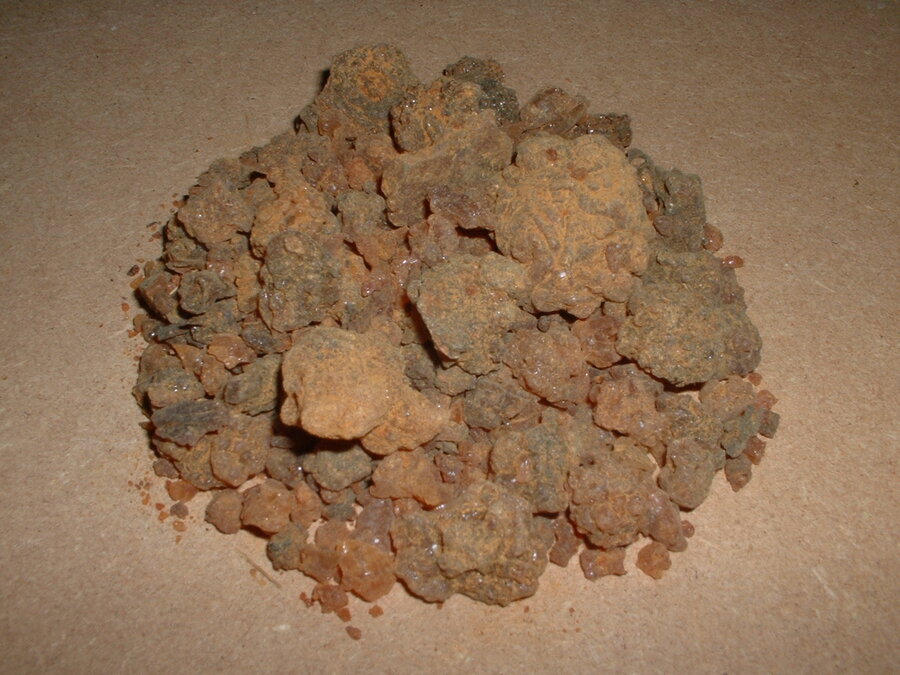
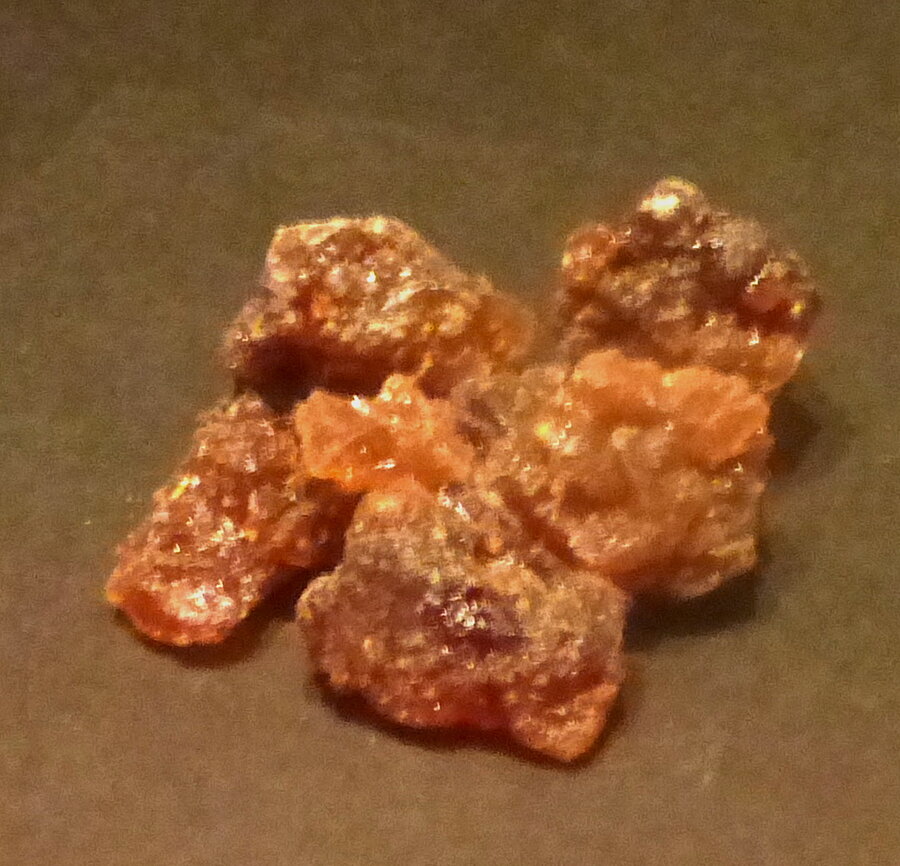
没药为没药树(Commiphora myrrha及同属植物)分泌的树脂,主产于索马里、埃塞俄比亚及阿拉伯半岛南部干旱地区。《本草纲目》载:「没药,生波斯国及一名末药……其块或大或小,黑色,似安息香。」采收方式与乳香类似,通过割裂树皮取其渗出树脂,经风干凝固后即可入药,以质地坚实、断面油润、气味浓郁者为佳品。
Myrrh is the resin secreted by myrrh trees (Commiphora myrrha and related species), primarily produced in the arid regions of Somalia, Ethiopia, and the southern Arabian Peninsula. The Compendium of Materia Medica records: "Myrrh grows in Persia, also called mo yao... its lumps vary in size, black in color, resembling benzoin." Its harvesting method resembles that of frankincense, obtained by incising the bark to collect the oozing resin, which is then air-dried and hardened before medicinal use, with premium grades identified by firm texture, oily cross-section, and strong aroma.
没药性味辛、苦,平,归心、肝、脾经。功能散瘀止痛、消肿生肌,主治跌打损伤、瘀血肿痛、癥瘕积聚、疮疡溃烂久不愈合等证,常与乳香相须为用以增强疗效。因其活血之性较强,孕妇忌用,血虚无瘀及胃肠虚弱者应慎服。
Myrrh is pungent and bitter in flavor, neutral in nature, and enters the Heart, Liver, and Spleen meridians. It disperses blood stasis, relieves pain, reduces swelling, and promotes tissue regeneration. It is indicated for traumatic injuries, painful blood stasis, abdominal masses, and chronic non-healing ulcerated sores, often paired with frankincense to enhance therapeutic effect. Due to its strong blood-activating property, it is contraindicated for pregnant women, and should be used cautiously by those with blood deficiency without stasis or weak gastrointestinal function.
没药传统炮制与乳香相似,多采用「醋炙法」:将净没药置锅中以文火加醋翻炒至表面微融、苦烈之气略减,取出晾凉研碎备用。因没药质地较乳香更为坚硬干燥,炮制前常需先以适量清水喷润软化,再进行捣碎及醋炙处理,以确保炮制均匀、便于配方使用。
The traditional processing of myrrh resembles that of frankincense, typically using the vinegar-frying method: the cleaned resin is stir-fried over low heat with vinegar until the surface slightly softens and its bitter intensity is somewhat reduced, then cooled and ground for use. As myrrh tends to be harder and drier than frankincense, it is often first moistened with a small amount of water to soften it before crushing and vinegar-frying, ensuring even processing and ease of use in formulations.
没药性偏辛散,孕妇忌用,血虚无瘀、胃肠功能虚弱及胃溃疡患者应慎用或减量使用。没药气味浓烈苦涩,部分患者内服后可能出现胃部不适,建议餐后服用或遵医嘱配伍其他药材以减轻刺激,不宜长期自行大量服用。
Being pungent and dispersing in nature, myrrh is contraindicated for pregnant women and should be used cautiously or in reduced dosage by those with blood deficiency without stasis, weak gastrointestinal function, or peptic ulcers. Its strong, bitter aroma may cause stomach discomfort in some patients when taken internally; taking it after meals or combining it with other herbs under medical guidance is recommended to reduce irritation, and it should not be self-administered in large amounts over extended periods.