木耳
Mù'ěr · 别名黑木耳、云耳
Mu'er · Black Wood Ear Fungus
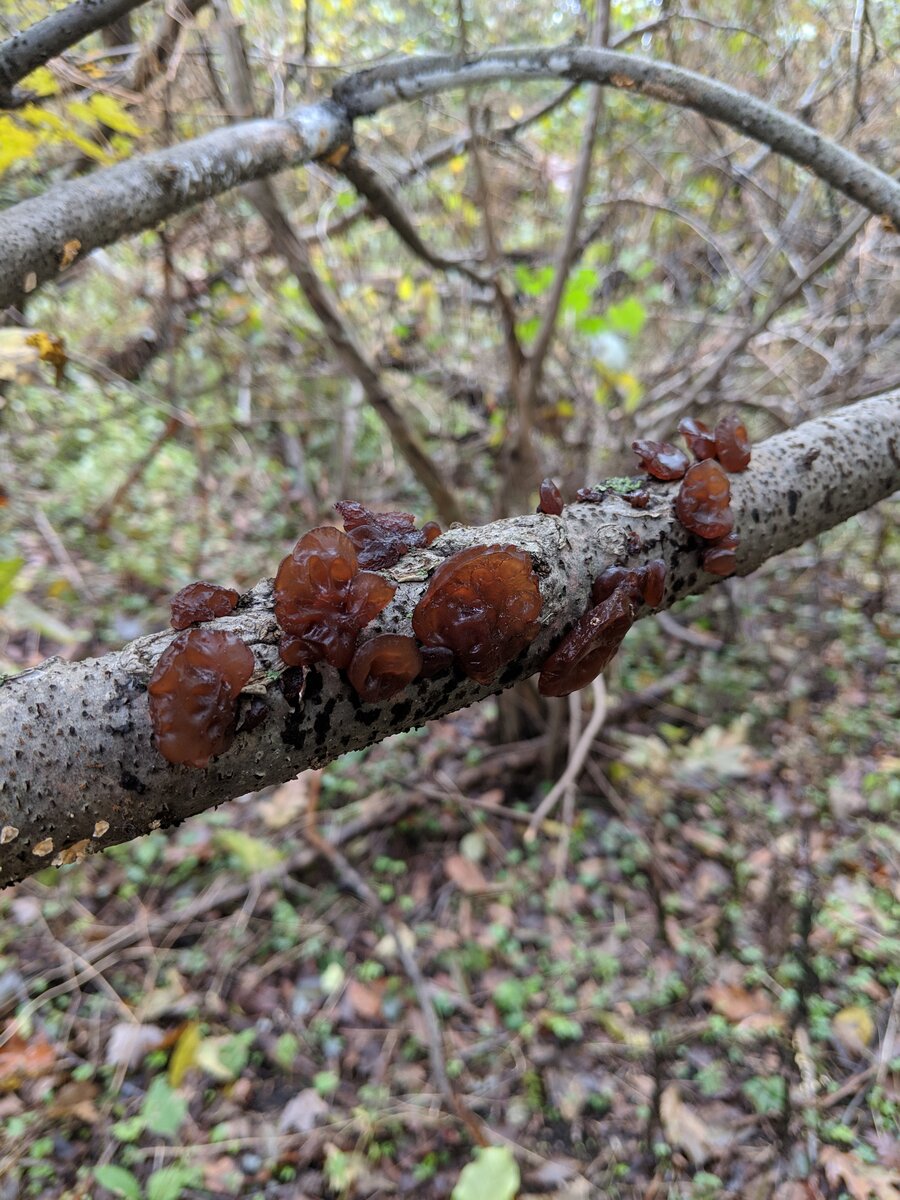
凉血止血 · 润燥通络 Cools Blood & Stops Bleeding · Moistens Dryness木耳因形似人耳、多生于枯木朽枝之上而得名,是最早被人类采食的野生菌类之一。古人观察到木耳在潮湿阴暗处快速生长、朝生暮落,认为其得阴湿之气而成,兼具食用与药用双重价值。历代本草多将其与「芝栭」类真菌并列,视为「山珍」之属,民间亦有「以耳补耳」的朴素养生观念,虽无科学依据,却反映了古人对形态相似性的联想式用药思维。
Wood ear fungus is named for its ear-like shape and its habit of growing on decaying wood and rotten branches, making it one of the earliest wild fungi foraged by humans. Ancient observers noted its rapid growth in damp, shaded conditions—appearing swiftly and fading just as fast—and believed it embodied concentrated yin-dampness qi, valued for both culinary and medicinal purposes. Historical materia medica texts classified it alongside "zhi" and "er" category fungi as a treasured mountain delicacy. Folk wisdom held the simple belief that "ear-shaped things nourish the ear," a notion without scientific basis but reflective of the associative, form-based reasoning common in ancient herbal medicine.
木耳主产于黑龙江、吉林、甘肃、陕西等地,其中黑龙江东宁及甘肃康县所产黑木耳素有盛名,肉质厚实、胶质丰富。《本草纲目》载:「木耳各木皆生,其良毒亦各随木性……煮浆粥,酱色黑,气如朽木者不可用。」现代木耳栽培已实现规模化椴木或菌棒培育,产量与品质均较野生采集更为稳定。
Wood ear fungus is primarily produced in Heilongjiang, Jilin, Gansu, and Shaanxi provinces, with black wood ear from Dongning in Heilongjiang and Kang County in Gansu particularly renowned for their thick, gelatinous texture. The Compendium of Materia Medica notes: "Wood ear grows on various trees, and its beneficial or toxic properties vary according to the tree species... if it turns the boiled porridge dark and smells of rotten wood, it should not be used." Modern cultivation now relies on large-scale log or substrate-bag farming, yielding more consistent quality and output than wild foraging.
木耳性味甘,平,归肺、脾、大肠经。功能凉血止血、润肺益胃、活血通络,主治咯血、便血、崩漏下血等出血证,以及肺燥咳嗽、气虚乏力等症。因其质滑利肠,脾胃虚寒、大便溏泄者应适量食用,不宜过量。
Wood ear fungus is sweet in flavor, neutral in nature, and enters the Lung, Spleen, and Large Intestine meridians. It cools the blood and stops bleeding, moistens the lungs and benefits the stomach, and invigorates blood circulation. It is indicated for bleeding disorders such as hemoptysis, blood in stool, and abnormal uterine bleeding, as well as dry cough from lung dryness and fatigue from qi deficiency. As it has a slippery, laxative quality, those with spleen-stomach cold deficiency or loose stools should consume it in moderation rather than excess.
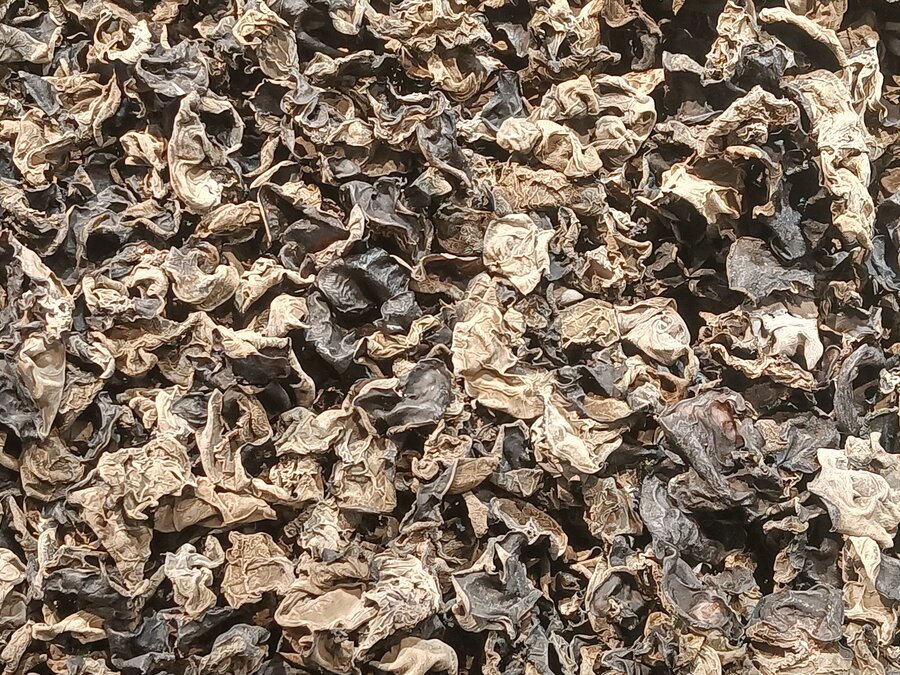
木耳入药或食用前需经清水泡发,去除杂质及蒂部硬结后方可使用。传统炮制多为「晒干贮存」法:鲜木耳采收后及时摊晒或烘干,使其含水量降至安全范围以便长期保存,入药时再以温水泡发,捣碎或切丝入煎剂或食疗方中,亦可研末冲服,取其润肺止血之效。
Before medicinal or culinary use, wood ear must be soaked in water to remove impurities and the hardened base. The traditional processing method is sun-drying for storage: freshly harvested wood ear is promptly spread out to dry or oven-dried, reducing moisture content to a safe level for long-term preservation. For medicinal use, it is rehydrated in warm water, then chopped or shredded for decoctions or dietary therapy, or ground into powder for oral infusion, harnessing its lung-moistening and hemostatic properties.
木耳性质滑利,脾胃虚寒、大便溏泄者应少食,孕妇及出血性疾病患者食用前宜咨询医师。新鲜木耳含有卟啉类光敏物质,未经晒干处理直接食用可能引发皮肤过敏反应,务必选用充分晒干的干制木耳,且需彻底泡发煮熟后方可食用。
Due to its slippery quality, wood ear should be consumed sparingly by those with spleen-stomach cold deficiency or loose stools, and pregnant women or those with bleeding disorders should consult a physician before consumption. Fresh wood ear contains porphyrin-like photosensitizing compounds; consuming it without proper sun-drying may trigger skin photosensitivity reactions. It is essential to use fully dried wood ear, thoroughly rehydrated and cooked before consumption.