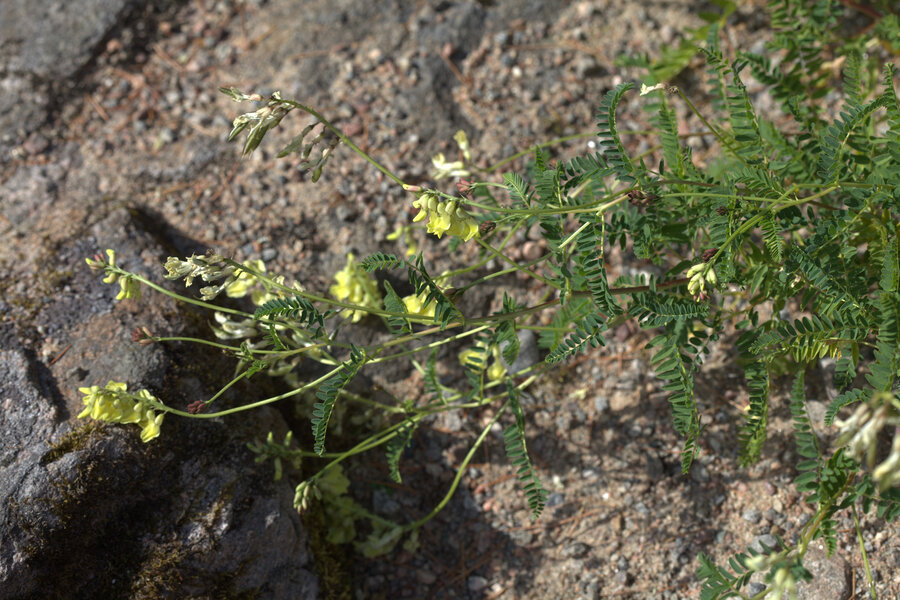
黄芪
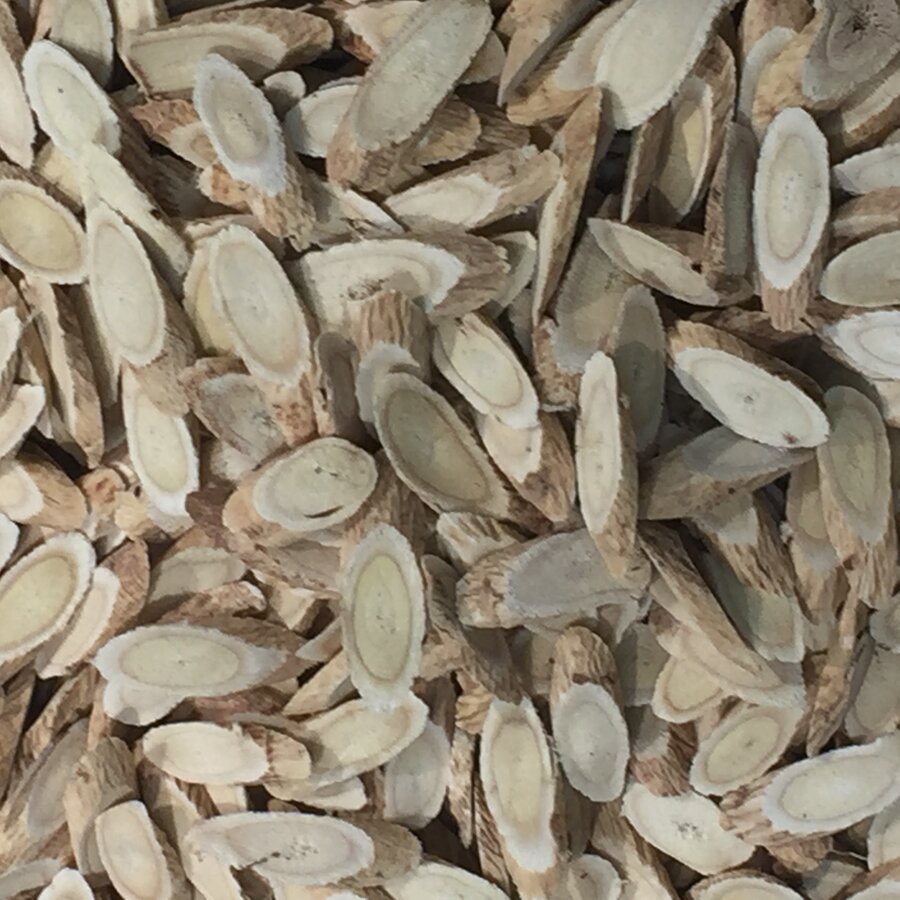
黄芪干燥根片标本
Dried Astragalus root slices specimen
草部 · 补气圣药 Plant Drug · Premier Qi Tonic民间素有"黄芪配人参,补气之最"的说法,黄芪常被称为"补气圣药",与人参并列为中医补气两大代表药材,但因其性味平和、价格相对低廉,历代应用范围更广,民间也有"小人参"之俗称。金代李东垞创制的"当归补血汤",即以大剂量黄芪配伍少量当归,成为后世"甘温除热"治法的经典范例。
Folk wisdom holds that "pairing huangqi with ginseng yields the greatest qi tonification," and huangqi is often called the "sacred qi-tonifying herb," ranked alongside ginseng as one of the two representative qi tonics in Chinese medicine. Because of its mild nature and relatively low cost, it has historically enjoyed far broader use, earning the folk nickname "little ginseng." The Jin-dynasty physician Li Dongyuan's Danggui Buxue Tang (Tangkuei Decoction to Tonify the Blood), which pairs a large dose of huangqi with a small amount of danggui, became a classic exemplar of the "sweet-warming to clear heat" treatment method.
黄芪主产于山西浑源、内蒙古武川、甘肃陇西等地,其中山西浑源所产黄芪根条肥大、粉性足、甜味浓,历代称为"绵黄芪",是公认的道地产区;甘肃、内蒙古产区则以种植规模大、产量高著称,是现代中药材市场的主要供应地。
Huangqi is mainly cultivated in Hunyuan (Shanxi), Wuchuan (Inner Mongolia), and Longxi (Gansu). The roots from Hunyuan, Shanxi, are notably thick, starchy, and intensely sweet, historically dubbed "silk-floss huangqi" (mianhuangqi) and recognized as the premier origin, while the Gansu and Inner Mongolia growing regions are known for large-scale cultivation and high yield, serving as the primary modern supply source.
《神农本草经》将黄芪列为上品,味甘,性微温,归肺、脾经,传统理论认为其能补气升阳、固表止汗、利水消肿、生津养血、行滞通痹,是治疗气虚乏力、表虚自汗、水肿尿少等证的常用要药。
The Shennong Bencao Jing classifies huangqi as a superior-grade herb: sweet in flavor, slightly warm in nature, associated with the Lung and Spleen meridians. Traditional theory credits it with tonifying qi and raising yang, securing the exterior to stop sweating, promoting urination to reduce edema, generating fluids and nourishing blood, and unblocking stagnation — a staple remedy for qi deficiency with fatigue, exterior deficiency with spontaneous sweating, and edema with scanty urination.
传统炮制分为生黄芪与蜜炙黄芪两种:生黄芪多用于利水消肿、固表止汗;蜜炙黄芪则以蜂蜜拌炒,增强其补中益气的功效,多用于气虚乏力、脏器下垂等证,二者应用侧重各有不同,需辨证选用。
Traditional processing yields two forms: raw huangqi and honey-fried huangqi. Raw huangqi is more often used for promoting urination and reducing edema, or securing the exterior to stop sweating, while honey-fried huangqi — stir-fried with honey — enhances its qi-tonifying and middle-strengthening effect, more commonly used for qi deficiency with fatigue or organ prolapse; the two forms are selected according to differential diagnosis.
黄芪性温而力偏补,表实邪盛、气滞湿阻、食积停滞、痈疽初起或溃后热毒尚盛、阴虚阳亢等证均不宜单用大量黄芪,否则恐助邪、生热,临床应在辨证基础上配伍使用,不宜盲目大量长期服用。
Because huangqi is warming and strongly tonifying, it is unsuitable as a standalone high-dose remedy for conditions marked by exterior excess with pathogens still present, qi stagnation with dampness obstruction, food stagnation, early-stage or still-toxic abscesses, or yin deficiency with yang hyperactivity — in such cases it risks aggravating pathogens or generating heat. Clinically it should be combined with other herbs based on differential diagnosis, not taken alone in large doses over extended periods without guidance.