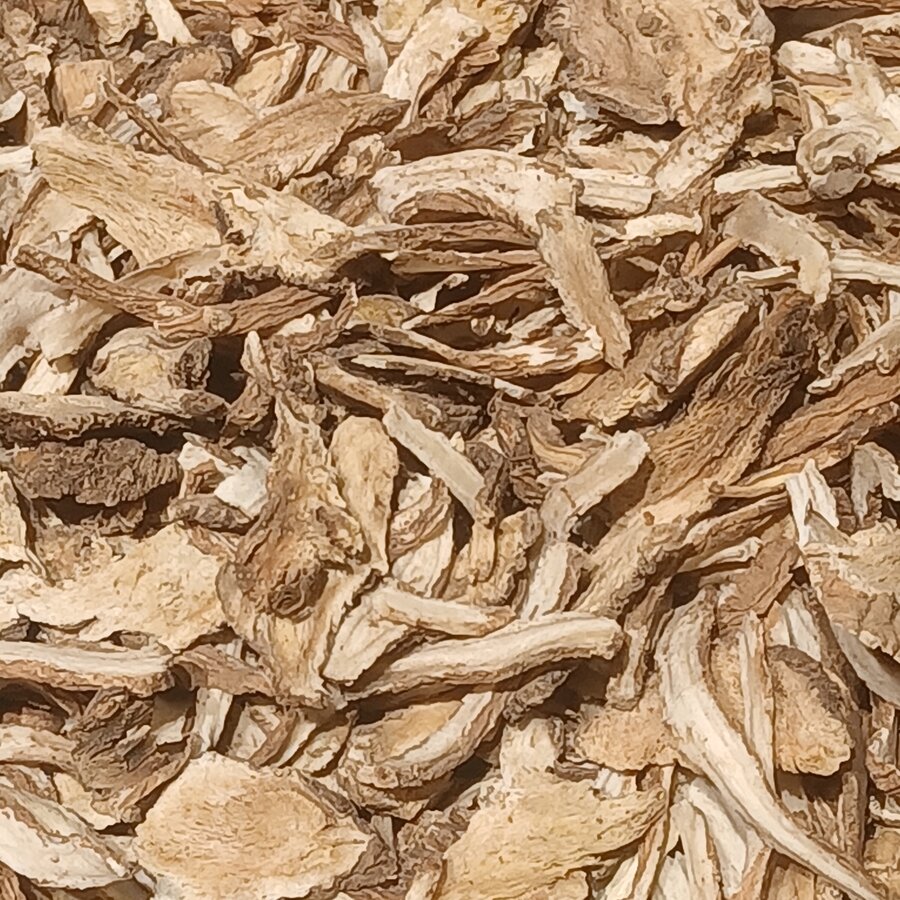
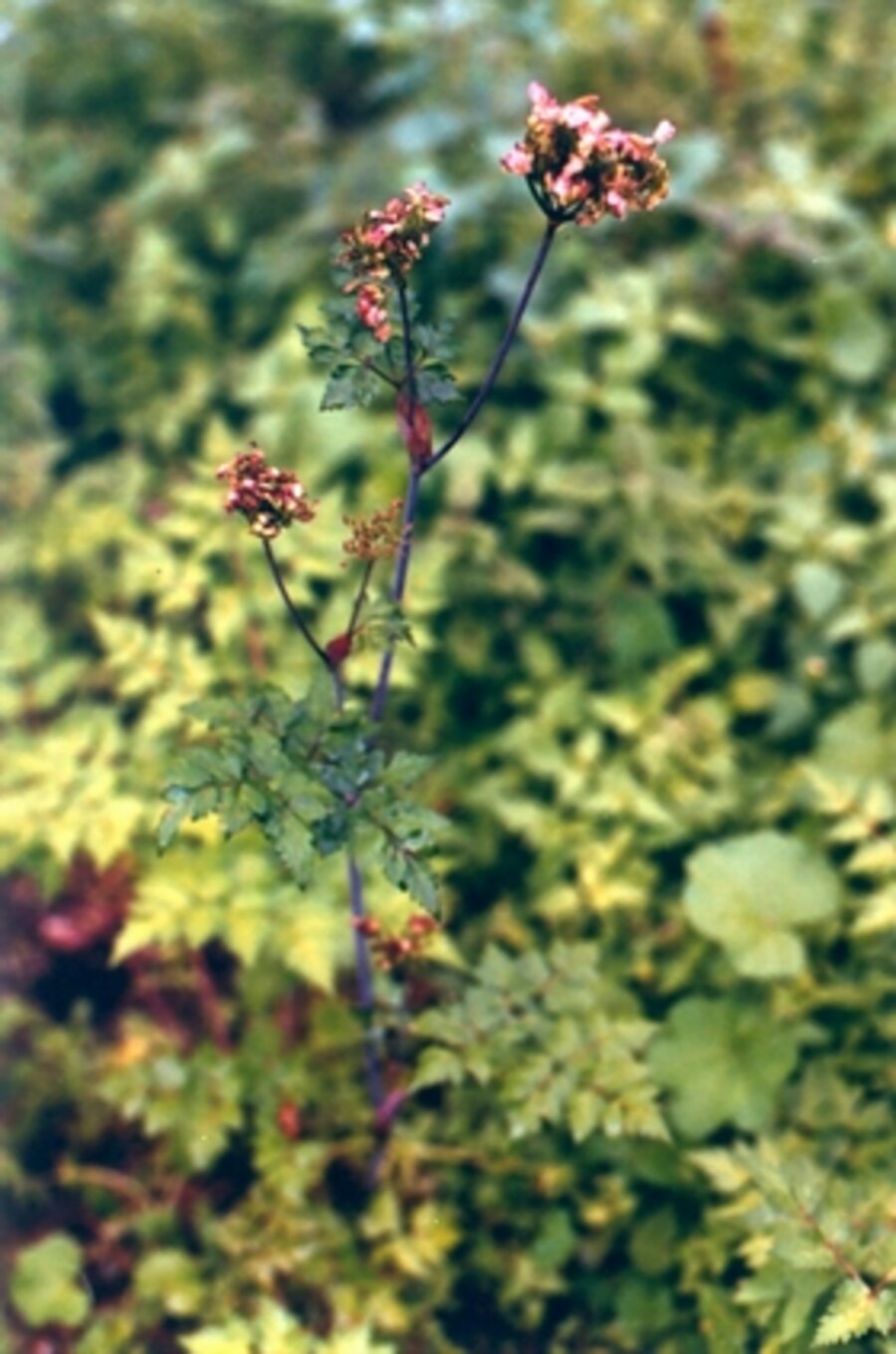
当归
Dāngguī · 别名秦归、云归
Danggui (Angelica sinensis) · The "Female Ginseng"
十方九归 · 妇科第一要药 "Nine in Ten Formulas" — The Foremost Gynecological Herb民间素有"十方九归"之说,形容当归在妇科方剂中出现频率之高,几乎是调经养血类处方的必备之选。关于"当归"这一名称的由来,历代说法不一:有说因其能使气血调畅、令人"恢复健康、应当归来";也有民间传说与妇人盼夫归家的思念之情相关联,二者都属后世附会的文化解读,而非严谨的命名考据,但都从侧面反映出这味药材与"归来""团圆"等美好意象的紧密关联。
Folk wisdom holds "nine in ten formulas contain danggui," reflecting its near-ubiquitous presence in gynecological prescriptions for regulating menstruation and nourishing blood. The origin of the name "danggui" (literally "should return") has several explanations: some say it refers to restoring healthy circulation so the body "should return" to balance; folk tales also link it to a wife's longing for her husband's return. Both are later cultural elaborations rather than rigorous etymology, but they reflect the herb's association with images of "return" and "reunion."
当归历以甘肃岷县所产为道地,岷县地处高寒山区,气候独特,所产当归根条肥壮、香气浓郁,古称"岷归"或"秦归",素有"中国当归之乡"之称,至今仍是全国最重要的当归产区。
Danggui has traditionally been sourced from Min County (Minxian), Gansu Province — a high-altitude region with a distinctive climate that produces roots of exceptional size and fragrance, historically called "Min danggui" or "Qin danggui." Known as "China's Hometown of Danggui," it remains the country's most important production area today.
《本草纲目》记载当归"味甘辛,温",归肝、心、脾经,传统理论认为其能补血活血、调经止痛、润肠通便,为妇科调经、产后诸虚的常用要药,与人参、黄芪等同属补益气血类的经典搭配。
The Bencao Gangmu describes danggui as "sweet and pungent in flavor, warm in nature," associated with the Liver, Heart, and Spleen meridians. Traditional theory credits it with nourishing and moving blood, regulating menstruation, relieving pain, and moistening the intestines — a classic gynecological herb often paired with ginseng and astragalus.
传统认为当归全根可依部位分段入药:归头偏于止血,归身偏于补血,归尾偏于破血活血,整根则兼而有之。此外亦有以黄酒拌炒制成"酒当归",认为可增强其活血通经之效,是妇科方剂中常见的炮制变化。
Traditionally, different parts of the danggui root were used for different purposes: the head (guitou) for stopping bleeding, the body (guishen) for nourishing blood, and the tail (guiwei) for breaking stasis and promoting circulation, while the whole root combines all three effects. It was also processed by stir-frying with rice wine ("wine danggui") to enhance its blood-moving action.
当归具有活血作用,传统医家提醒月经过多、有出血倾向者及孕妇应慎用;现代药理研究提示当归可能与抗凝血类药物存在相互作用,正在服用相关药物者应在医师指导下使用,不宜自行长期大量服用。
本页内容仅作本草文化与历史文献的呈现,不构成用药建议,具体现代安全性数据请查证 AMMKB 药材知识库。
Because of its blood-moving properties, traditional physicians caution against use by those with heavy menstrual bleeding, bleeding tendencies, or pregnancy. Modern pharmacological studies suggest danggui may interact with anticoagulant medications; those on such medication should use it only under medical guidance.
This page presents cultural and historical material only, not medical guidance — for current safety data, see the AMMKB Materia Medica Knowledge Base.