人参
Rénshēn · 别名黄参、棒槌
Ginseng (Rénshēn) · "Root of Man"
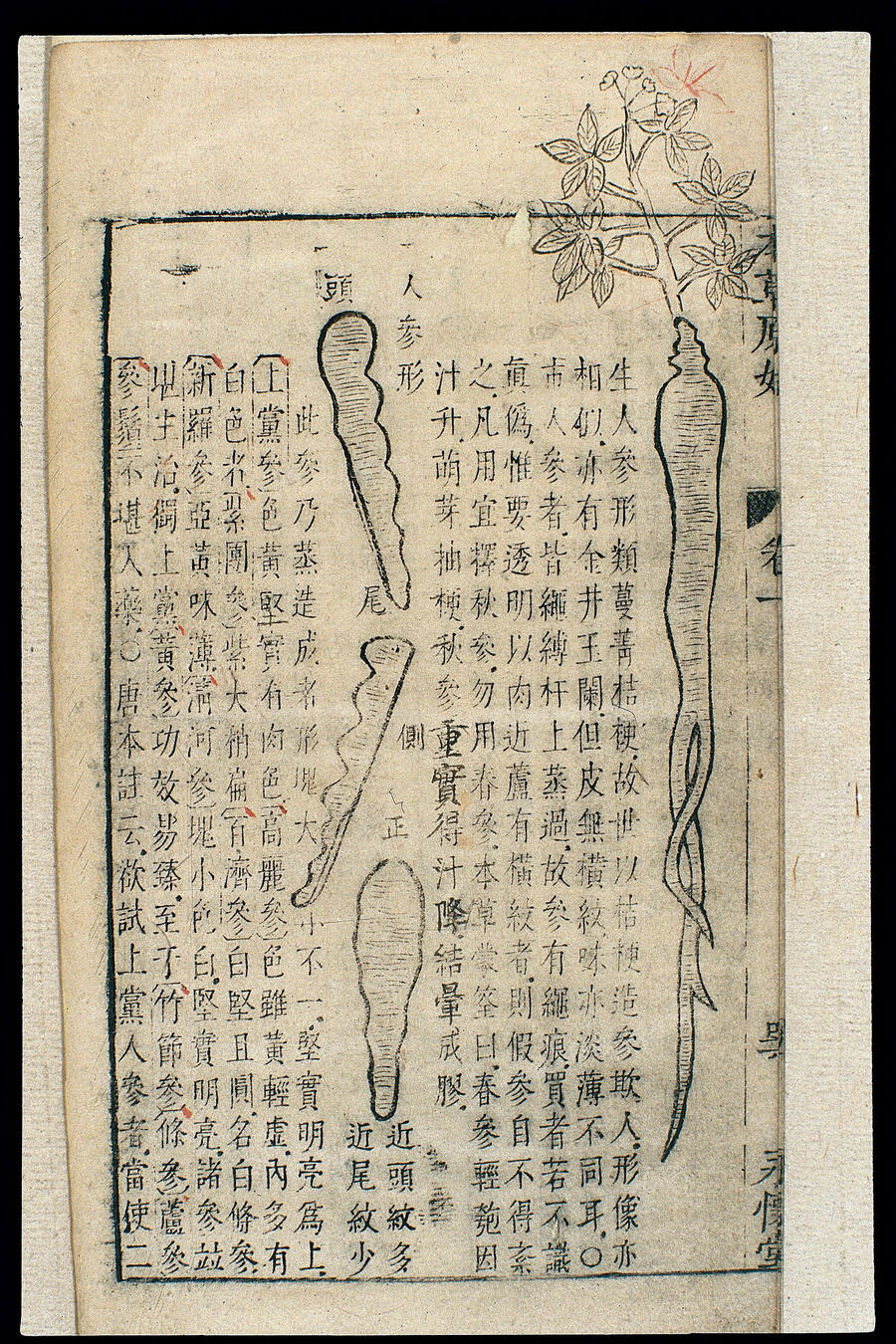
百草之王 · 民俗信仰与本草正典的交汇 The King of Herbs — Where Folk Ritual Meets Classical Pharmacology在长白山区,人参自古被称为"棒槌",采参人称"放山"。相传发现人参需先用系着古铜钱的红线将参茎拴住,称为"固宝",以防人参"成精遁走";随后小心翼翼地用木质或鹿骨"索拨棍"一点点剔净根部周围的泥土,唯恐伤及细如发丝的须根,因为完整的须根与年份纹路,正是人参药效与价值的关键所在。
李时珍在《本草纲目》中记载"人参生上党及辽东"——上党即今山西东南部,辽东即今东北一带,这条记载也让后世学者就"上党人参"究竟是人参还是党参展开长期争论。而在东北民间,人参与深山、命运纠缠的传说,共同塑造了它"百草之王"的文化地位,远超一味普通药材的意义。
In the Changbai Mountain region, ginseng has long been nicknamed "bangchui" (mallet), and digging for it was called "fangshan" (going to the mountain). Legend holds that upon finding a plant, the digger must first tie its stem with a red thread strung with an ancient copper coin — a ritual called "securing the treasure" — to prevent the root spirit from fleeing. The surrounding soil was then painstakingly cleared with a wooden or bone pick, so as not to damage the hair-thin rootlets, since their completeness and growth-ring patterns were essential to both efficacy and value.
Li Shizhen recorded in the Bencao Gangmu that ginseng "grows in Shangdang and Liaodong" — Shangdang corresponding to southeastern Shanxi, Liaodong to the northeast — a note that later sparked long scholarly debate over whether "Shangdang ginseng" referred to true ginseng or to Codonopsis. In northeastern folklore, ginseng became entangled with tales of deep mountains and fate, cementing its cultural status as the "King of Herbs."
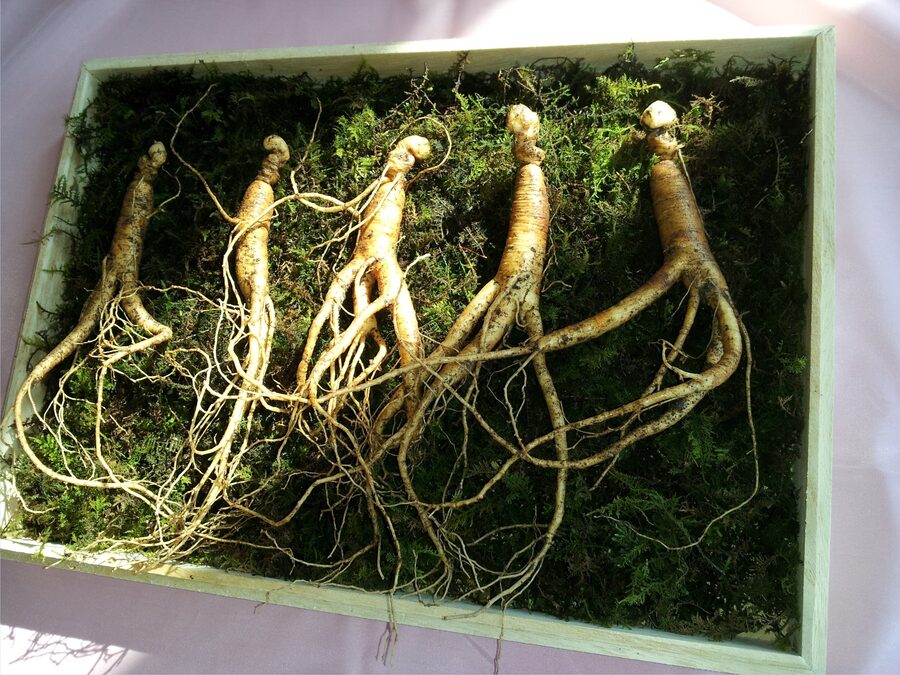
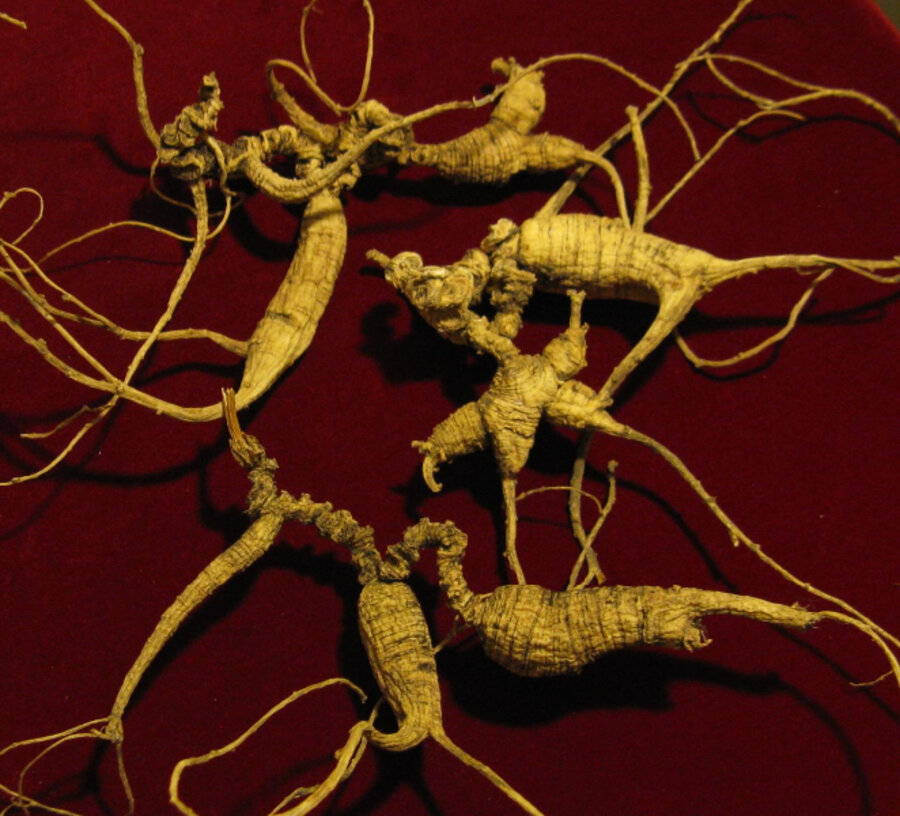
人参产地历有变迁:《本草纲目》记载"生上党及辽东",上党(今山西东南)之参在明代已近枯竭,辽东(今东北长白山区)逐渐成为道地产区,并延续至今,居"关东三宝"(人参、貂皮、鹿茸)之首。图中标本为北美同属植物美洲人参(Panax quinquefolius)老根,可清晰见其分叉如人形的根部形态,是"人参"命名由来的直观参照。
Ginseng's place of origin shifted over history: the Bencao Gangmu records it as growing "in Shangdang and Liaodong." By the Ming dynasty, Shangdang (southeastern Shanxi) stocks were nearly exhausted, and Liaodong (today's Changbai Mountain region) became the recognized premier source, a status it retains today as foremost among the "Three Treasures of the Northeast." The specimen shown is a mature root of American ginseng (Panax quinquefolius), a close botanical relative — its forked, human-like shape offers a direct reference for how the herb came to be named "renshen," literally "root of man."
《神农本草经》记载人参"味甘,微寒",后世本草多补充"微温"之说;归脾、肺、心经,传统理论认为其"大补元气",尤宜于气虚欲脱、久病虚劳之证,故有"补虚扶正第一要药"之称。
The Shennong Bencao Jing describes ginseng as "sweet in flavor, slightly cold," though later herbals often added a note of "slight warmth." It is associated with the Spleen, Lung, and Heart meridians, traditionally credited with "greatly replenishing primal qi" — considered especially suited to qi deficiency verging on collapse, earning it the epithet "foremost herb for tonifying deficiency."
传统炮制之法因产地与用途而异:鲜参晒制去皮者称"生晒参";经蒸制变红者称"红参",蒸制被认为可改变部分成分、使药性更为温补;亦有以糖渍者称"糖参"。不同炮制方式所得的"参性",在传统中医理论中被认为各有侧重,历代医家对此多有讨论。
Traditional processing varied by origin and use: fresh roots sun-dried and peeled were called "white ginseng"; those steamed until reddened were called "red ginseng," a process thought to yield a more warming tonic effect; roots preserved in sugar were termed "sugared ginseng." Different methods were traditionally believed to shift the herb's therapeutic emphasis.
人参虽被视为补益上品,但《本草纲目》及后世医家也强调"虚者宜之,实者忌之"——体质本已亢盛、患有实热证候者不宜滥用,误服反可致燥热上火、失眠心悸等不适。
现代药理研究证实人参含多种人参皂苷等活性成分,具有一定的免疫调节与抗疲劳作用,但也可能与抗凝血药物、部分降压药及糖尿病用药产生相互作用;高血压患者、正在服药人群及儿童应在医师指导下使用。本页内容仅作本草文化与历史文献的呈现,不构成用药建议——具体的现代药理评估与安全性数据,请查证 AMMKB 药材知识库。
Although regarded as a premier tonic, the Bencao Gangmu and later physicians stressed that ginseng "suits those with deficiency, but is contraindicated for those with excess" — individuals with heat-excess conditions should not use it indiscriminately, as this could cause dryness, insomnia, or palpitations.
Modern pharmacological research confirms ginseng contains active compounds including ginsenosides, with certain immune-modulating and anti-fatigue effects — but it may interact with anticoagulants, antihypertensives, and diabetes medications. Those with hypertension, individuals on medication, and children should use it only under medical guidance. This page presents cultural and historical material only, not medical guidance — for current data, see the AMMKB Materia Medica Knowledge Base.