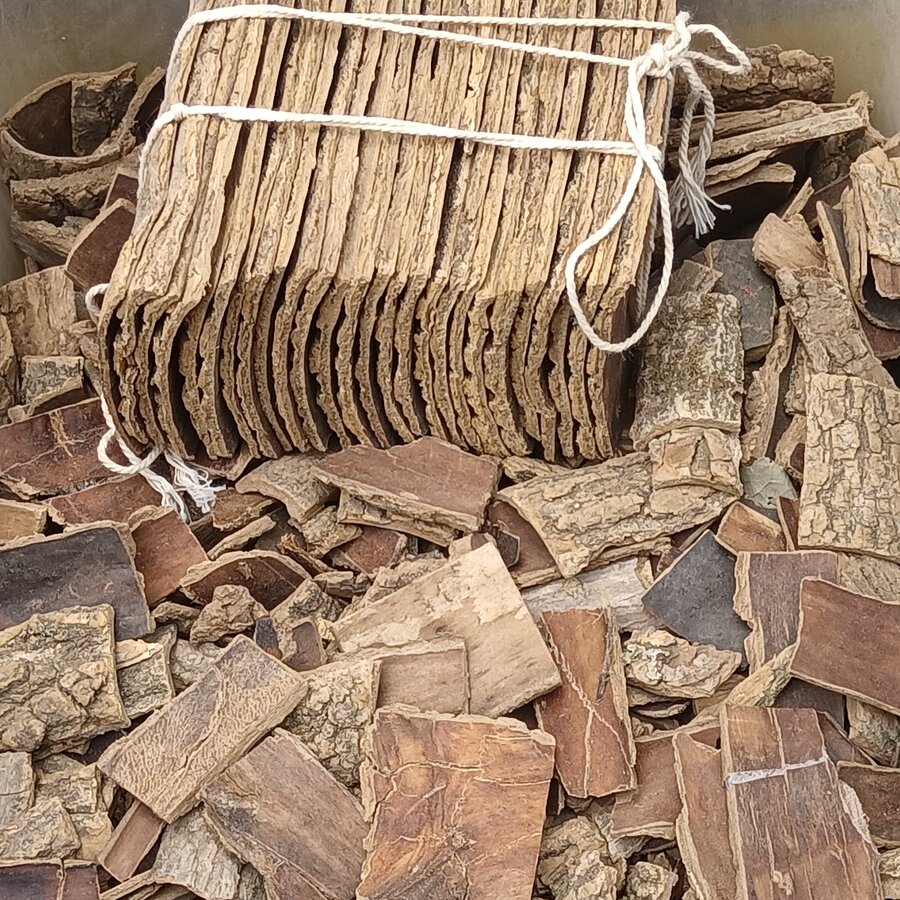
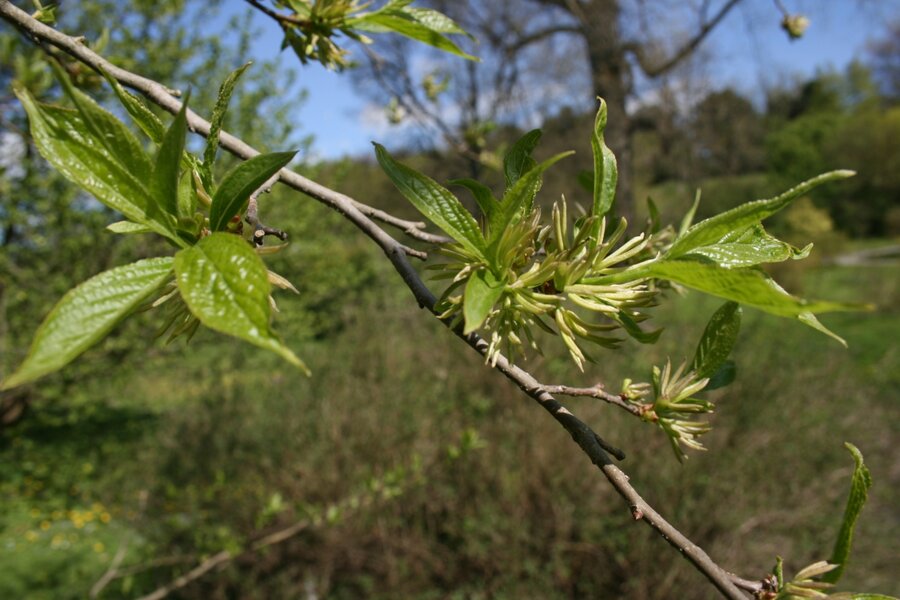
杜仲
Dùzhòng · 别名思仙、木绵
Duzhong (Eucommia Bark) · Sinew Bound in Bark
植物活化石 · 筋骨相连之象 "Living Fossil" — The Image of Sinew Bound to Bone杜仲树皮折断后可见细密的白色橡胶丝将断口两端牵连不断,古人以此‘筋骨相连’之象,引申出其补肝肾、强筋骨的功效联想。相传因一位名为‘杜仲’的道士服食其皮治愈了自身的腰腿痼疾而得名。杜仲为中国特有的单科单属珍稀植物,历经数千万年演化保存至今,被学界誉为‘植物活化石’。
When the bark of the duzhong tree is broken, fine white rubbery strands remain stretched between the two ends without snapping — an image of 'sinew and bone connected' that gave rise to its traditional association with strengthening the liver, kidneys, sinews, and bones. According to legend, the herb takes its name from a Daoist practitioner named Du Zhong, who reportedly cured his own chronic lower-back and leg ailments by consuming its bark. Duzhong is a botanically unique species, the sole member of its own family and genus native to China, earning it the nickname 'living fossil of the plant kingdom.'
主产于四川、贵州、陕西、湖北等地,其中四川、贵州所产产量最大、质量最优,习称‘川杜仲’。
Duzhong grows chiefly in Sichuan, Guizhou, Shaanxi, and Hubei. The bark from Sichuan and Guizhou, known as 'Chuan Duzhong,' is the most abundant and highest in quality.
味甘,性温,归肝、肾经。
Sweet in flavor and warm in nature, duzhong enters the Liver and Kidney channels.
生杜仲长于清热解毒;经盐水炙制的盐杜仲能引药入肾,显著增强其补肝肾、强筋骨的功效,是临床最常用的炮制品。
Raw duzhong is more suited to clearing heat and resolving toxicity. Salt-processed duzhong, prepared by stir-frying with brine, directs the herb's action into the kidneys and markedly enhances its ability to tonify the liver and kidneys and strengthen the sinews and bones.
阴虚火旺者应慎用;入药前须破坏其橡胶丝结构(切丝、炒制等),否则有效成分难以煎出。
本页内容仅作本草文化与历史文献的呈现,不构成用药建议,具体现代安全性数据请查证 AMMKB 药材知识库。
Duzhong should be used cautiously by those with yin deficiency and excess fire. Before use, its rubbery fibrous structure must be broken down through shredding or stir-frying, otherwise its active compounds are difficult to extract during decoction.
This page presents cultural and historical material only, not medical guidance — for current safety data, see the AMMKB Materia Medica Knowledge Base.