白术
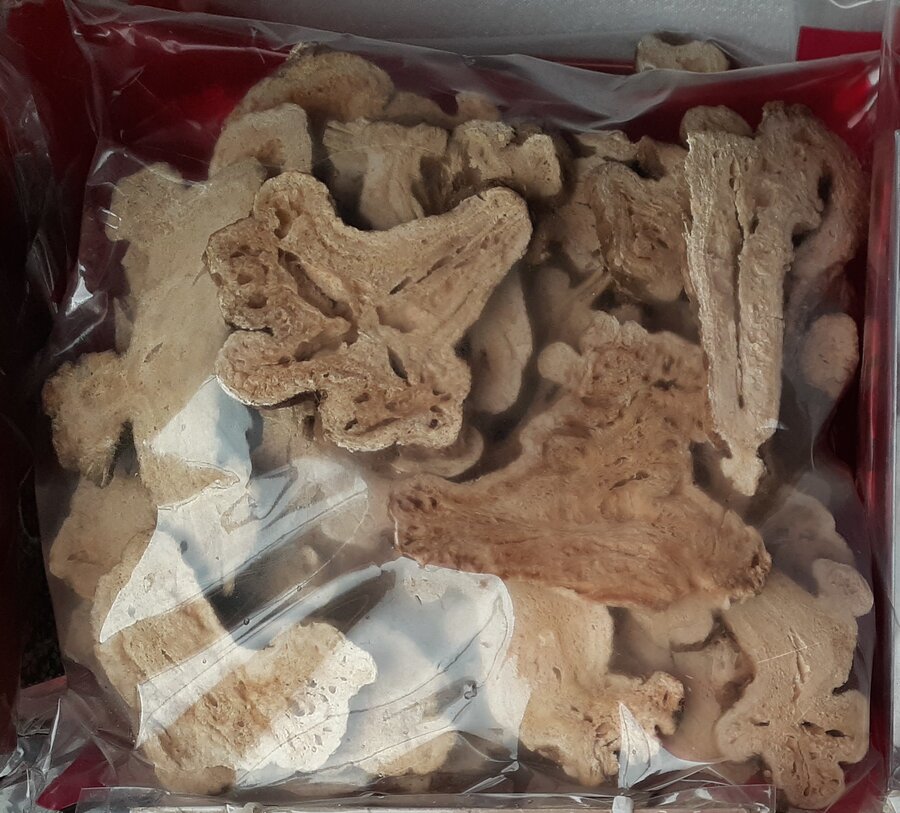
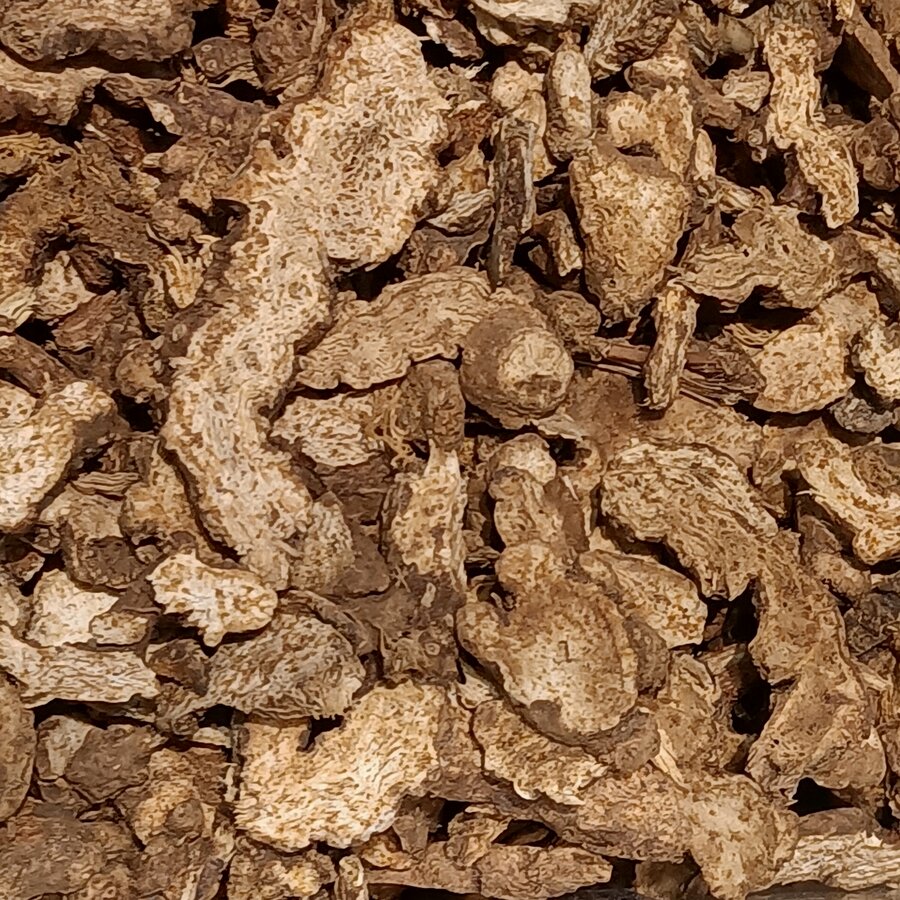
白术干燥根茎标本
Dried Atractylodes rhizome specimen
草部 · 脾脏要药 Plant Drug · Essential Spleen Tonic白术与人参、茯苓、甘草共同组成中医经典方剂"四君子汤",被视为健脾益气的基础配伍,历代医家称白术为"脾脏之要药"。民间也流传着"东垞术""於术"等地域性称谓,反映出不同产区药材品质的历史差异与市场认知。
Baizhu, together with ginseng, poria (fuling), and licorice (gancao), forms the classic formula Sijunzi Tang (Four Gentlemen Decoction), regarded as the foundational combination for strengthening the spleen and boosting qi; physicians throughout history have called baizhu the "essential herb of the spleen." Folk tradition also preserves regional names such as "Dongyuan zhu" and "Yuzhu," reflecting historical differences in perceived quality and market recognition across different growing regions.
白术道地产区历来推崇浙江於潜(今属临安),所产者古称"於术",以根块肥大、断面菊花心明显、香气浓郁著称;现今浙江磐安、湖南、江西等地也是重要产区,品质各有特色。
The historically recognized premier origin of baizhu is Yuqian (in present-day Lin'an, Zhejiang), where the product was traditionally called "Yuzhu" — known for its plump root, a distinctive chrysanthemum-pattern cross-section, and strong fragrance. Today, Pan'an in Zhejiang, along with Hunan and Jiangxi, are also important growing regions, each with its own distinguishing qualities.
白术味苦、甘,性温,归脾、胃经,传统理论认为其能健脾益气、燥湿利水、止汗安胎,是治疗脾胃虚弱、食少便溏、水肿痰饮及妇女妊娠期脾虚胎动不安等证的常用要药。
Baizhu is bitter and sweet in flavor, warm in nature, associated with the Spleen and Stomach meridians. Traditional theory credits it with strengthening the spleen and boosting qi, drying dampness and promoting urination, and stopping sweating while stabilizing pregnancy — a common remedy for spleen-stomach weakness, reduced appetite with loose stools, edema with phlegm-fluid retention, and fetal restlessness due to spleen deficiency during pregnancy.
白术炮制方法多样:生白术偏于燥湿利水;炒白术(麸炒)健脾止泻功效更强,为临床最常用形式;焦白术则收涩止泻力更专,多用于脾虚久泻不止之证,三者应用各有侧重。
Baizhu processing takes several forms: raw baizhu leans toward drying dampness and promoting urination; bran-fried baizhu has a stronger spleen-strengthening and diarrhea-stopping effect, making it the most commonly used clinical form; and scorched baizhu has an even more focused astringent, diarrhea-stopping action, more often used for chronic diarrhea due to spleen deficiency — each form suited to a different emphasis of treatment.
白术性偏温燥,阴虚燥渴、内热津伤及气滞胸腹胀满者应慎用,以免助燥伤阴或加重气滞;临床应结合具体证型辨证选用,不宜自行长期大量服用。
Because baizhu's nature leans warm and drying, it should be used with caution in cases of yin deficiency with dry thirst, internal heat with fluid damage, or qi stagnation with chest-abdominal distension, to avoid aggravating dryness, damaging yin, or worsening stagnation. Clinical use should be guided by differential diagnosis rather than self-administered in large doses over extended periods.