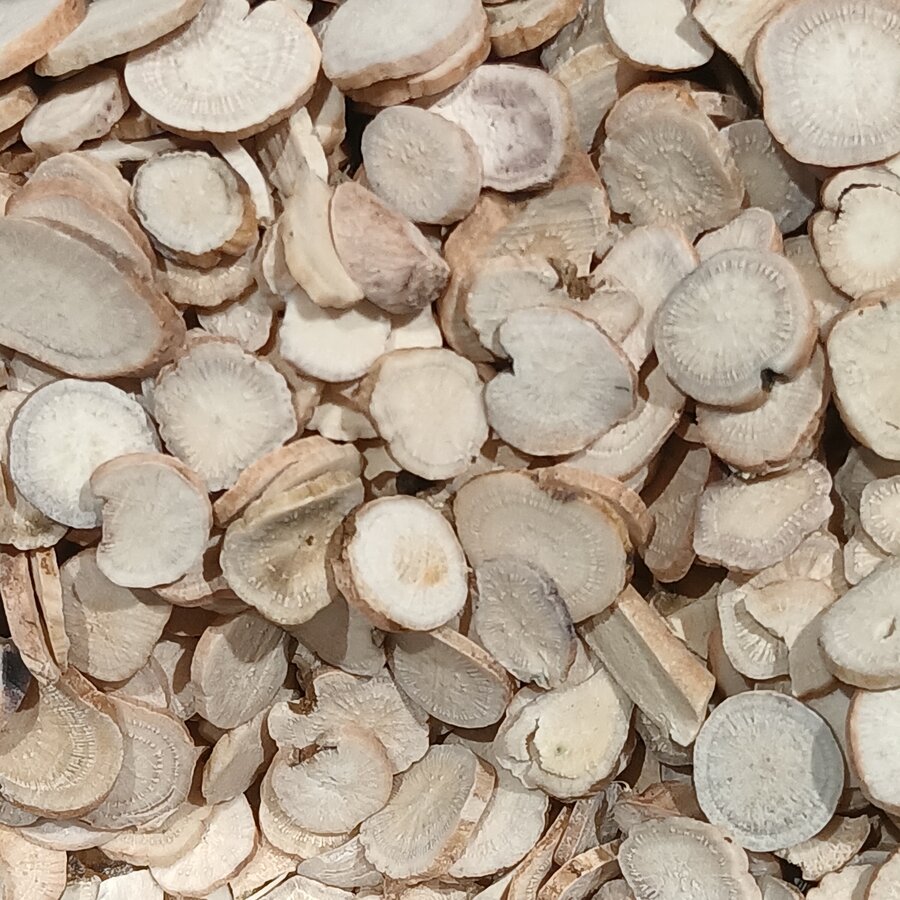
白芍
Báisháo · 别名芍药、白芍药
Baishao (White Peony Root) · The Grand Blood-Nourishing Herb
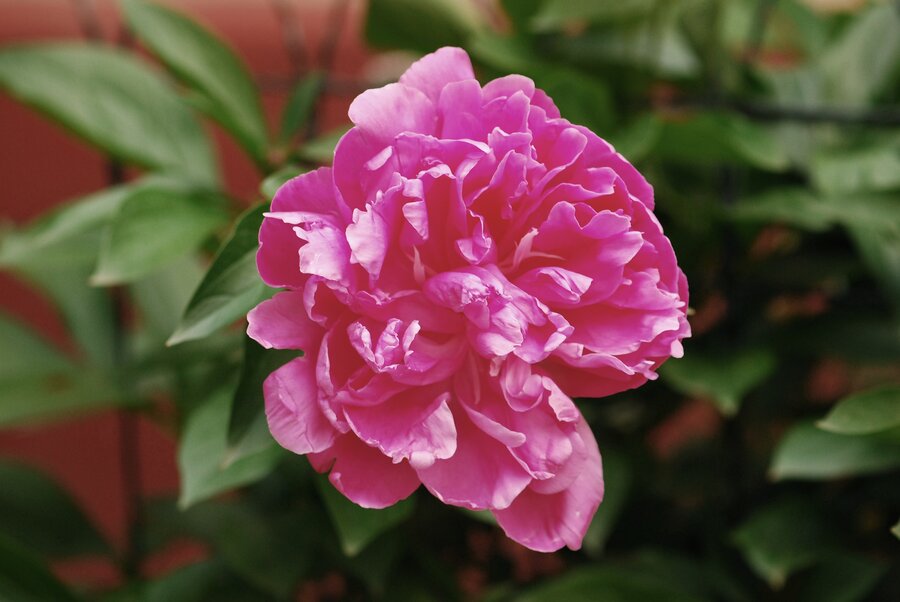
四物汤要药 · 妇科调经圣品 Key Herb in the Four-Substance Decoction — Menstrual Regulation白芍为四物汤(当归、白芍、川芎、熟地黄)中养血柔肝之要药,自古被视为妇科调经的圣药。芍药与牡丹并称‘花中二绝’,古人常以芍药寄托离别相思之情,《诗经·郑风》中‘赠之以芍药’即为定情之礫。药用白芍取自芍药之根,经沸水煮制、去皮晒干而成,与观赏牡丹为同科而异种的植物。
Baishao (white peony root) is the principal blood-nourishing, liver-soothing herb in the Four-Substance Decoction (with danggui, chuanxiong, and shudihuang), long revered as a sacred remedy for regulating women's menstrual health. The peony flower, paired with the tree peony as one of the 'two wonders among flowers,' was traditionally exchanged as a token of parting affection — the Book of Songs records the giving of peony blossoms as a gesture of romantic farewell. The medicinal root is harvested, boiled briefly, peeled, and sun-dried, distinct botanically from its showier tree-peony cousin though closely related.
主产于浙江杭州(习称‘杭白芍’)、四川中江、安徽亳州(‘亳芍’)等地,其中杭白芍以个大质坚、粉性充足者为道地上品的代表。
Baishao is chiefly cultivated in Hangzhou, Zhejiang (known as 'Hang Baishao'), Zhongjiang in Sichuan, and Bozhou in Anhui ('Bo Baishao'). Among these, the Hangzhou variety, prized for its large, firm, starchy roots, is considered the benchmark of authentic quality.
味苦、酸,性微寒,归肝、脾经。
Bitter and sour in flavor, slightly cold in nature, baishao enters the Liver and Spleen channels.
生白芍长于平肝敛阴、清热凉血;炒白芍性质较为缓和,善养血柔肝;酒白芍则借酒力增强活血调经的功效。
Raw baishao excels at calming the liver and preserving yin fluids while cooling the blood. Stir-fried baishao has a milder nature, better suited to nourishing blood and soothing the liver, while wine-processed baishao gains enhanced power to invigorate blood and regulate menstruation.
中医传统‘十八反’中芍药反藜芦,二者不可同用;虚寒腹痛、寒凝血滞者应慎用。
本页内容仅作本草文化与历史文献的呈现,不构成用药建议,具体现代安全性数据请查证 AMMKB 药材知识库。
According to the traditional 'Eighteen Incompatibilities' in Chinese medicine, baishao should never be combined with veratrum (lilu). It should also be used cautiously by those with cold-type abdominal pain or cold-congealed blood stagnation.
This page presents cultural and historical material only, not medical guidance — for current safety data, see the AMMKB Materia Medica Knowledge Base.