云芝
彩绒革盖菌 / 千层塔
Turkey Tail Fungus
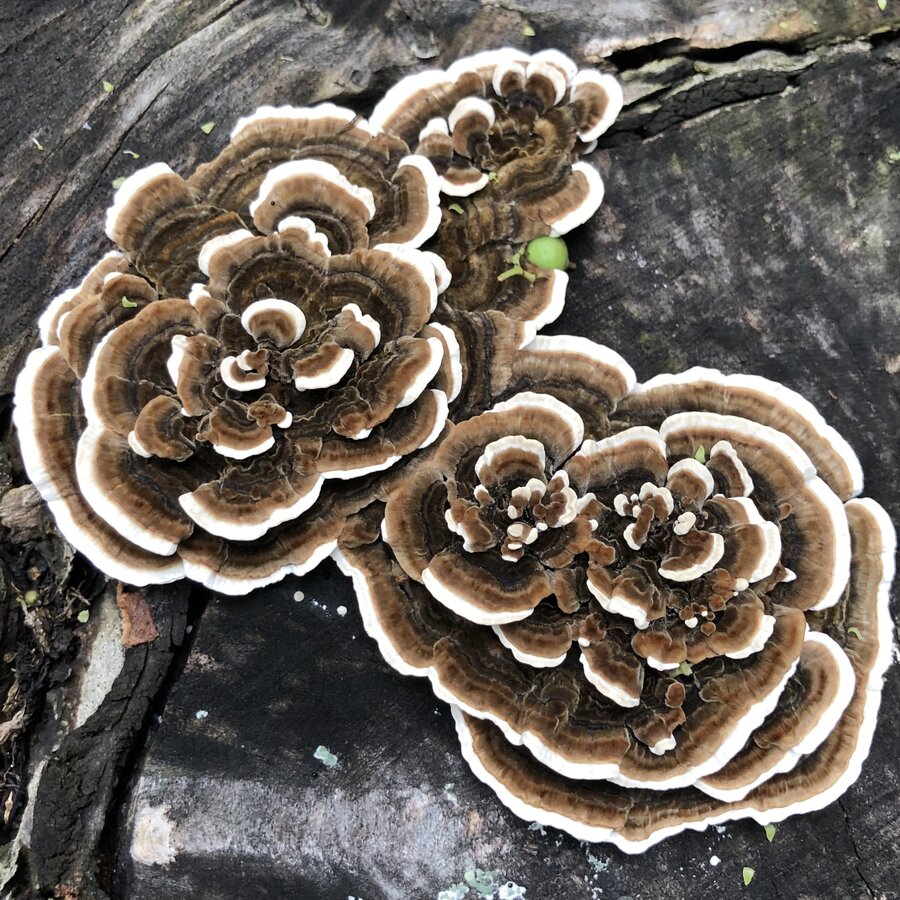
健脾利湿 · 扶正固本 Fortifying the Spleen and Dispersing Dampness · Supporting the Body's Constitution云芝因其菌盖表面呈现深浅相间的同心环纹,色彩斑斓如云霞叠起,故得'云芝'之美名,又因质地薰韧似皮革,亦称'栗蓴革盖菌'。
因其形态酷似火鸡尾羽的斑斓花纹,西方本草中亦称其'turkey tail'(火鸡尾),东西方本草文化在这味朴素真菌身上意外地达成了形象的呼应。
Turkey tail takes its name from the concentric rings of varied hue and shade across its cap surface, layered like drifting clouds at dawn. Because of its leathery, tough texture, it is also known as the 'chestnut-colored bracket fungus.'
Its patterned appearance, strikingly reminiscent of a turkey's fanned tail feathers, has earned it the Western name 'turkey tail' — an unexpected meeting of imagery between Eastern and Western herbal traditions over this humble fungus.
云芝性平味甘微苦,古时民间常以其煎汤,用以调理脾虚湿困、倦怠乏力之症,取其'扶正气、化湿浊'之功。
江南一带民间亦有用云芝配伍茯苓、山药同煎,作为病后调养、体虚乏力者的日常食养方,是山野草木朴素而实用的养生智慧。
Neutral in nature with a sweet, slightly bitter flavor, turkey tail was traditionally decocted by folk healers to relieve spleen deficiency and dampness-induced fatigue, valued for its ability to 'support the body's righteous qi and transform turbid dampness.'
In the Jiangnan region, folk practice also combines turkey tail with poria and Chinese yam in a decoction, serving as a daily nourishing formula for those recovering from illness or suffering general weakness — a simple yet practical piece of wisdom drawn from the plants of the wild.
云芝被历代医家视为扶正固本之品,认为其能增强机体本身的抗病能力,而非直接攻邪,故多用于久病体虚、正气不足之人的调补。
这种'扶正为主'的用药思路,也体现了中医'治病求本'的核心理念,即先固根本,再徐图康复。
Physicians through the ages have regarded turkey tail as a constitution-supporting agent, believed to strengthen the body's own resistance to illness rather than directly attacking pathogens — hence its frequent use in nourishing those weakened by prolonged illness or deficient vital qi.
This approach of 'prioritizing constitutional support' reflects the core Chinese medical philosophy of 'treating the root of the disease' — first stabilizing the foundation, then allowing gradual recovery to follow.
云芝多附生于阔叶朽木之上,四季可见,尤以春秋二季长势最盛,采摘后需洗净泥屑,晒干或烘干,以备切片煎煮之用。
因其质地薰韧如皮革,不易腐坢,晒干后的云芝可长期保存,是山野人家常备的'百搭'药材,遇体虚不适便可随取随用。
Turkey tail commonly grows on the rotting wood of broadleaf trees and can be found year-round, though it flourishes most in spring and autumn. Once gathered, it must be washed clean of debris and sun- or oven-dried, ready to be sliced for decoction.
Its leathery, tough texture resists decay, so dried turkey tail can be stored for long periods — a versatile staple kept on hand by mountain households, ready to be used whenever weakness or discomfort arises.
现代研究从云芝中提取出多糖成分(PSK、PSP),发现其对机体免疫功能有一定调节作用,这一发现让云芝在东亚地区的辅助调养领域备受关注。
云芝多糖制剂在部分东亚地区曾被广泛用作肿瘤患者的辅助调理之品,这也让这味'扶正固本'的古老真菌药材,在现代医学语境下获得了新的诠释。
Modern research has isolated polysaccharide compounds (PSK and PSP) from turkey tail and found that they exert a regulatory effect on the body's immune function — a discovery that has drawn considerable attention to turkey tail in supportive care across East Asia.
Turkey tail polysaccharide preparations have been widely used in parts of East Asia as supportive care for cancer patients, granting this ancient 'constitution-supporting' fungal medicine a fresh interpretation within the context of modern medicine.