香菇
香菌 / 冬菇
Shiitake Mushroom
益气健脾 · 化痰消食 Boosting Qi and Fortifying the Spleen · Transforming Phlegm and Aiding Digestion香菇因其独特的菌香而得名,晒干后香气愈发浓郁,古人称之为'香菌',因常生于冬季又称'冬菇',是历代餐桌上不可或缺的山珍。
相传南宋时期,浙江龙泉、庆元一带的樵夫吴三公偶然发现香菇可以人工繁育,自此'香菇之乡'的美名流传至今,也留下了'砍花法'这一古老栽培技艺。
Shiitake takes its name from its distinctive fungal fragrance, which grows even more pronounced once dried. The ancients called it 'fragrant fungus,' and because it often fruits in winter, it was also known as 'winter mushroom' — an indispensable delicacy on tables through the ages.
Legend holds that during the Southern Song dynasty, a woodcutter named Wu Sangong in the Longquan and Qingyuan regions of Zhejiang discovered by chance how to cultivate shiitake. The renown of this 'hometown of shiitake' has endured to this day, along with the ancient 'log-notching' cultivation technique he left behind.
《本草纲目》记载香菇能'益气不饥,治风破血',古人认为其性平味甘,能补益脾胃之气,故常用以调理食少体倦、气血不足之症。
民间素有'山珍之王'的说法,逢年过节的宴席上,香菇炖鸡、香菇烧肉常作为滋补佳肴,寓意用朴素的山货调养身体。
The Bencao Gangmu records that shiitake 'boosts qi, staves off hunger, and disperses wind and stagnant blood.' The ancients considered it neutral and sweet, capable of tonifying the qi of the spleen and stomach, and thus useful for treating poor appetite, fatigue, and deficiency of qi and blood.
Folk tradition calls it the 'king of mountain delicacies.' At festival banquets, dishes such as shiitake-stewed chicken or shiitake-braised pork are served as nourishing fare, embodying the idea of restoring the body through humble mountain produce.
香菇亦被认为有化痰消食、降脂降压之效,古时医家常配伍山楂、萝卜等同煮,用以调理痰湿壅滞、食积不化之症。
民间还有用香菇柄煎汤治疗麻疹透发不畲的经验,虽属草根疗法,却反映出百姓对这味寻常食材药用价值的朴素信任。
Shiitake is also believed to transform phlegm, aid digestion, and help lower fat and blood pressure. Physicians of old often simmered it together with hawthorn or radish to relieve phlegm-damp congestion and stagnant food accumulation.
Folk practice also includes decocting shiitake stems to help measles rashes fully emerge — a grassroots remedy that, while simple, reflects the common people's earnest trust in the medicinal worth of this everyday food.
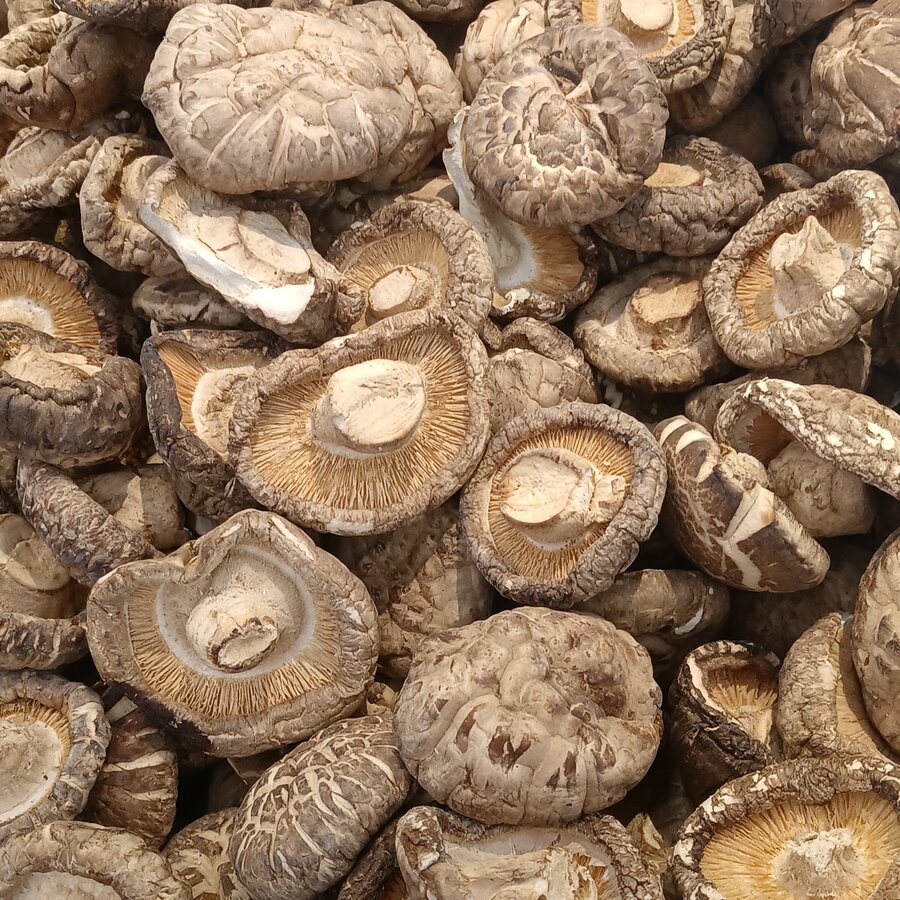
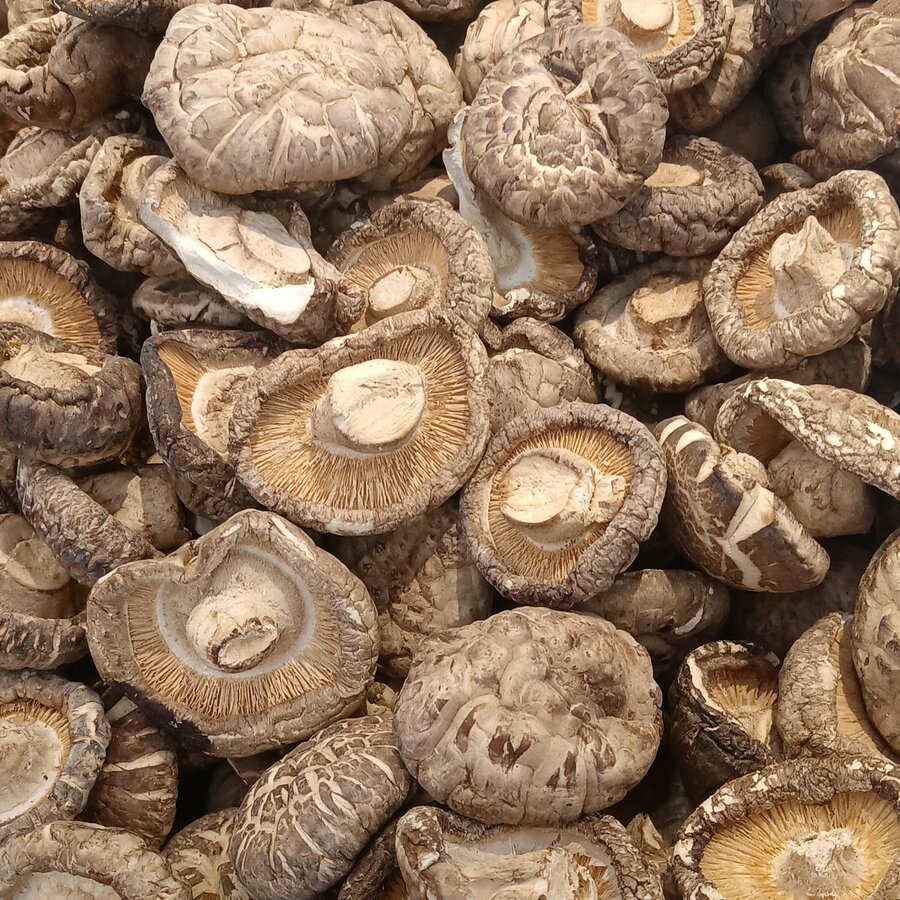
传统香菇多在深秋初冬采收,采后经日晒或炭火烘焙,使其水分蒸发、香气凝聚,晒制得当的香菇色泽金黄、菌褶完整,方为上品。
老药工挑选香菇讲究'厚而不薰、干而不焦',认为菌肉厚实、香气纯正者方能兼具食用与药用价值,历经数百年而不衰。
Traditionally, shiitake is harvested in late autumn and early winter, then sun-dried or charcoal-baked to evaporate moisture and concentrate its aroma. Properly dried shiitake, golden in color with intact gills, is considered the finest grade.
Veteran herb dealers judge quality shiitake by the standard 'thick yet not smoked, dry yet not scorched,' believing that only specimens with plump flesh and pure fragrance can serve both culinary and medicinal purposes — a standard that has endured for centuries.
现代营养学发现香菇富含维生素D前体麦角固醇,经日晒后可转化为维生素D,暗合古人'晒制增效'的经验智慧。
此外,香菇多糖被认为有助于增强机体免疫功能,使这味流传千年的山珍在现代养生食谱中依然占据一席之地。
Modern nutritional science has found that shiitake is rich in ergosterol, a precursor of vitamin D that converts into the vitamin upon sun exposure — a finding that resonates with the age-old wisdom that 'sun-drying enhances potency.'
In addition, shiitake polysaccharides are believed to help strengthen the body's immune function, ensuring that this mountain treasure, passed down through a thousand years, still holds a place in modern dietary wellness.