五倍子
文蛤 / 百虫仓
Chinese Gall
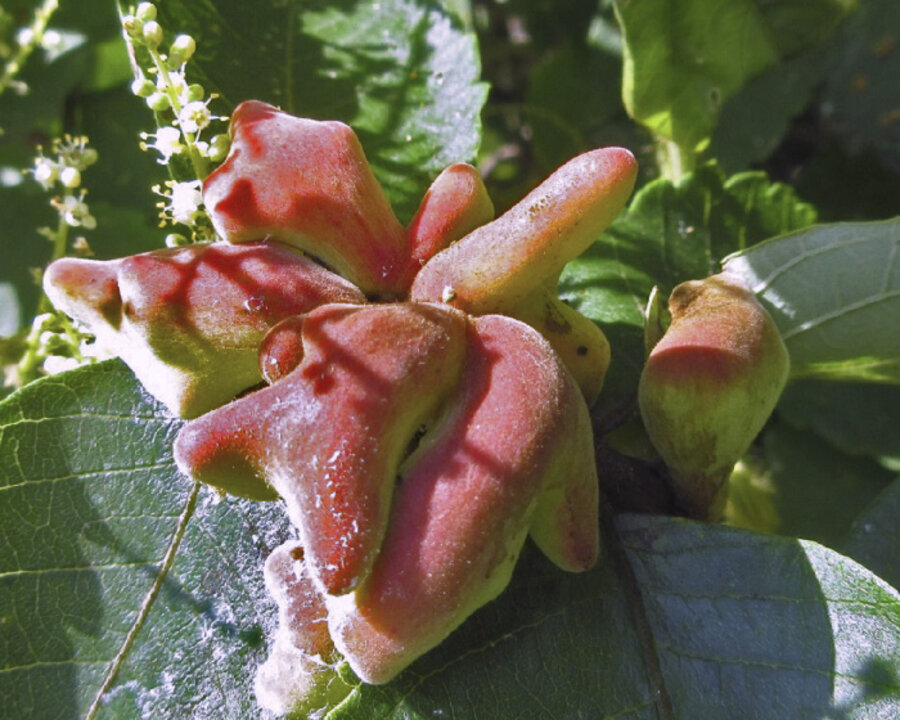
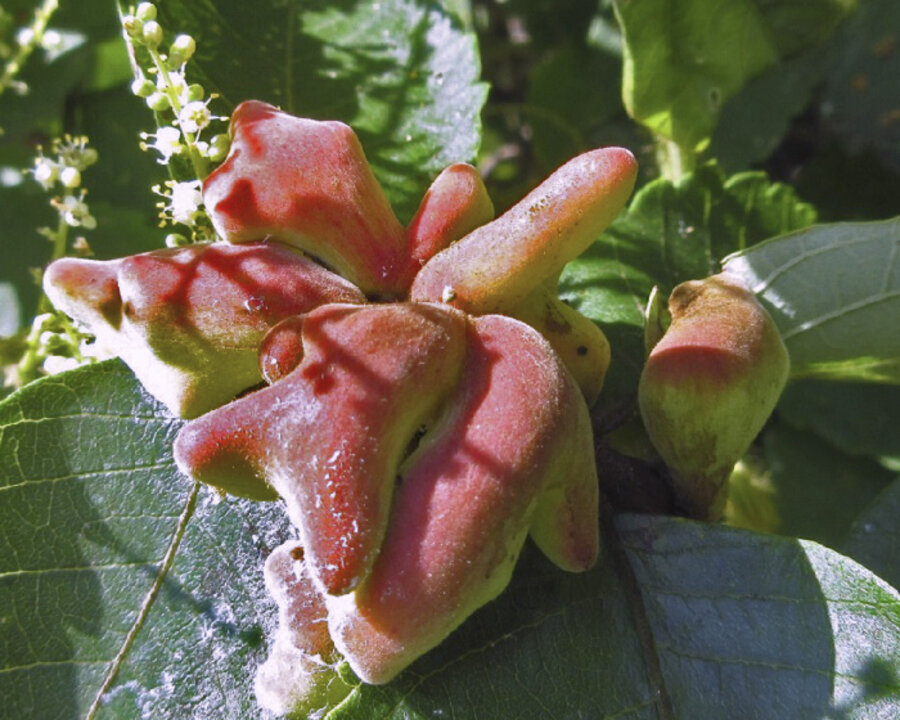
敛肺止汗 · 涩肠止泻 Astringing the Lungs and Stopping Sweating · Astringing the Intestines and Stopping Diarrhea五倍子并非果实或种子,而是盐肤木(Rhus chinensis,古称盐肤木或盐酸树)叶片上因倍蚜寄生而形成的虫瘿,因其形态多呈分叉状、体积可倍增而得'五倍子'之名。
古人观察到虫瘿内部藏有微小蚜虫,故又称其'百虫仓',这一充满想象力的名称生动描绘出这味药材独特的生物成因。
Chinese gall is not a fruit or seed, but rather a gall formed on the leaves of the Chinese sumac (Rhus chinensis) due to parasitic gall aphids. Because these galls often branch into multiple lobes and can swell to many times their initial size, it came to be called 'wubeizi,' literally 'fivefold seed.'
The ancients observed that the gall contained tiny aphids within, and so also called it 'the hundred-insect granary' — an imaginative name that vividly captures this medicine's unique biological origin.
《本草纲目》称五倍子'酸涩,能敛肺止汗,治虚劳咳嗽',古时医家常以其配伍五味子、诃子等收敛药材,治疗肺虚久咳、自汗盗汗之症。
民间亦有用五倍子研末外用治疗盗汗不止的经验,将其撲于脐部或涌泉穴,取其收敛止汗之效,是流传已久的外治验方。
The Bencao Gangmu describes Chinese gall as 'sour and astringent, able to astringe the lungs and stop sweating, treating chronic cough from consumptive deficiency.' Physicians of old commonly combined it with schisandra and chebula to treat chronic cough from lung deficiency and spontaneous or night sweating.
Folk practice also includes grinding Chinese gall into powder for external application to treat persistent night sweating, dusting it onto the navel or the Yongquan point, drawing on its astringent sweat-stopping effect — a long-standing external remedy.
五倍子性寒质涩,兼有涩肠止泻之效,古时医家常用其治疗久泻不止、脱肛等因肠气不固所致的病症,取其收敛固脱之性。
五倍子亦常用于治疗痔疮出血、脱肛等肛肠疾患,煎汤外洗或研末外敷,取其收敛止血、固涩不脱之效,是传统外科常备的收敛良药。
Cold and astringent in nature, Chinese gall also astringes the intestines and stops diarrhea. Physicians of old commonly used it to treat persistent diarrhea and rectal prolapse caused by weakened intestinal qi, drawing on its astringent, prolapse-securing quality.
Chinese gall is also commonly used to treat hemorrhoidal bleeding and rectal prolapse and other anorectal conditions, either decocted for external washing or ground into powder for external application, drawing on its astringent, hemostatic, prolapse-securing effect — a commonly stocked astringent remedy in traditional surgery.
五倍子多在秋季采收,须在虫瘿尚未开裂、内部蚜虫尚未飞散之时采摘,采后须蒸煮杀虫,方可晒干储存,否则蚜虫破壁而出,药材尽失。
老药工鉴别五倍子讲究'个大质坚、色灰褐、断面角质样光泽',这一经验性标准至今仍是判断五倍子品质的重要依据。
Chinese gall is mostly harvested in autumn, and must be picked before the gall cracks open and the aphids inside disperse. After harvesting, it must be steamed to kill the insects before being sun-dried and stored — otherwise the aphids will break through the gall wall and the medicinal material will be lost.
Veteran herb dealers judge quality Chinese gall by the standard 'large in size, firm in texture, grayish-brown in color, with a horn-like luster at the fractured surface' — an experiential criterion that remains an important basis for judging its quality to this day.
现代化学证实五倍子富含鞍酸(没食子酸鞣质),具有显著的收敛、抗菌作用,是提取工业用鞍酸的重要天然原料,这与古人'收敛止泻'的经验记载相互印证。
如今五倍子鞍酸还被广泛用于制革、染料及医药工业之中,这味源于虫瘿的奇特药材,在现代工业与传统医学之间架起了一座独特的桥梁。
Modern chemistry has confirmed that Chinese gall is rich in tannic acid (gallotannin), possessing significant astringent and antibacterial properties, making it an important natural raw material for extracting industrial tannic acid — a finding that corroborates the ancient record of its 'astringent, diarrhea-stopping' effects.
Today, tannic acid derived from Chinese gall is also widely used in leather-making, dyeing, and the pharmaceutical industry. This peculiar medicine, born of an insect gall, thus forms a unique bridge between modern industry and traditional medicine.