苏木
苏方木 / 红柴
Sappanwood
活血祛瘀 · 消肿止痛 Invigorating Blood and Dispelling Stasis · Reducing Swelling and Relieving Pain苏木原产于东南亚及岭南地区,因古时多经苏门答腊等南洋一带转运而来,故得'苏木'之名,又因其木材可制染料,古人亦称其'苏方木'。
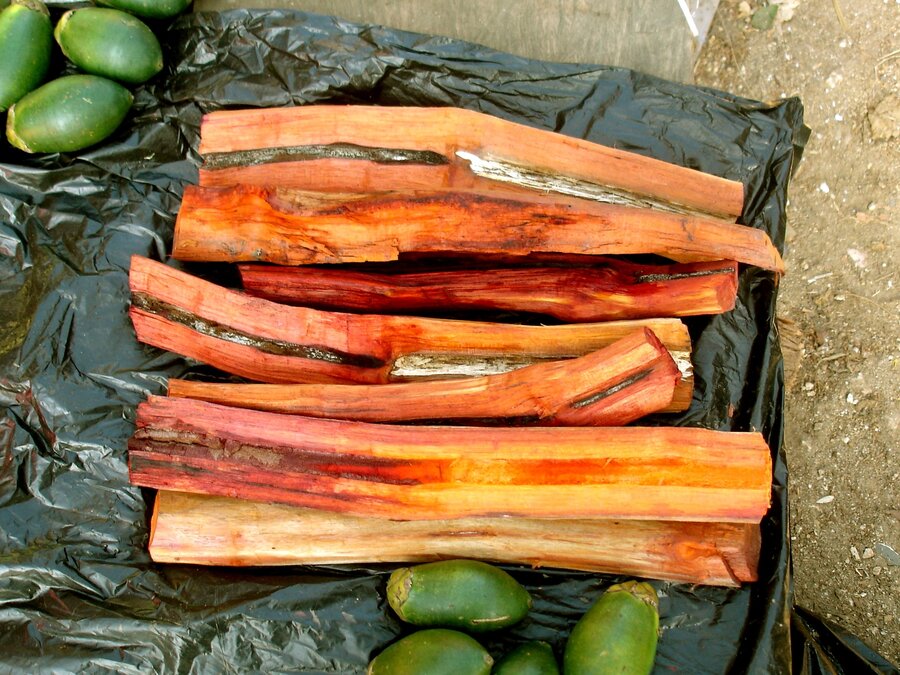
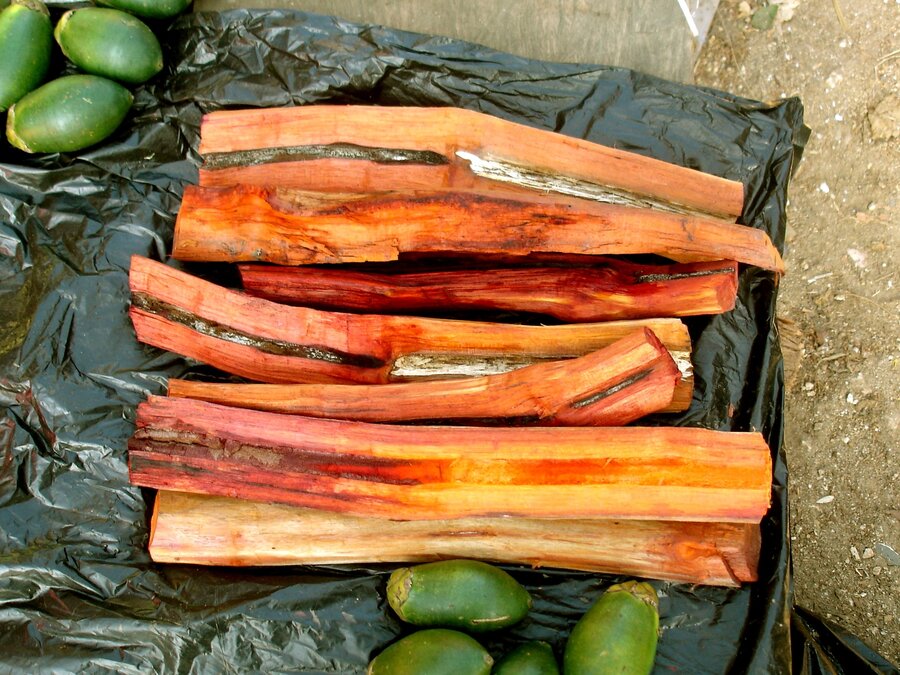
劈开的苏木断面呈深红色,浸水后可染出艳丽的红色,故在古代纺织业中,苏木不仅是药材,也是重要的天然染料来源。
Sappanwood originates in Southeast Asia and the Lingnan region. Because it was traditionally transshipped through Sumatra and other parts of the South Seas, it came to be called 'su mu' (Su-wood). Since its wood could also be used to produce dye, the ancients also called it 'sufang wood.'
The cross-section of split sappanwood is deep red, and soaking it in water yields a vivid red dye. In ancient times, sappanwood served not only as a medicinal material but also as an important source of natural dye in the textile industry.
《本草纲目》称苏木'性味甘咳而平,能破血、消肿、止痛',古时医家常以其治疗妇人产后瘀血、恶露不下、经闭腹痛等症,是妇科调经的常用药材。
民间还有用苏木煎汤治疗跌打损伤、瘀血肿痛的经验,取其活血化瘀、消肿止痛之效,是伤科常备的草木良药。
The Bencao Gangmu describes sappanwood as 'sweet and pungent in flavor, neutral in nature, capable of breaking up blood, reducing swelling, and relieving pain.' Physicians of old commonly used it to treat postpartum blood stasis, retained lochia, and amenorrhea with abdominal pain — a frequently used herb in gynecological menstrual regulation.
Folk practice also includes decocting sappanwood to treat bruising injuries and swollen, painful stasis, drawing on its ability to invigorate blood, resolve stasis, reduce swelling, and relieve pain — a commonly stocked herbal remedy in traumatology.
苏木除内服活血之外,亦常外用煎汤洗涤,治疗跌打损伤后的局部肿痛,古时行伍武人受伤后常以苏木水外洗患处,助其消肿散瘀。
岭南民间至今仍保留着用苏木煮水沐浴、调理产后气血的习俗,体现出这味药材在南方民俗文化中的深厚渊源。
Beyond internal use for invigorating the blood, sappanwood decoction is also commonly used externally as a wash to treat localized swelling and pain after traumatic injury. Soldiers of old, once wounded, often washed the affected area with sappanwood water to help reduce swelling and disperse stasis.
In the Lingnan region, the folk custom of bathing in sappanwood-boiled water to regulate postpartum qi and blood persists to this day, reflecting the deep roots of this herb in southern folk culture.
苏木多取其树干心材入药,采伐后需剥去外皮,取内部深红色木质部分,劈成薄片或小段,晒干后方可入药。
老药工鉴别苏木讲究'色红质坚、断面细密',认为色泽愈深、质地愈坚实者药力愈醇厚,这一经验至今仍是判断苏木品质的重要依据。
Sappanwood medicine is taken mainly from the heartwood of the tree trunk. After felling, the outer bark is stripped away, and the inner deep-red wood is taken, split into thin slices or small segments, and sun-dried before being fit for medicinal use.
Veteran herb dealers judge quality sappanwood by the standard 'red in color, firm in texture, fine-grained at the cut surface,' believing that the deeper the color and the more solid the texture, the more potent the medicine — a criterion that remains an important basis for judging sappanwood quality to this day.
现代研究发现苏木中含有苏木素等成分,具有一定的抗炎、活血作用,与古人'活血祛瘀'之说相互印证,也让这味南药在现代方剂中仍占有一席之地。
如今苏木仍常用于妇科调经方剂及跌打损伤的外治制剂之中,延续着这味古老南药跨越千年的实用价值。
Modern research has found that sappanwood contains compounds such as brazilin, which possess certain anti-inflammatory and blood-invigorating properties — corroborating the ancient claim of 'invigorating blood and dispelling stasis,' and securing this southern herb a place in modern formulas.
Today, sappanwood is still frequently used in gynecological menstrual-regulating formulas and external preparations for traumatic injury, continuing the practical value of this ancient southern herb across a thousand years.