朱砂
Zhūshā · 别名丹砂、辰砂
Cinnabar (Zhūshā) · Mercury Sulfide Mineral
争议之药 · 古代理性医学的典型案例 A Controversial Remedy — Rational Medicine in Antiquity在古人眼中,朱砂色如凝血、光泽如星,是"安神定魄"的圣物,道教炼丹术士更将其视为"还丹"的核心原料,相信服食可以长生不老。历代帝王中不乏因服食丹药中毒而暴亡的记载,朱砂正是这类丹药最常见的成分之一。
然而李时珍在《本草纲目》里对此保持了罕见的理性与警惕——他既承认朱砂外用、少量入药确有"镇心、明目、解毒"之效,又直言不讳地指出其内服久服的剧毒风险,这种"既传承古法、又质疑古法"的态度,恰恰是明代医家精神最动人的一面。
To the ancients, cinnabar's blood-red hue and starlike luster made it a sacred substance for "calming the spirit." Daoist alchemists regarded it as the core ingredient of the elixir of immortality. History records more than one emperor who died from cinnabar-based elixirs.
Yet Li Shizhen approached it with rare rationality — acknowledging its calming and detoxifying effects in small, external doses, while bluntly warning against prolonged internal use. This tension between inherited tradition and critical scrutiny is one of the most compelling aspects of Ming-dynasty medicine.
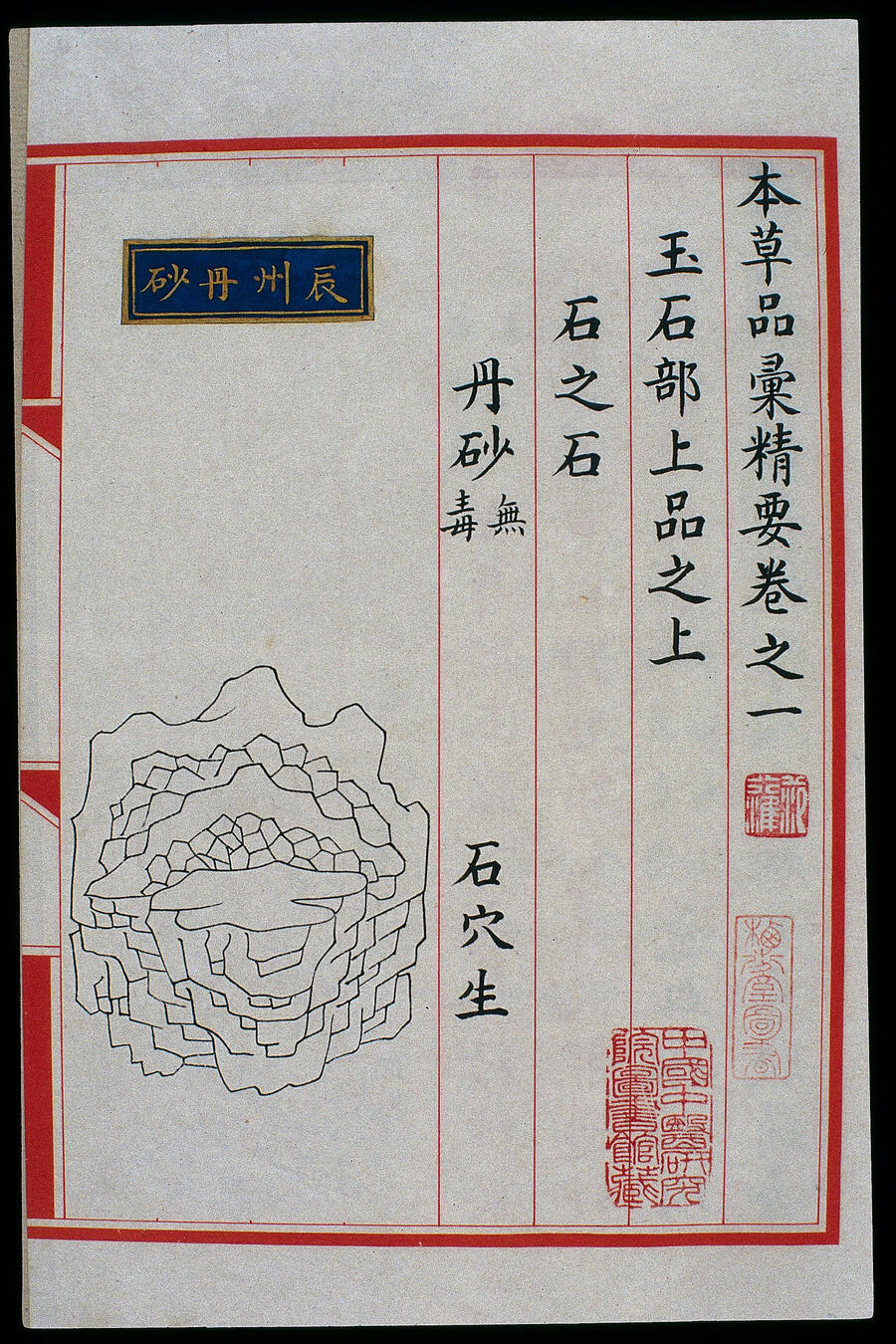
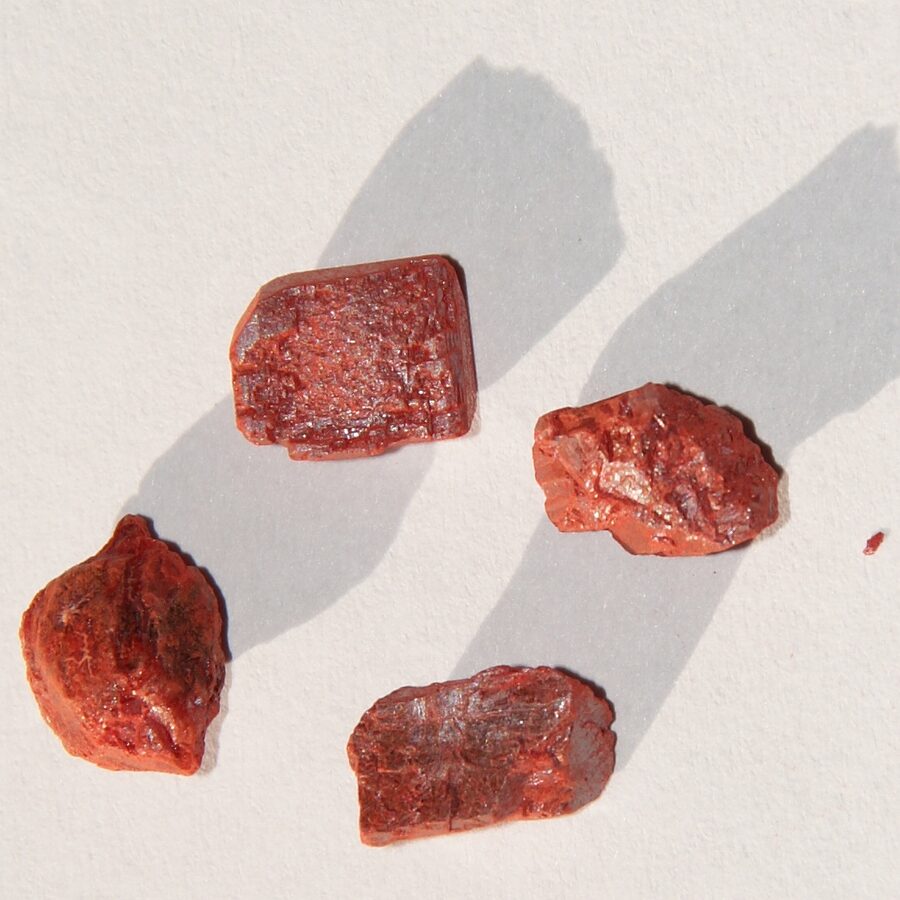
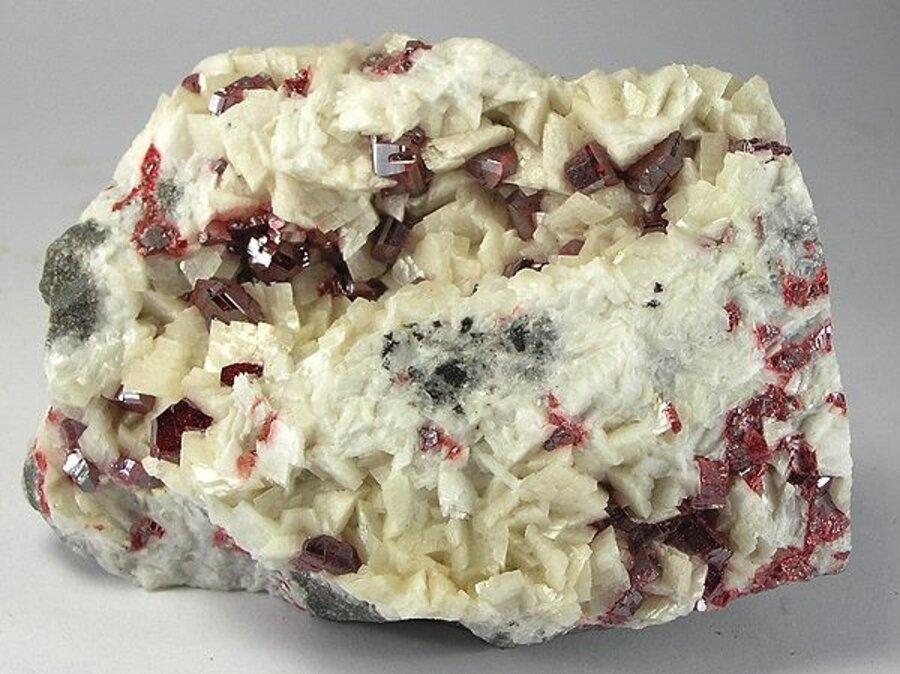
《本草纲目》称"辰州"(今湖南沅陵一带)所产朱砂品质最佳,故又名"辰砂"。图中标本产自贵州铜仁,与辰州地理相邻,同属中国西南朱砂矿脉带,是历史上最重要的朱砂产区之一。
Bencao Gangmu records that cinnabar from "Chenzhou" (present-day Yuanling, Hunan) was considered the finest, hence the alternate name "chensha." The specimen shown here is from Tongren, Guizhou — geographically adjacent to Chenzhou and part of the same historic cinnabar-mining belt in southwest China.
《本草纲目》记载朱砂"味甘,微寒,无毒"(后世医家多认为此处"无毒"仅指外用或极少量入药而言,与其后文警示内服久服之毒性并不矛盾);归心经,传统理论认为其"色赤属火,能入心,故可镇心安神"。
Bencao Gangmu describes cinnabar as "sweet in flavor, slightly cold, non-toxic" (later physicians generally read this "non-toxic" as referring only to external or minimal use, not contradicting the book's later warning about internal, prolonged use). In traditional theory it is associated with the Heart meridian — its red color linked to fire, said to allow it to "enter the heart and calm the spirit."
古代药工多采用"水飞法"处理朱砂:将矿石研磨后置于水中反复搅拌、沉淀、撇取悬浮的细粉,去除粗砂与杂质,只取最细腻的部分入药。这一传统炮制技艺至今仍在部分中药炮制流派中作为非物质文化遗产的一部分被记录和传承,但其历史应用本身并不能消除朱砂的毒性本质。
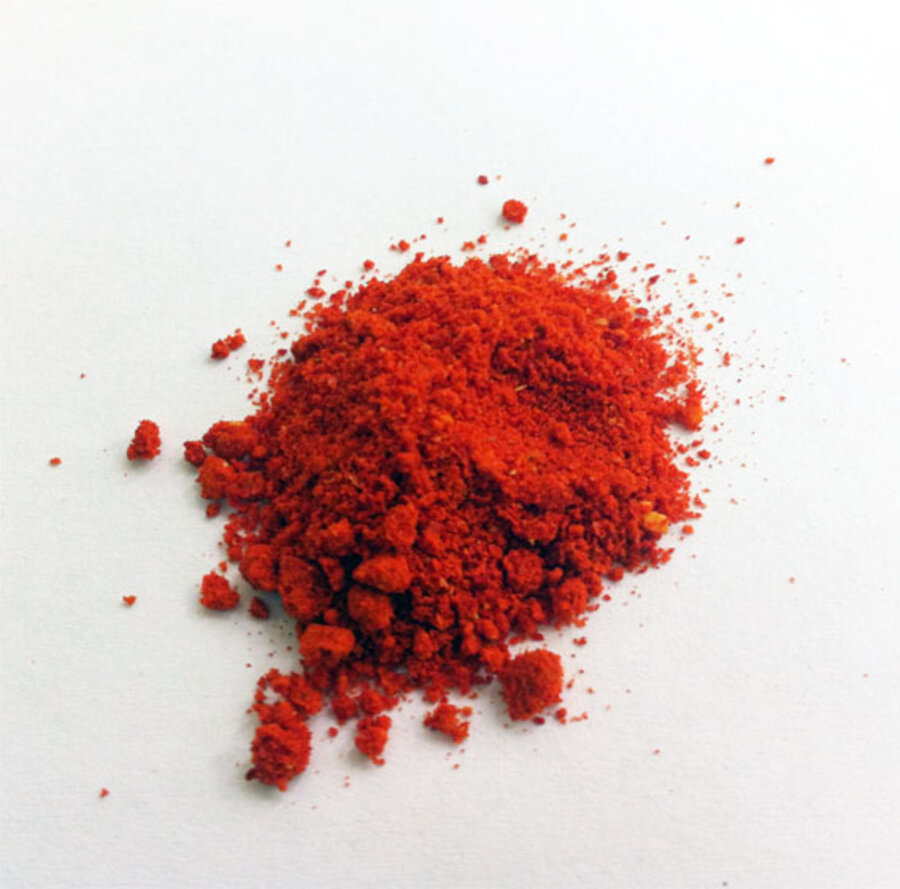
Traditional pharmacists commonly used the "water-flotation method" (shuifei fa): grinding the mineral, suspending it in water, and repeatedly stirring and decanting to collect only the finest particles, removing coarse sand and impurities. This traditional processing technique is still documented today as part of intangible cultural heritage in some schools of Chinese medicine processing — though the technique itself does not eliminate cinnabar's underlying toxicity.
李时珍在《本草纲目》中明确写道"丹砂入火则热而有毒,能杀人",警示久服、过量或高温处理不当均有致命风险,这一警示在成书四百余年后的今天,已被现代化学证实——朱砂的主要成分是硫化汞(HgS),受热或体内代谢可能转化为毒性更强的汞化合物,长期或过量摄入会导致汞中毒,损害神经系统与肾脏。
因此,现代药典对含朱砂的中成药均有严格的剂量与疗程限制,孕妇、儿童、肝肾功能不全者更需格外谨慎。本页内容仅作本草文化与历史文献的呈现,不构成用药建议——具体的现代药理评估与安全性数据,请查证 AMMKB 药材知识库。
Li Shizhen explicitly warned that "cinnabar, when exposed to fire, becomes hot and toxic, and can kill" — a caution that modern chemistry has since confirmed. Cinnabar's primary component, mercury sulfide (HgS), can convert to more toxic mercury compounds under heat or through metabolism, and prolonged or excessive intake can cause mercury poisoning, damaging the nervous system and kidneys.
Modern pharmacopoeias therefore impose strict dosage and duration limits on cinnabar-containing preparations, with particular caution advised for pregnant women, children, and those with liver or kidney impairment. This page presents cultural and historical material only, not medical guidance — for current pharmacological evaluation and safety data, see the AMMKB Materia Medica Knowledge Base.