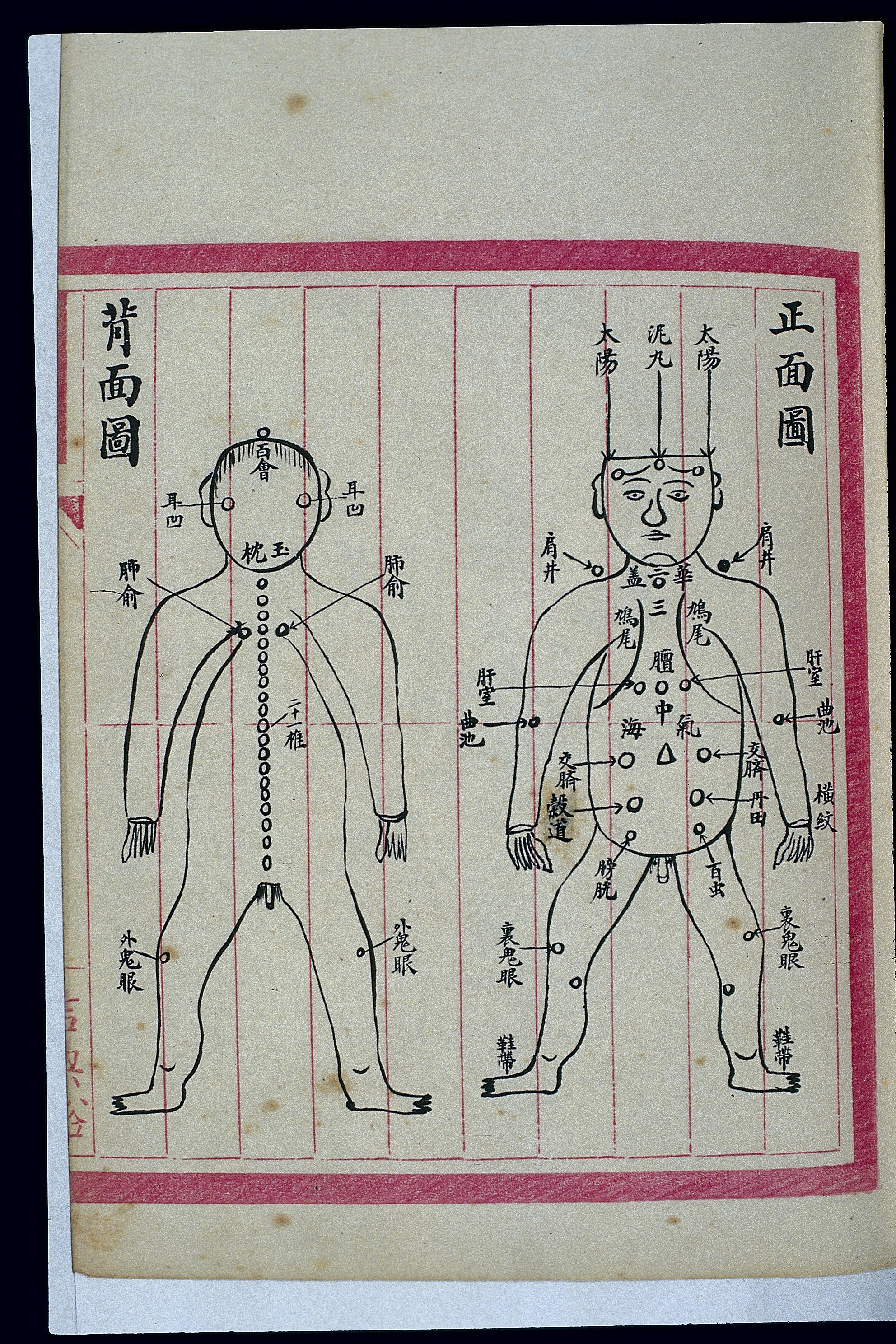
全身经络穴位正背面图 · 图片来源 Wellcome Collection(CC BY 4.0)
Whole-Body Meridian Chart, Front & Back · Source: Wellcome Collection (CC BY 4.0)
经络腧穴,毫针见功
Channels and points, the needle's quiet art
《黄帝内经》最早系统论述经络理论,《针灸甲乙经》确立腧穴定位之法,历经宋代王惟一铸造针灸铜人、明代《针灸聚英》等典籍图注,逐渐形成今日所见的经络腧穴体系。本展厅陈列历代铜人图与经络木刻插图,均为公共领域历史图像,呈现的是文化脉络与图像传统,不构成现代医疗建议,仅供文化与历史参考。
The Huangdi Neijing first systematized meridian theory, while the Zhenjiu Jiayi Jing established point localization. Through the Song-dynasty bronze figures cast under Wang Weiyi and Ming-dynasty illustrated canons such as the Zhenjiu Juying, today's channel-and-point system gradually took shape. This hall presents historical bronze figures and woodcut meridian charts, all public-domain images, as cultural and visual heritage, presented for historical reference only.
全身经络穴位正背面图 · 图片来源 Wellcome Collection(CC BY 4.0)
Whole-Body Meridian Chart, Front & Back · Source: Wellcome Collection (CC BY 4.0)
北宋天圣年间(1027年),医官王惟一主持铸造针灸铜人,标注全身经络腧穴,用于医官教学与考核,是世界上较早的人体经络教学模型之一。明代嘉靖十六年(1537年)高武撰《针灸聚英》,以木刻图谱记录铜人正背面穴位分布;明正统八年(1443年)另铸铜人一具留存至今,现藏于中国国家博物馆。
In 1027 CE, during the Song dynasty, court physician Wang Weiyi oversaw the casting of a bronze acupuncture figure marked with the body's channels and points — used for training and examining medical officials, and among the world's earliest anatomical teaching models. In 1537, Gao Wu's Zhenjiu Juying recorded the figure's points in woodcut form; a separate bronze figure cast in 1443 survives today in the National Museum of China.
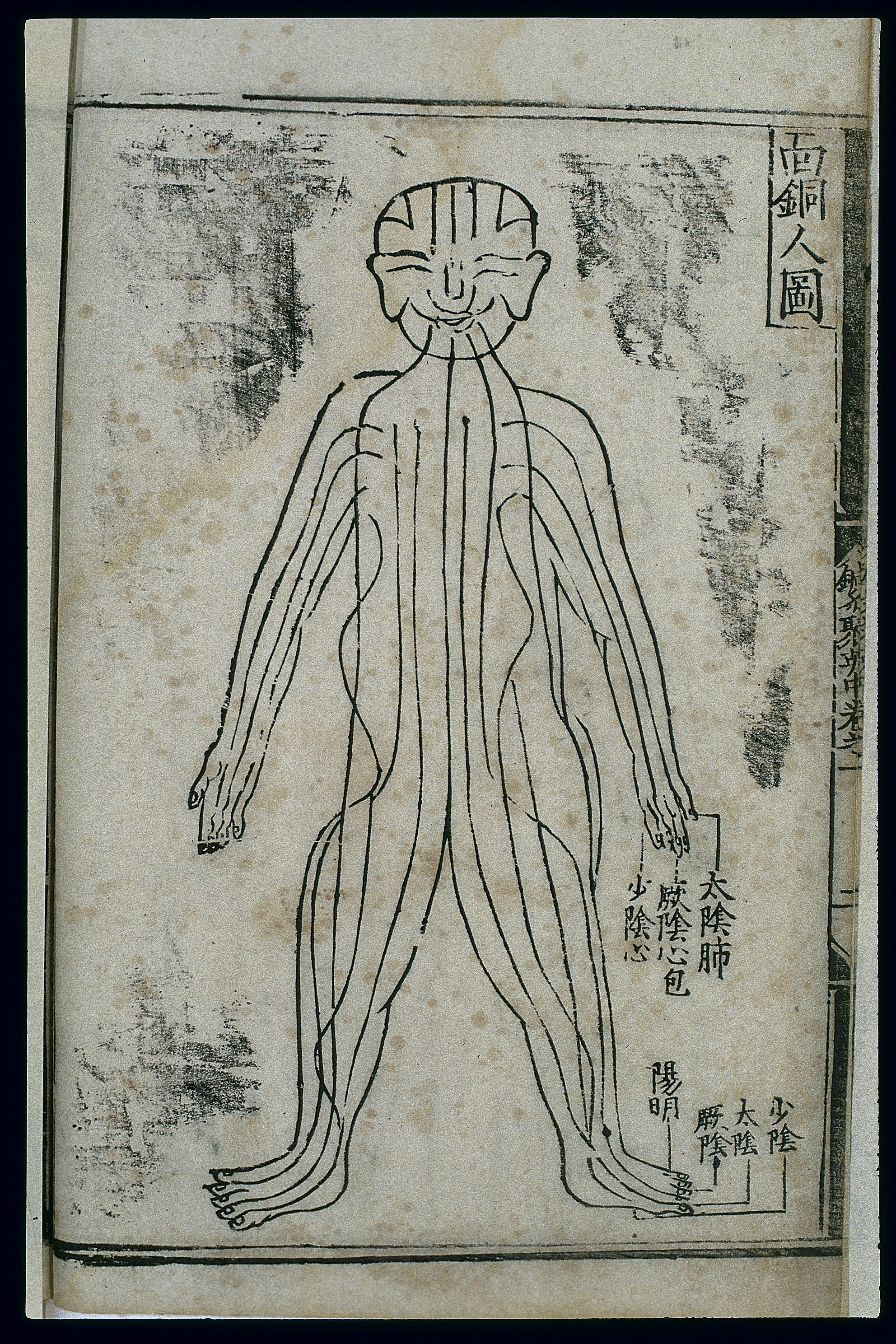
铜人木刻正面图 · 1537年《针灸聚英》
Bronze Man Woodcut, Front · 1537, Zhenjiu Juying
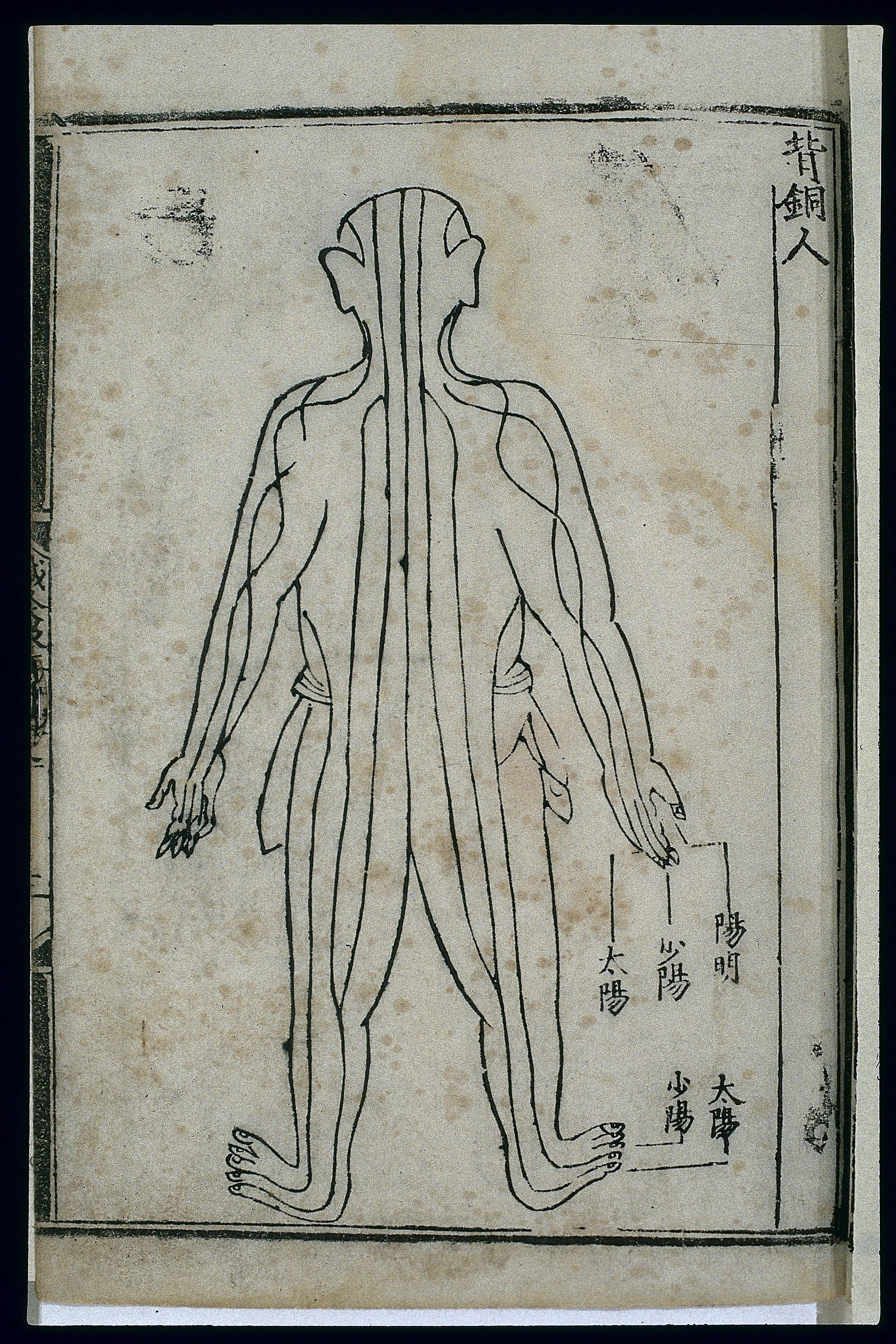
铜人木刻背面图 · 1537年《针灸聚英》
Bronze Man Woodcut, Back · 1537, Zhenjiu Juying
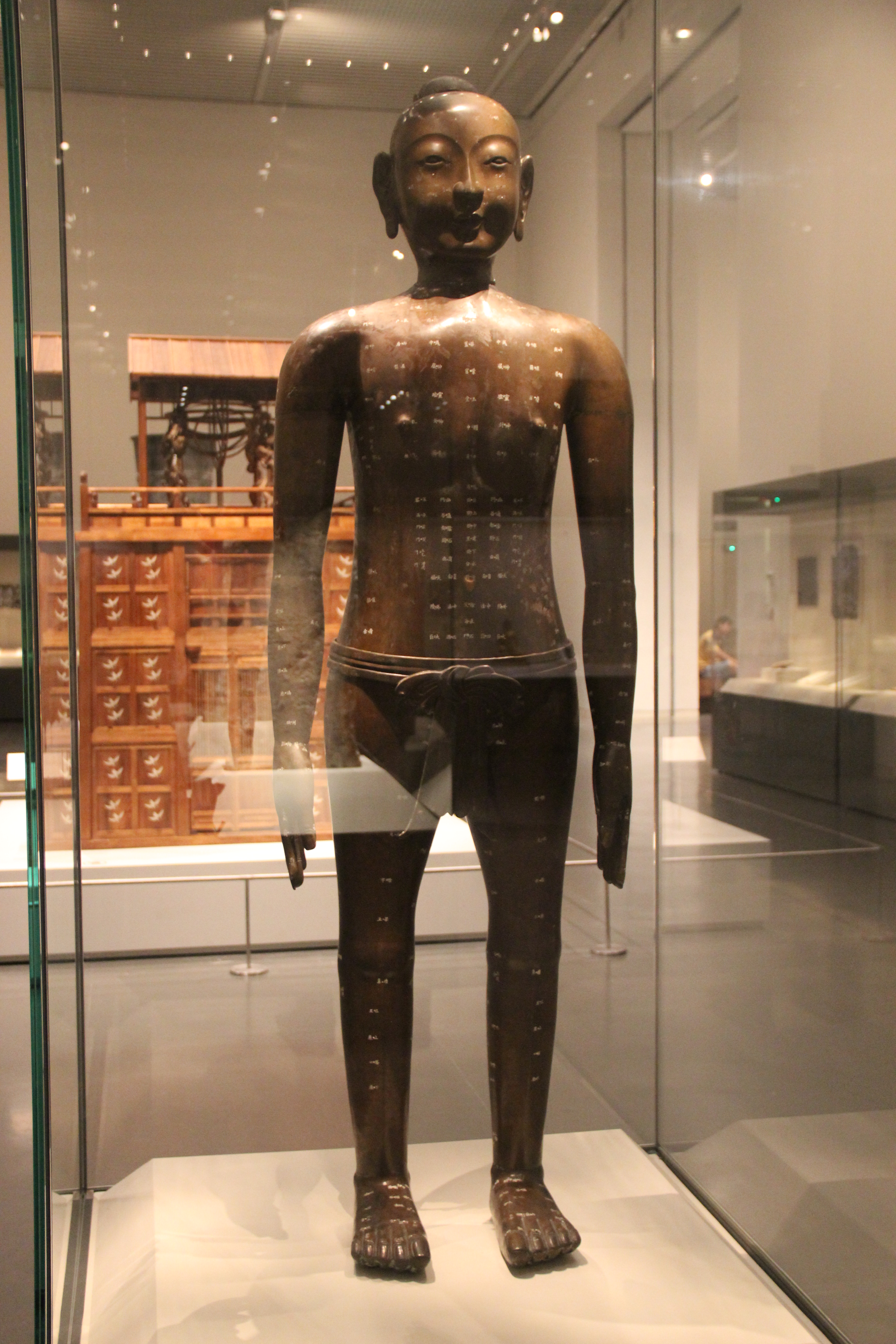
明代铜人实物正面照 · 1443年,中国国家博物馆藏
Ming Bronze Statue, Front · Cast 1443, National Museum of China
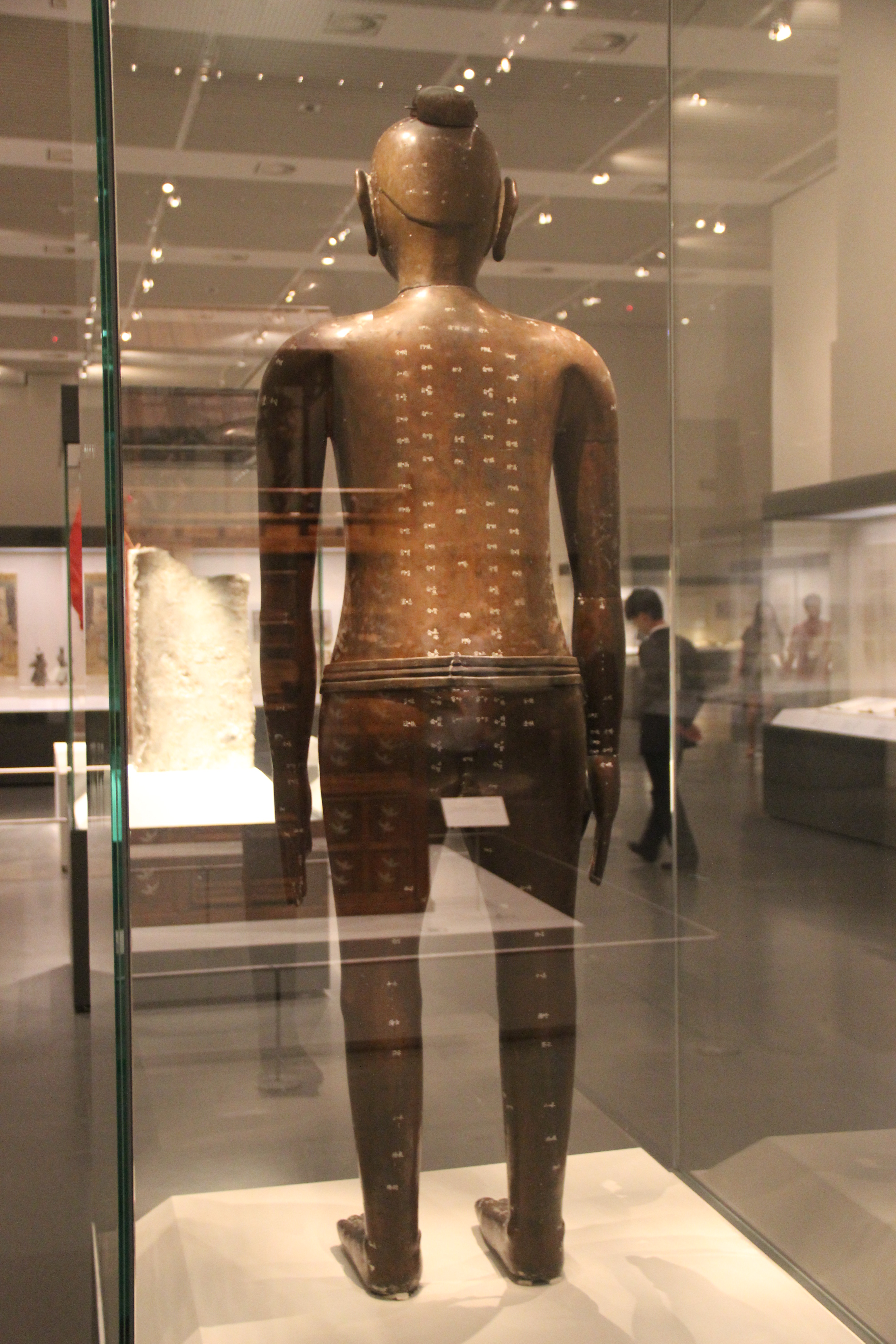
明代铜人实物背面照 · 1443年,中国国家博物馆藏
Ming Bronze Statue, Back · Cast 1443, National Museum of China
十二经脉分手足、阴阳,依次相接循环全身;任、督二脉总摄阴阳诸脉,合称「奇经八脉」之要。以下图像均出自明代《针灸聚英》系统木刻插图,点击卡片可放大查看。
The Twelve Channels are divided by hand/foot and yin/yang, connecting in sequence around the body; the Ren and Du vessels govern the yin and yang channels respectively, key among the Eight Extraordinary Vessels. All images below are Ming-dynasty woodcuts from the Zhenjiu Juying tradition — click a card to enlarge.
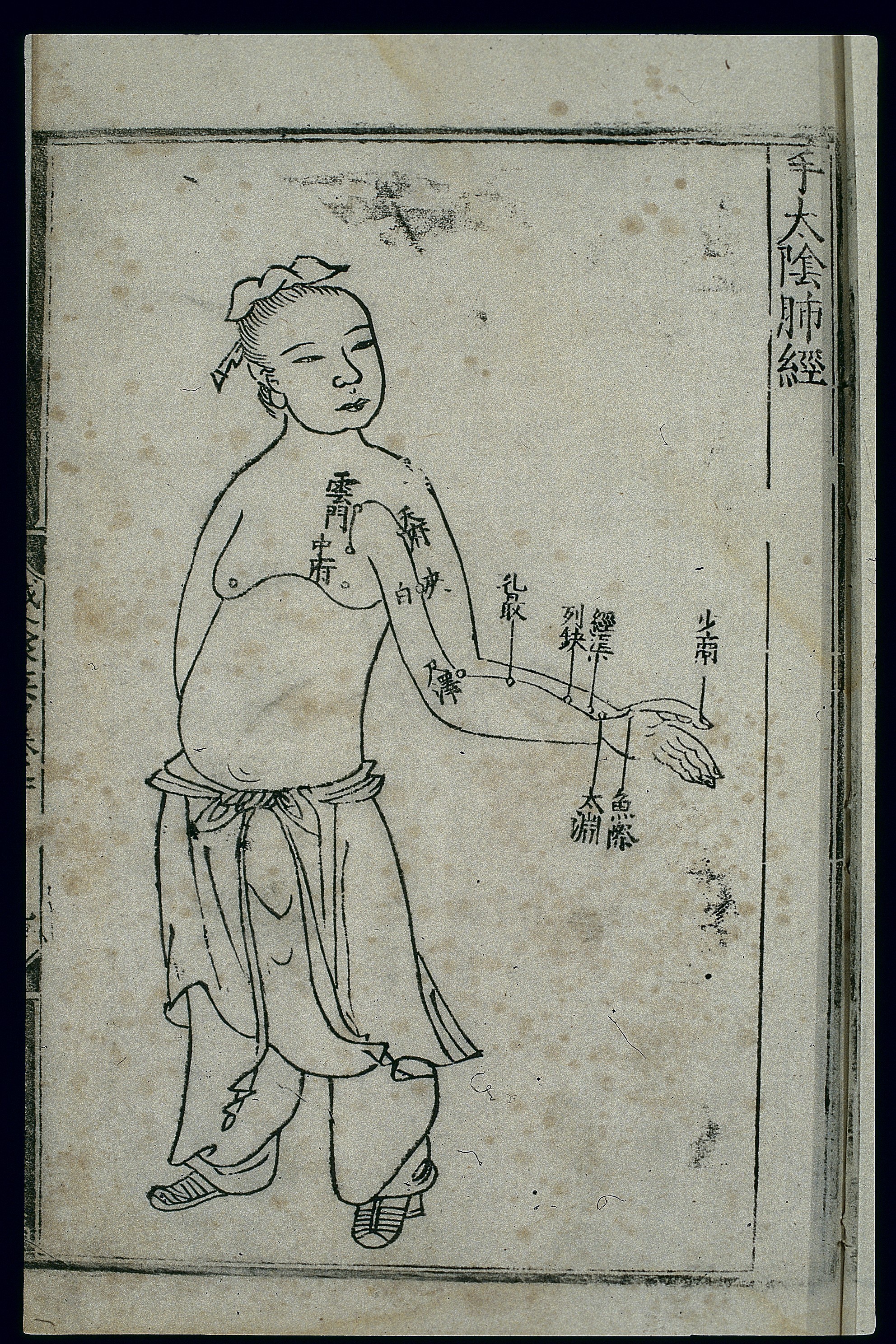
起于中府,止于少商
From Zhongfu to Shaoshang
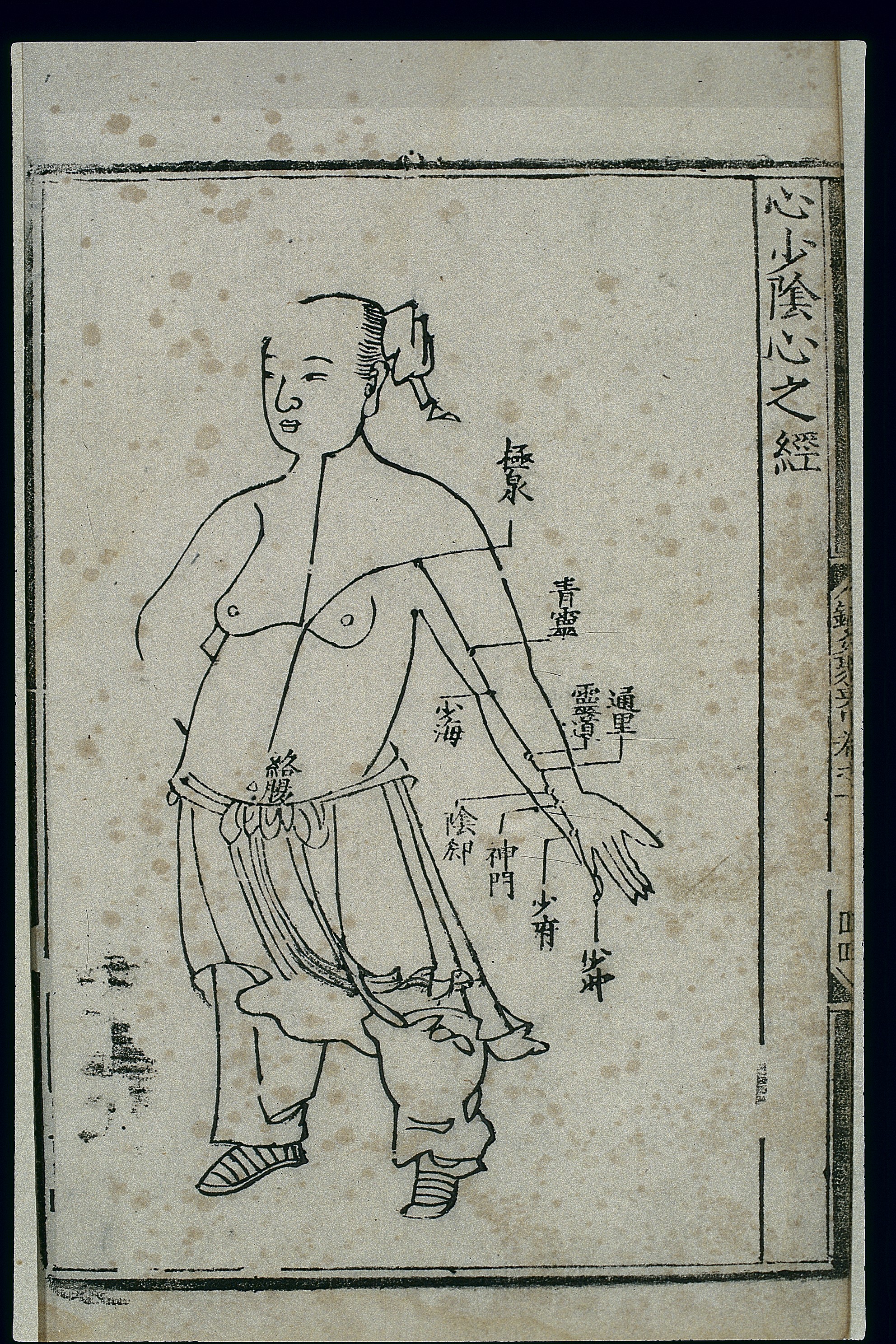
起于极泉,止于少冲
From Jiquan to Shaochong
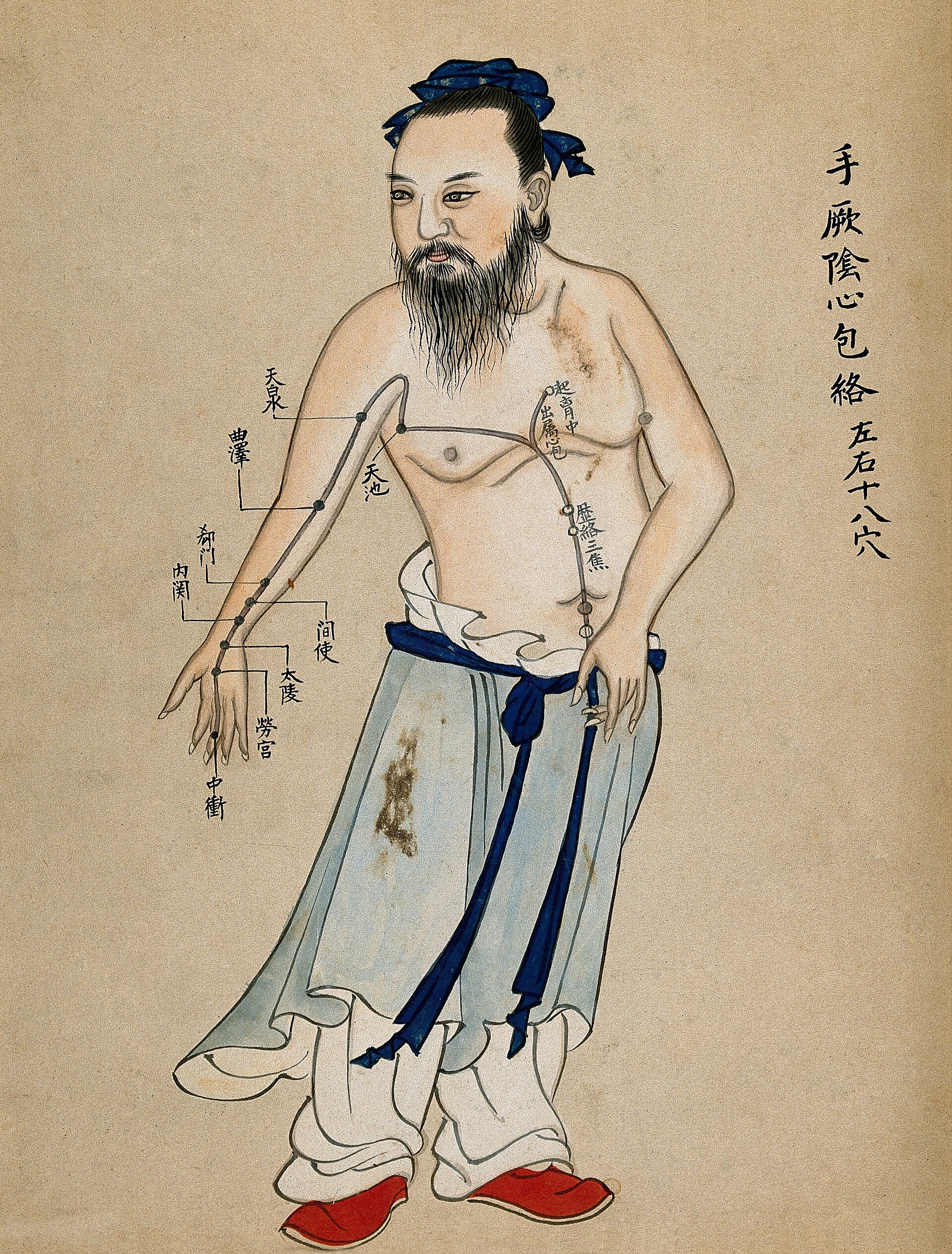
此图所载十八穴
18 points recorded in this chart
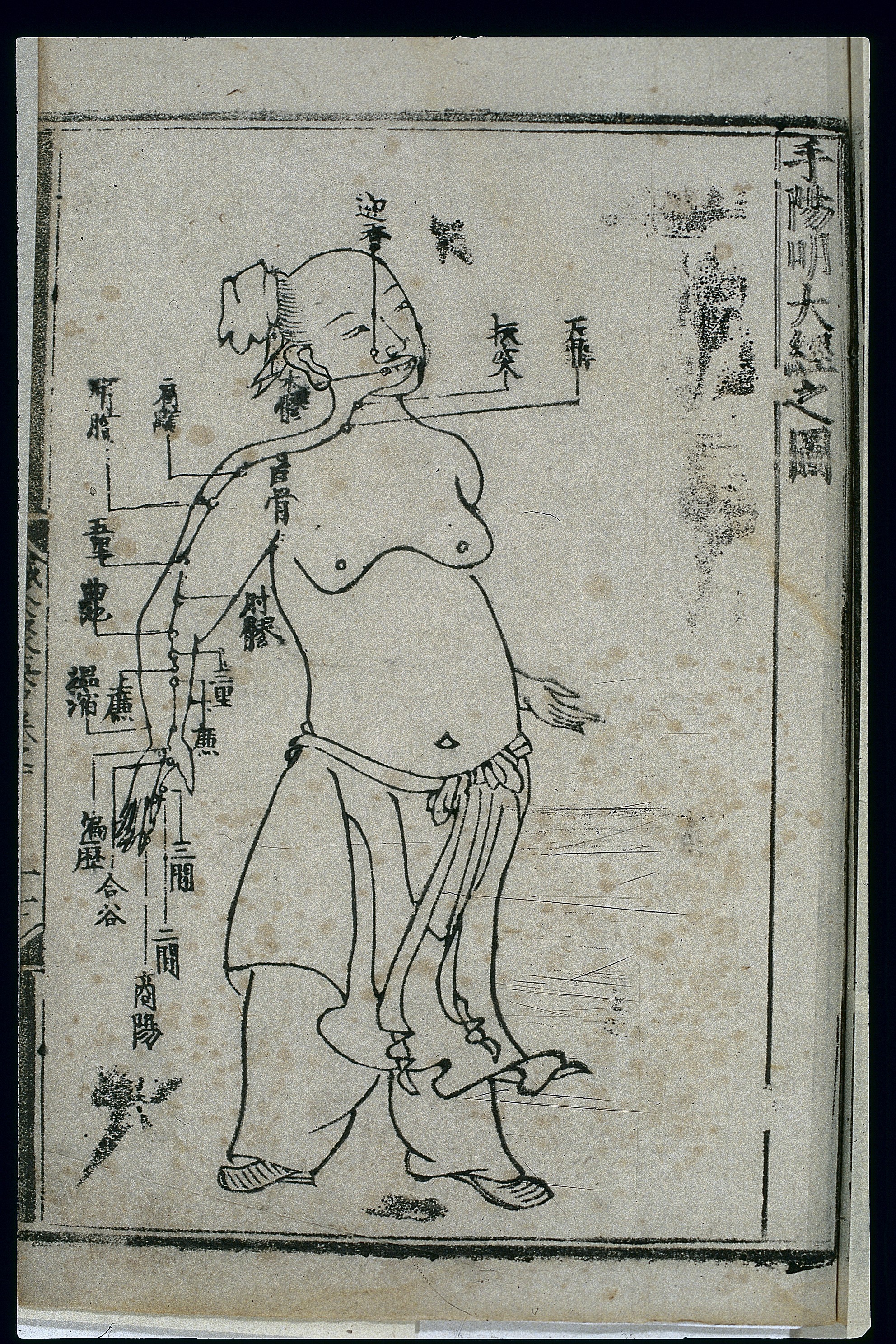
起于商阳,止于迎香
From Shangyang to Yingxiang
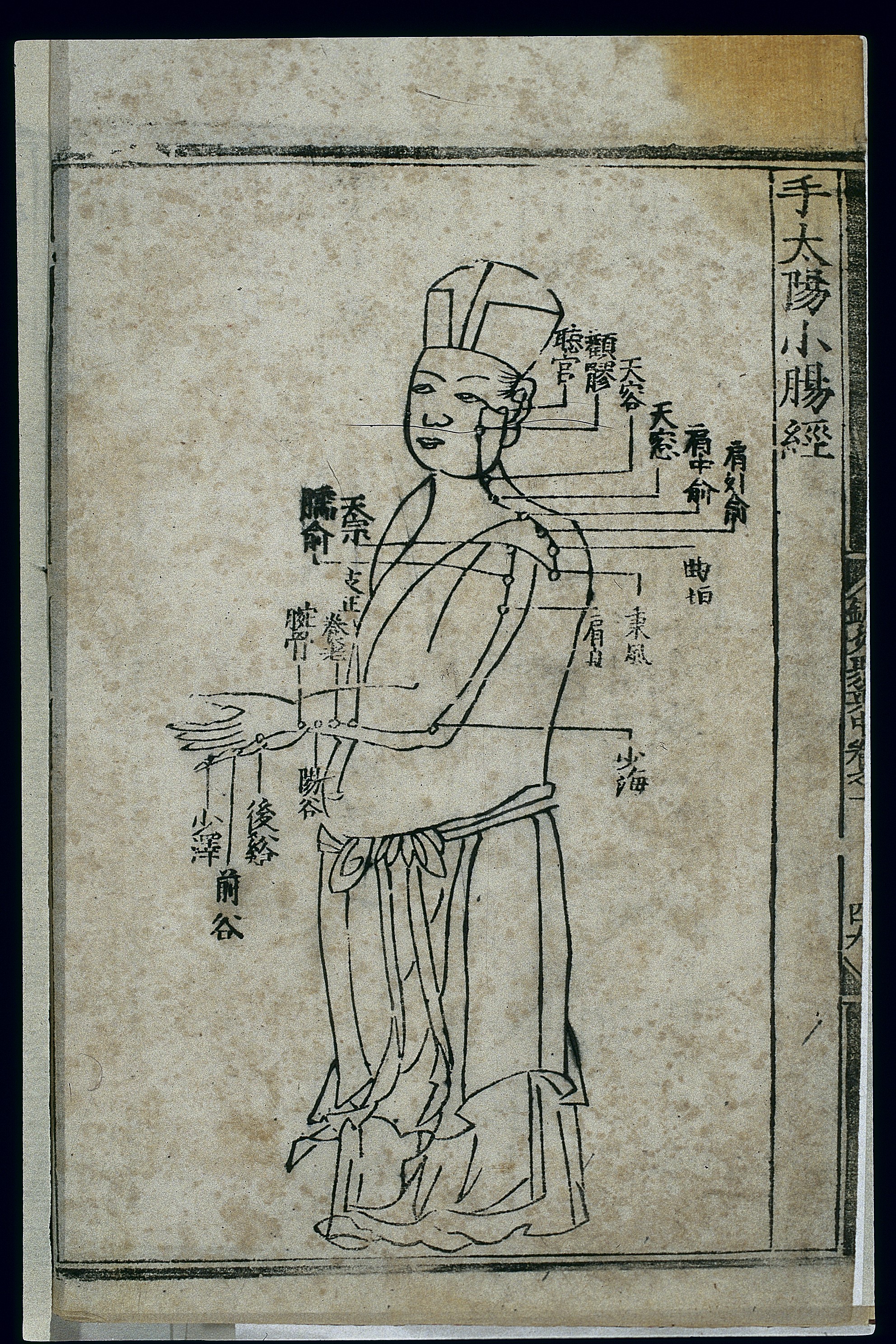
起于少泽,止于听宫
From Shaoze to Tinggong
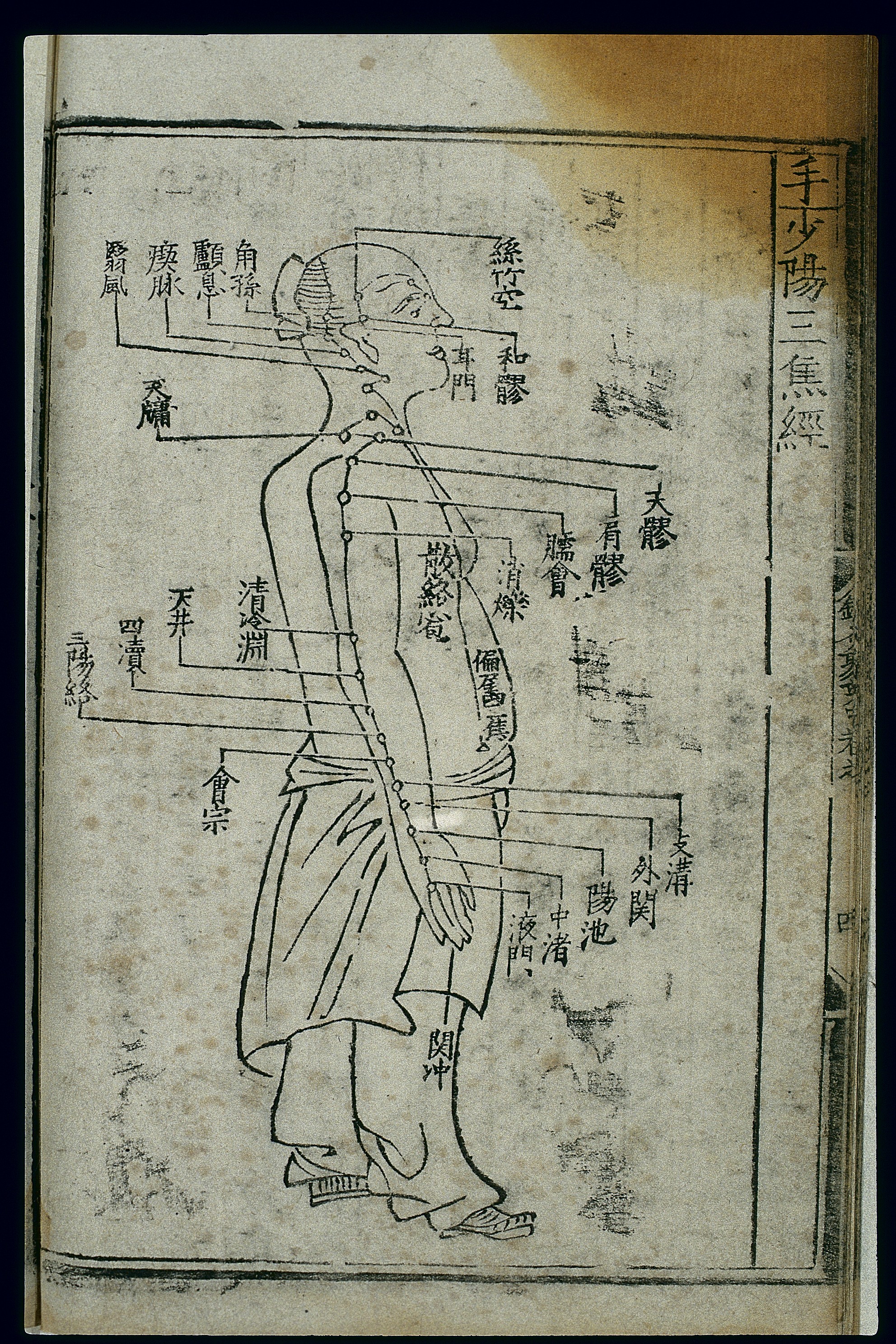
起于关冲,止于耳门
From Guanchong to Ermen
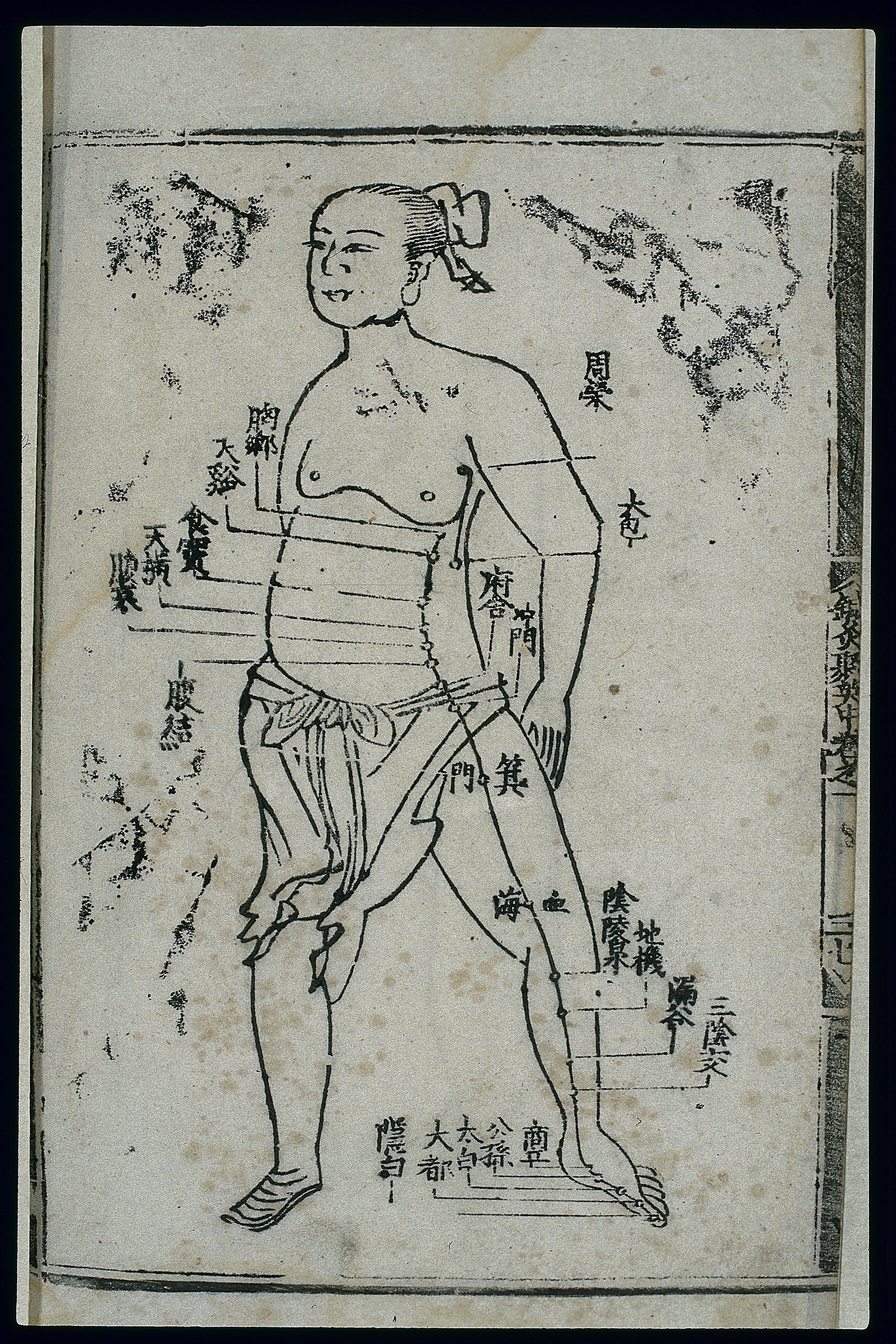
起于隐白,止于大包
From Yinbai to Dabao
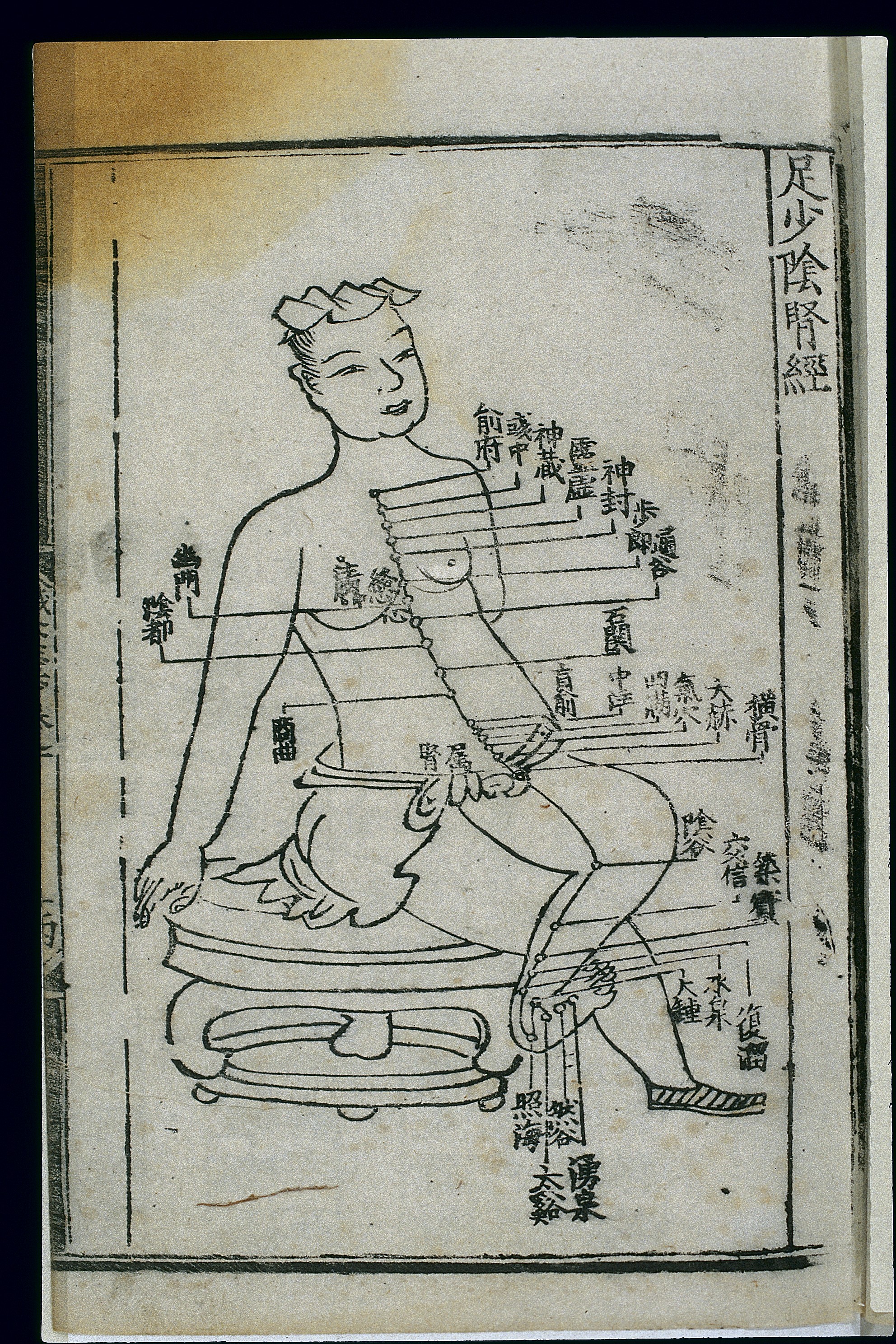
起于涌泉,此图所载27穴
27 points recorded, from Yongquan
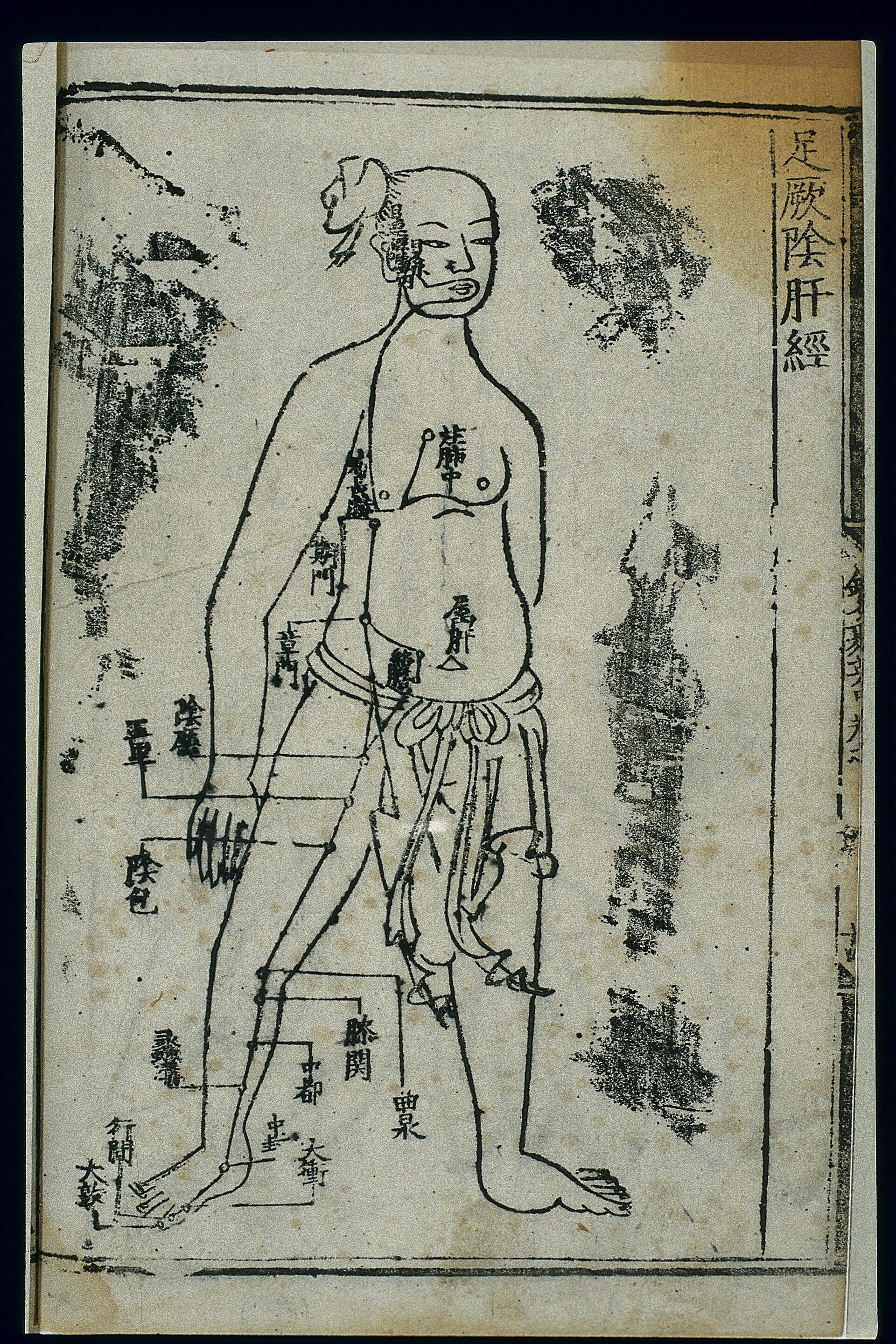
止于期门
Ending at Qimen
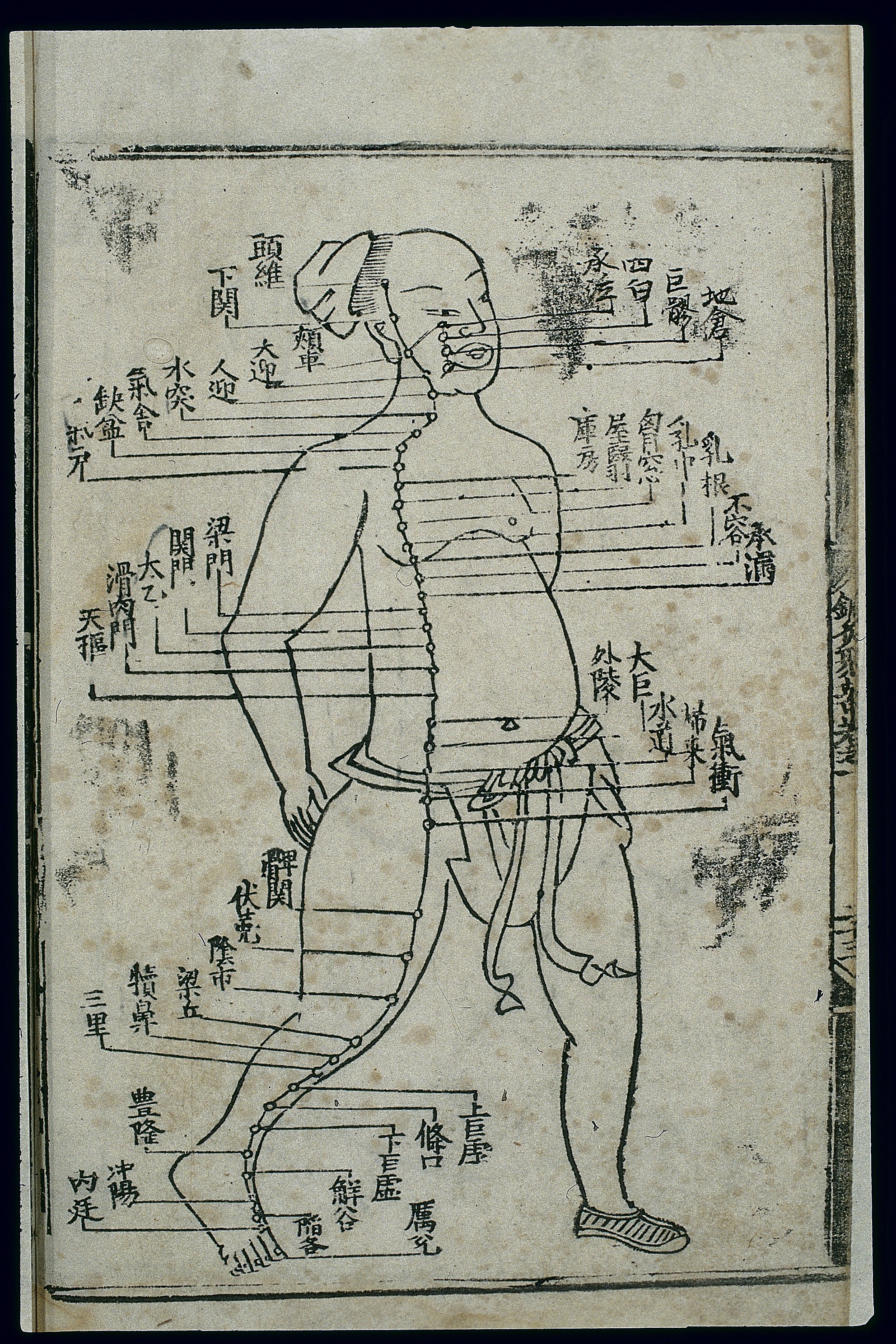
起于承泣,止于厉兑
From Chengqi to Lidui
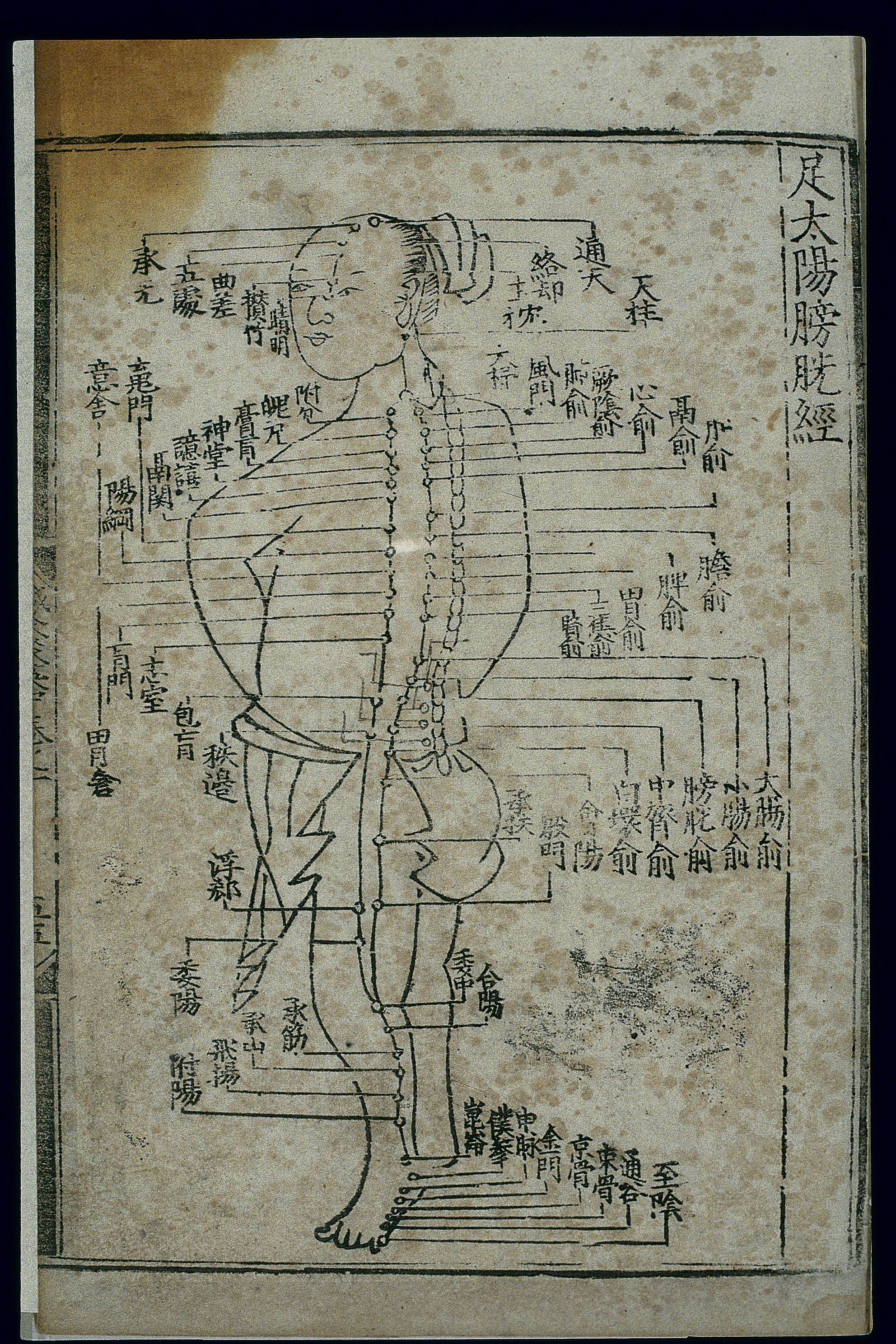
起于睛明,此图所载63穴
63 points recorded, from Jingming
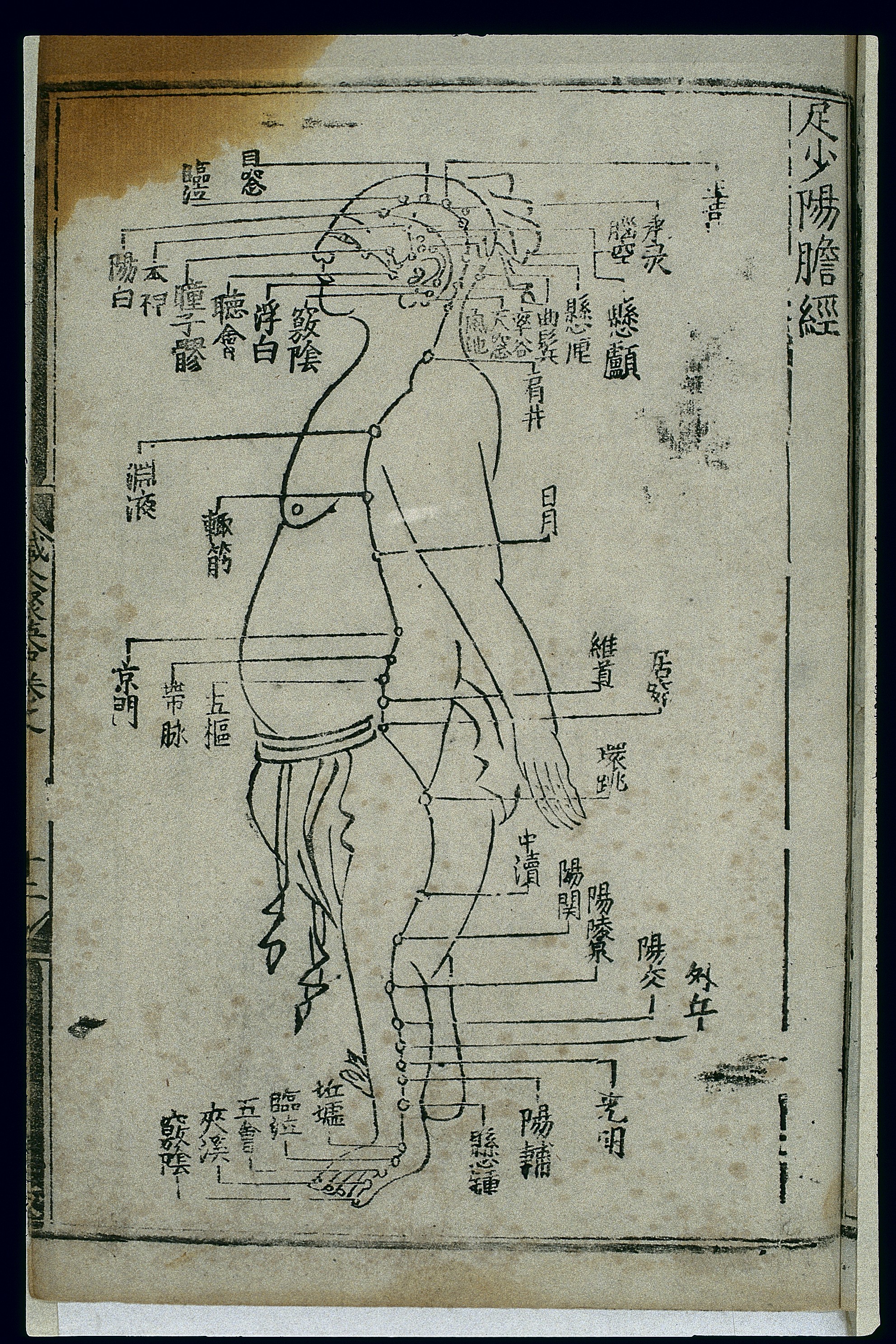
此图所载43穴
43 points recorded in this chart
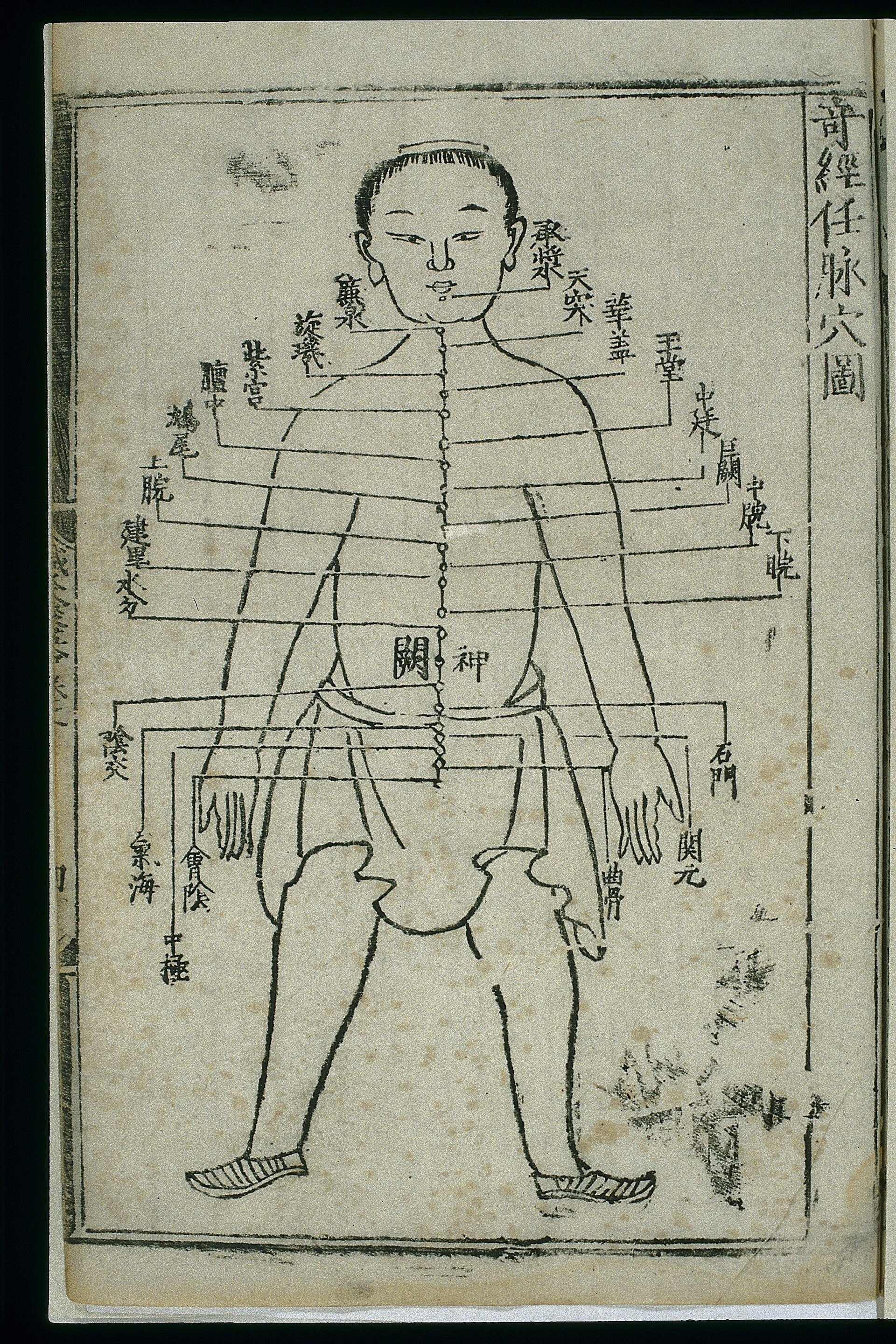
此图所载24穴,阴脉之海
24 points, "Sea of Yin Channels"
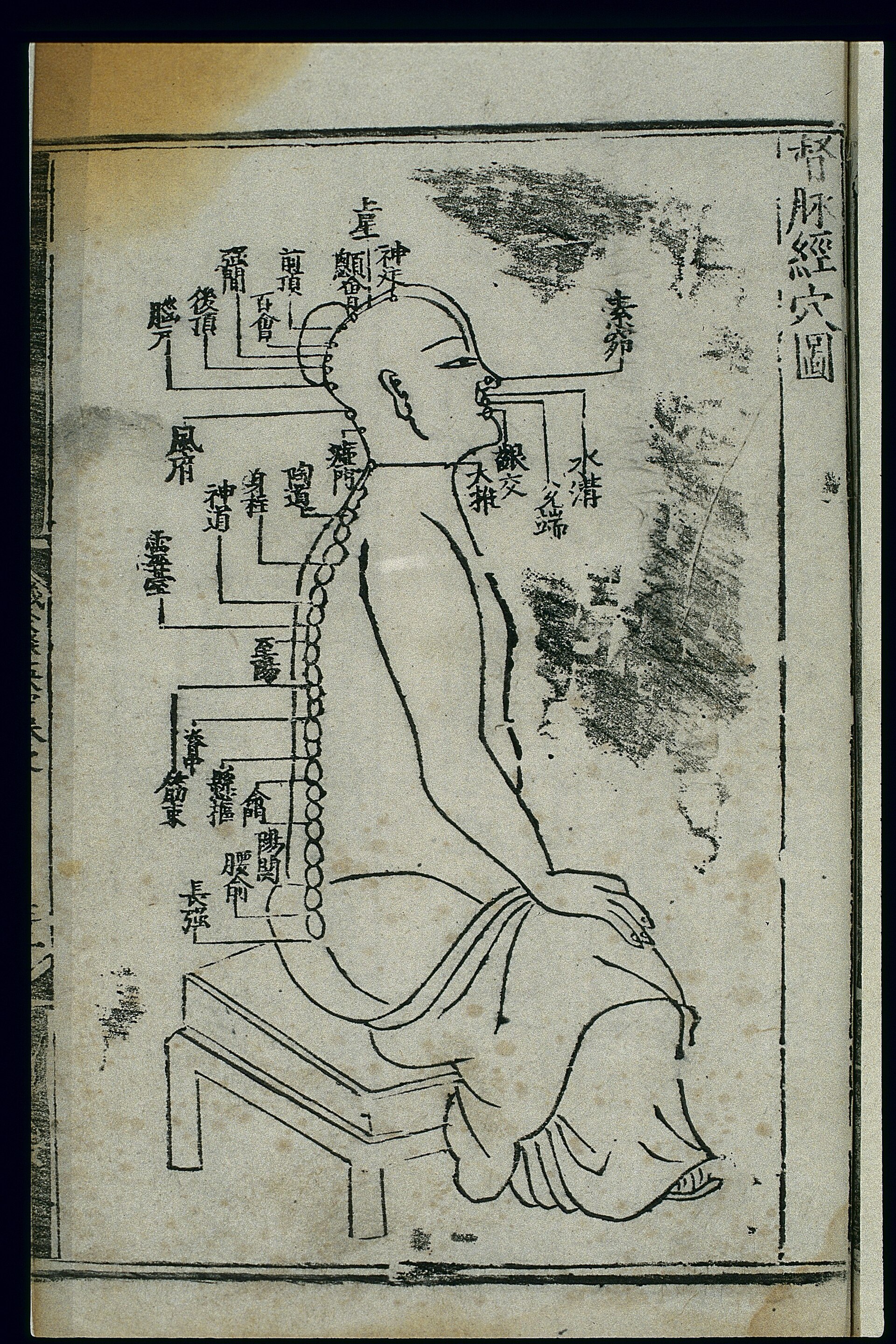
此图所载27穴,阳脉之海
27 points, "Sea of Yang Channels"
毫针、灸法与拔罐同为针灸技术体系的重要脉络,历代典籍与文物留下了丰富的器具演变与起源记述。以下图像分别出自明清木刻、清代手绘图谱与实物照片,仅呈现器具与图像的历史脉络,点击卡片可放大查看。
Needling, moxibustion, and cupping form three major technical threads within the acupuncture tradition, each leaving behind a record of tool evolution and origin lore across historical texts and artifacts. The images below — drawn from Ming/Qing woodcuts, a Qing-dynasty hand-painted chart, and photographs of surviving instruments — present only their historical and material context; click a card to enlarge.
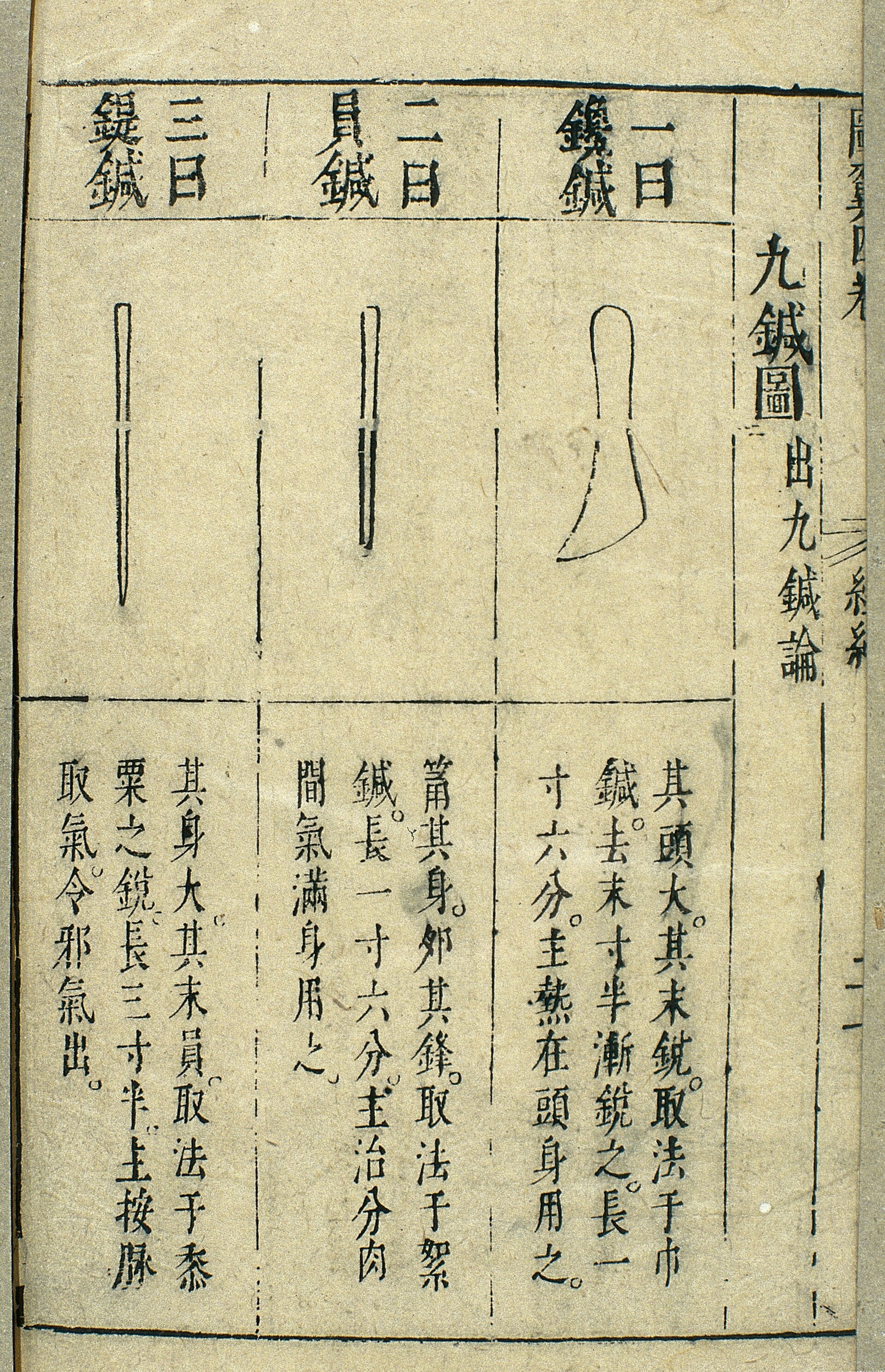
十七世纪木刻,《灵枢》记形制
17th-c. woodcut; forms recorded in the Lingshu
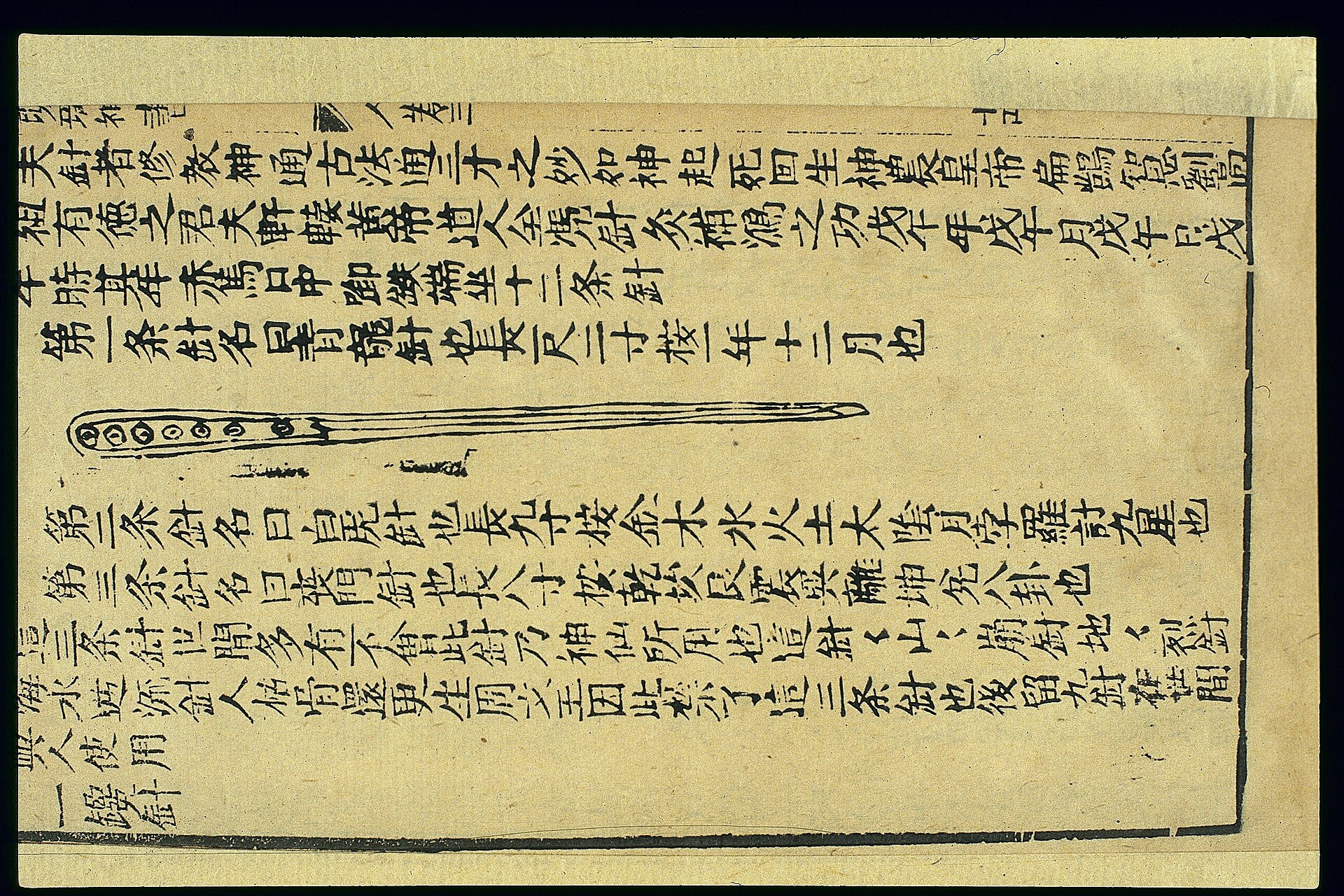
1848年木刻,针具起源传说
1848 woodcut; legend of origin
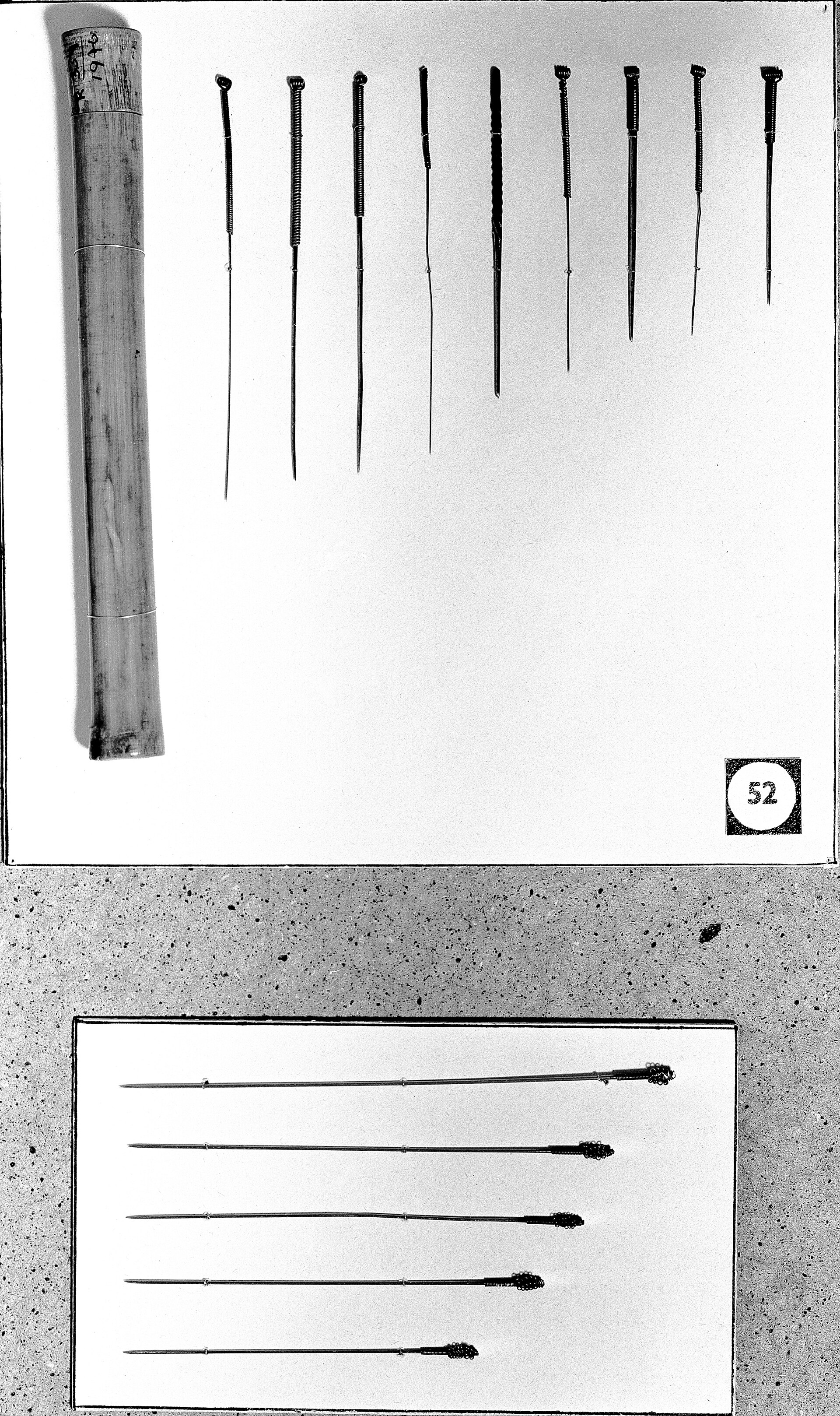
针具与竹制收纳盒实物照片
Photograph of needles and their case
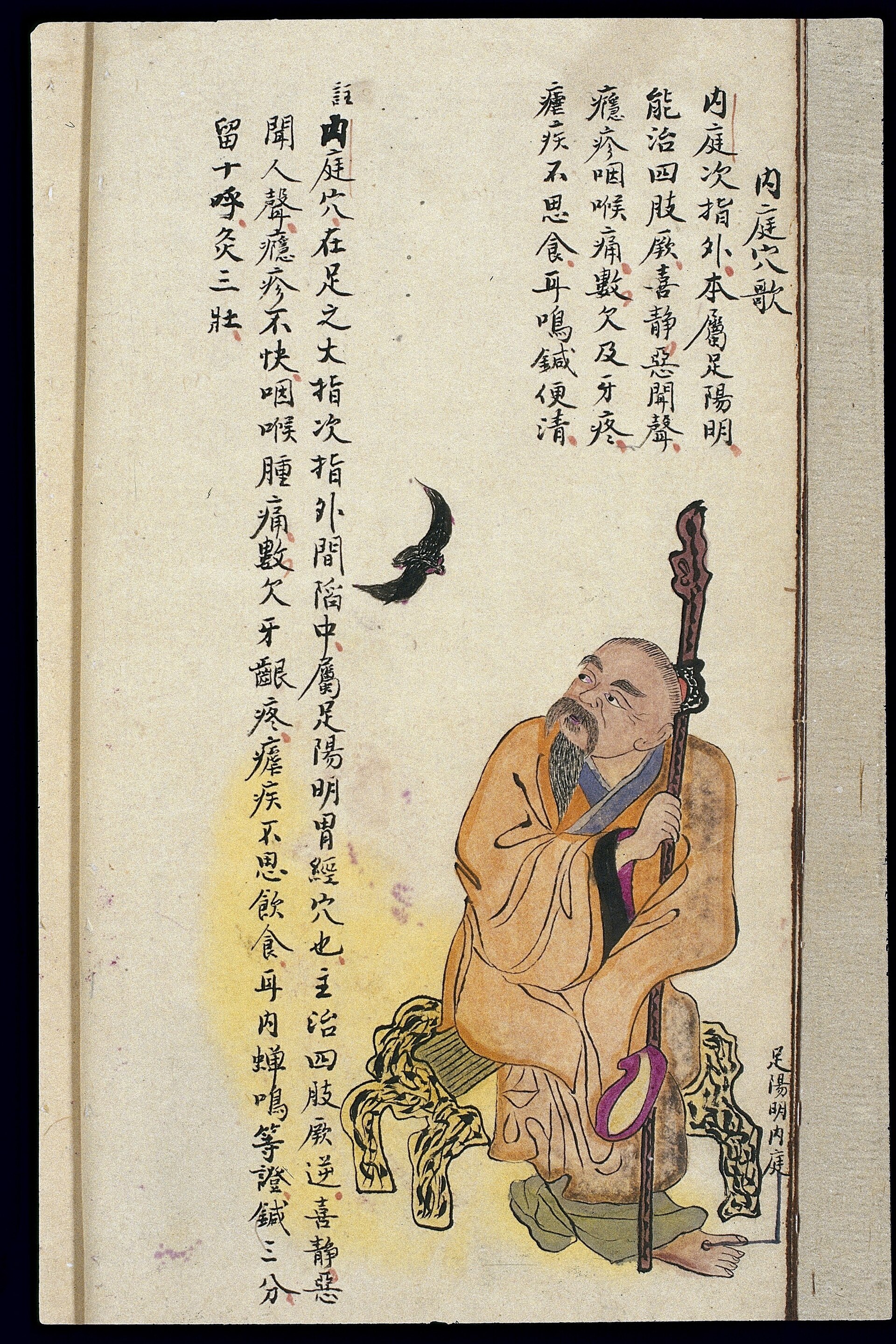
1869年,八十四图彩绘稿本之一
1869, one of 84 coloured charts
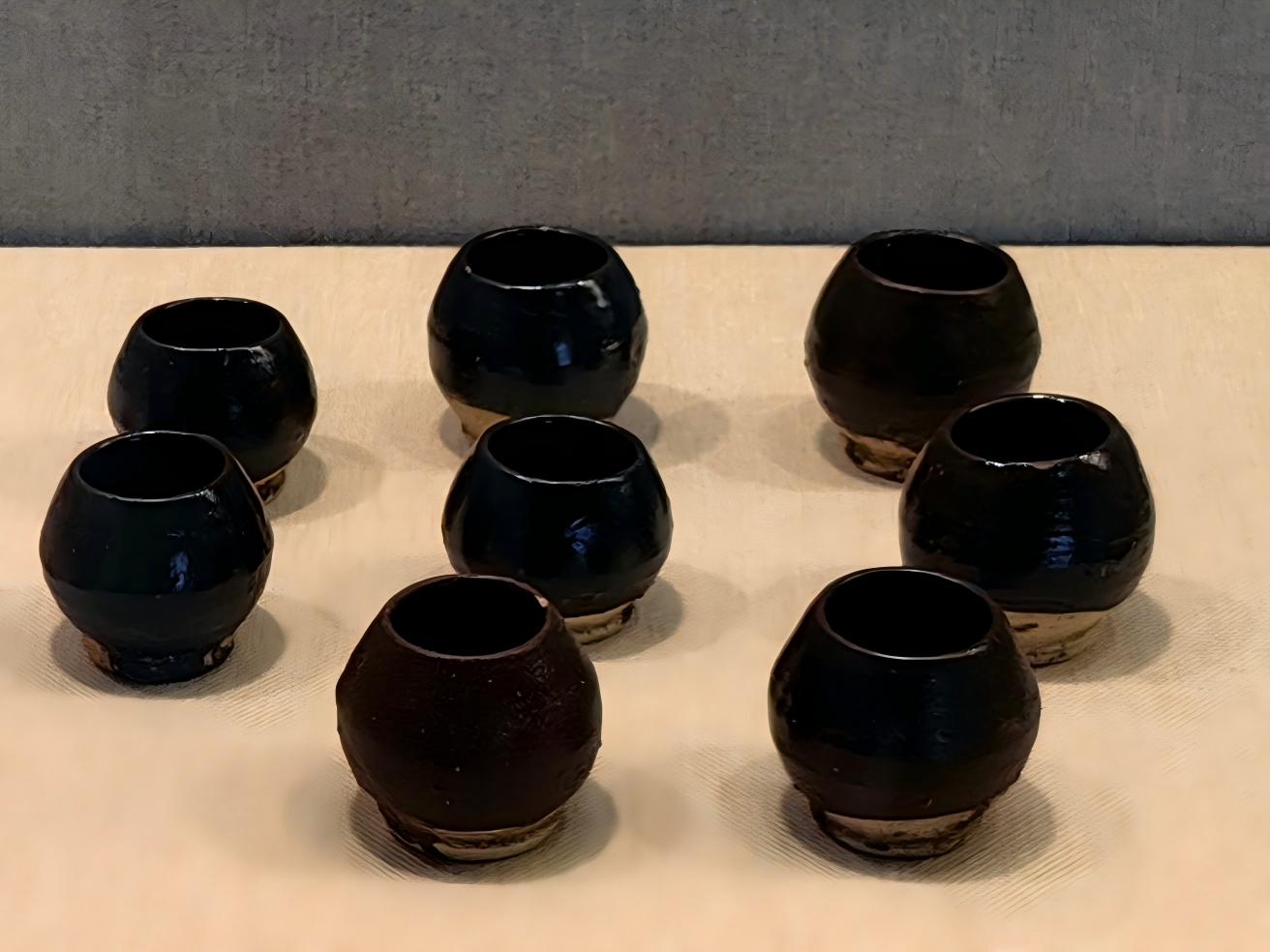
沧州市博物馆藏,陶瓷/竹制罐体
Cangzhou Museum collection
本展厅所有图像均为公共领域历史文物或经开放许可授权的历史图像,仅作文化与历史叙事之用,不构成现代医疗建议。
All images in this hall are public-domain historical artifacts or openly licensed historical images, presented for cultural and historical narrative only — not medical advice.